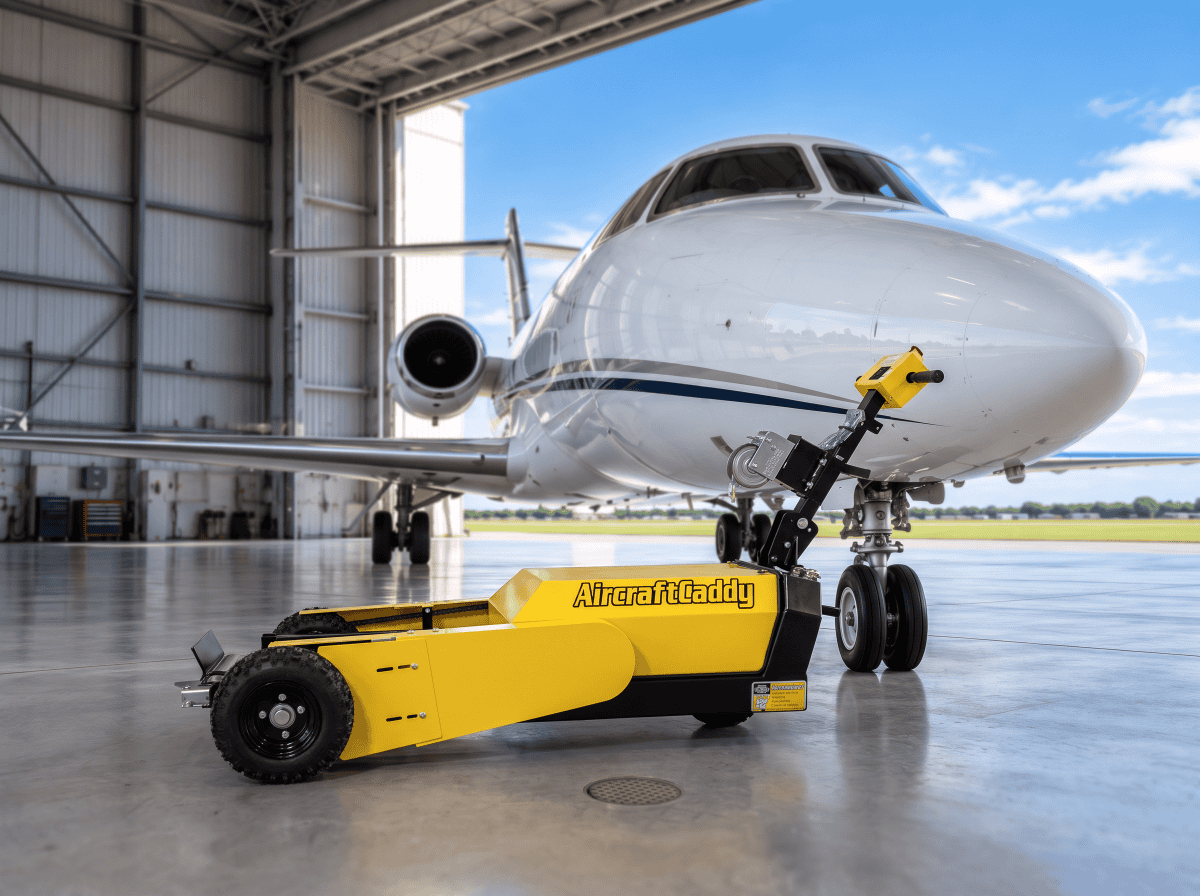
Battery-Powered Aircraft Tugs: A Buyer’s Guide to Aircraft and Hangar Fit

Choosing a battery-powered aircraft tug starts with aircraft compatibility, towing capacity, supported nose gear weight, route conditions, low-speed control, and charging requirements. Evaluate these together before selecting a model or comparing prices.

An aircraft’s weight helps narrow the options. The connection method, hangar layout, and daily workload determine whether a shortlisted tug fits the job.

For FBOs, flight schools, corporate flight departments, maintenance teams, and private hangar owners, the goal is practical: equipment that can handle the complete move, from connection and loading to final parking and unloading.

What should you compare when buying an aircraft tug?

Use the same requirements for every provider so you can compare proposals consistently.

Selection factor What to confirm
Aircraft compatibility Exact aircraft model, landing gear configuration, wheel dimensions, wheel pants, and approved towing method
Towing and support capacity Aircraft towing weight and the load the tug must support at the nose wheel
Route conditions Slopes, pavement, grass crossings, door tracks, surface transitions, and expected weather
Hangar fit Doorway clearance, wingtip path, turning space, and final parking position
Control Loading, gradual starts, small adjustments, stopping, and unloading
Battery and charging Expected workload, available charging time, electrical supply, and temperature limits
Ownership cost Equipment, attachments, batteries, maintenance, training, parts, and support

A proposal should explain how the recommended configuration meets these requirements and identify any operating limitations.

Start with the aircraft and daily workload

A flight school making repeated moves has different needs from an owner taking one aircraft out of a private hangar. An FBO handling several aircraft types also needs to understand connection changes between aircraft.

Before requesting quotes, gather:

  • Aircraft makes, models, and expected towing weights
  • Nose wheel, dual nose wheel, or tailwheel configuration
  • Photos and dimensions of the intended connection area
  • Wheel pants and nearby clearance restrictions
  • Number of moves per day and approximate distance per move
  • Hangar opening dimensions and the tightest parking turn
  • Route photos showing slopes, door tracks, and surface changes
  • Charging location and available charging time

For a mixed fleet, list each aircraft separately. Compatibility with one aircraft does not establish compatibility with every aircraft in the same weight range.

Understand towing capacity and nose gear support capacity

Towing capacity describes the aircraft weight a tug is rated to move under the manufacturer’s specified conditions.

For a tug that supports the nose wheel, the maximum supported nose gear weight is a separate limit. It describes the load the tug’s cradle or lifting arrangement can carry.

Both must suit the aircraft’s intended loading condition. Being within the towing rating does not automatically mean the nose gear load is within the support rating.

Use the aircraft’s documentation and weight-and-balance information to establish the relevant weights. Ask the aircraft manufacturer or a qualified aircraft professional for clarification where needed.

Then ask the tug provider to confirm those requirements against the exact configuration being quoted.

Check the conditions behind the rating

Ask whether the quoted towing capacity applies to your route.

An incline changes the force needed to move and control the aircraft. Surface conditions can affect rolling resistance, traction, or both. A level, dry pavement rating alone does not establish suitability for a sloped driveway, grass crossing, or winter operation.

Provide the slope, surface, and aircraft weight, then request a configuration recommendation for those conditions. A larger tug may be appropriate, but size alone does not establish that a route is suitable.

Confirm the connection method and aircraft clearances

Aircraft compatibility requires more than a towing rating.

Have the provider review the wheel dimensions, landing gear geometry, connection points, and available clearance. Confirm the proposed method against the aircraft manufacturer’s towing instructions and steering limits.

The FAA’s Aircraft Ground Handling, Servicing, and Marshalling guidance addresses towing equipment capacity, aircraft-specific procedures, and nose wheel swivel limits.

Questions to resolve include:

  • Does the tug use a tow bar, wheel cradle, or another attachment?
  • Is a separate tow bar needed during loading?
  • Will the attachment clear the wheel pants and surrounding components?
  • Can the configuration accommodate dual nose wheels?
  • What adjustments or attachment changes are needed between aircraft?
  • What manual effort is involved in connection and unloading?

Ask to see the complete loading process for a comparable aircraft configuration.

Evaluate control where space is tight

An open-ramp demonstration shows only part of the job. Your evaluation should also cover the doorway, the narrowest turn, and the final parking adjustment.

Observe how the tug handles:

  1. Approaching and connecting to the aircraft
  2. Loading or securing the wheel
  3. Starting gradually
  4. Making small forward and reverse adjustments
  5. Stopping and holding as specified by the manufacturer
  6. Unloading and disconnecting

Ask how speed control, acceleration, and braking work on the quoted model. Confirm what happens when the operator releases the throttle and what procedures apply on your route.

Also establish staffing requirements. Equipment that one person can operate may still require additional personnel for the aircraft or surroundings. FAA guidance recommends tow guides in congested areas.

Choose a battery and charger around your schedule

The useful battery question is: Will this configuration support our expected moves between charging opportunities?

Give the provider your aircraft weights, travel distances, move frequency, route conditions, and seasonal temperatures. Ask for a runtime estimate with those assumptions stated.

Then confirm:

  • Battery type and capacity
  • Compatible charger and electrical supply
  • Expected recharge time after normal use
  • Whether charging between moves is permitted
  • Operating, charging, and storage temperature limits
  • Battery maintenance and replacement requirements

Battery capacity divided by charger output does not establish a dependable full-charge time on its own. Charging behavior also depends on the battery, charger, starting charge level, and conditions.

For a busy FBO, available charging windows may influence the configuration as much as towing capacity. For a private hangar, reliable readiness between occasional moves may be the main concern.

Compare the full cost of ownership

Request a quote for the configuration your operation needs, including the attachments required for your aircraft.

Compare:

  • Purchase price, delivery, and required accessories
  • Battery and charger costs
  • Routine inspections and maintenance
  • Expected battery replacement costs
  • Operator training and setup
  • Warranty terms
  • Replacement parts availability
  • Technical support

A battery-powered tug has no combustion-engine exhaust during operation, but it still needs maintenance and appropriate charging arrangements.

Assess labor using the complete process. Include connection, loading, travel, positioning, and unloading, along with any guides or other personnel your procedures require.

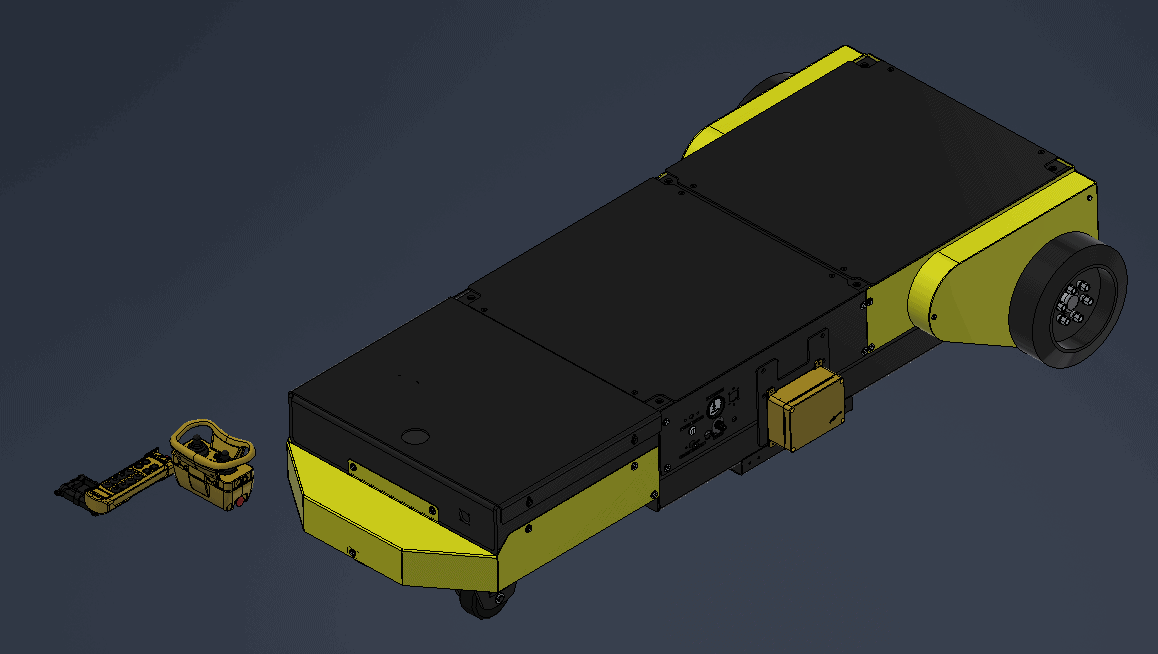
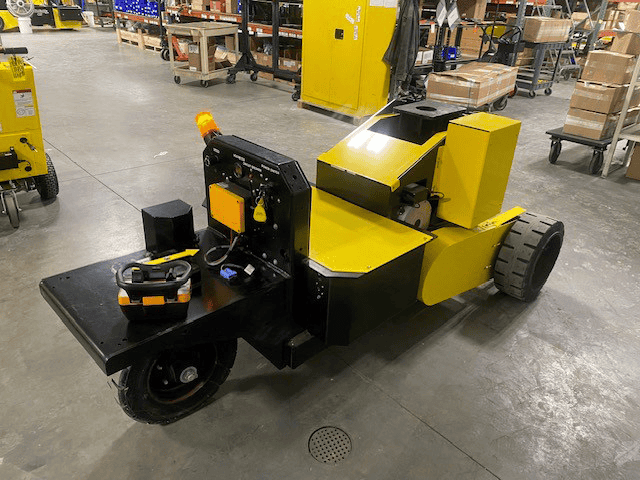
AircraftCaddy options from DJ Products

The AircraftCaddy range includes battery-powered aircraft tugs with published towing capacities from 4,000 to 35,000 lbs. The lineup includes lighter-aircraft models, higher-capacity units, Magic Arm configurations, and a dual nose wheel model.

AircraftCaddy model Published towing capacity
4K Jr. Up to 4,000 lbs
4K Up to 4,000 lbs
8K Up to 8,000 lbs
15K Up to 15,000 lbs
35K Up to 35,000 lbs
DNW Up to 35,000 lbs; designed for dual nose wheel aircraft

These ratings provide a starting point for a shortlist. Confirm supported nose gear weight, aircraft compatibility, attachments, and route suitability for the specific unit.

For lighter aircraft, explore the AircraftCaddy 4K / 8K. For higher towing weights, review the AircraftCaddy 15K and AircraftCaddy 35K.

The 4K / 8K, 15K, and 35K product pages list neutral throttle braking and adjustable acceleration and braking. Available attachments and options vary, so confirm the final equipment specification in your quote.

Frequently asked questions

Is aircraft weight enough to select a tug?

  • No. Also confirm aircraft compatibility, supported nose gear weight where applicable, route conditions, stopping requirements, hangar clearance, and battery needs.

Can a tug work with aircraft wheel pants?

  • Some configurations accommodate wheel pants. Compatibility depends on wheel dimensions, fairing clearance, and the loading attachment. Send photos and measurements for a review of your specific aircraft.

Does a towbarless tug eliminate every need for a tow bar?

  • Confirm the complete loading and unloading method. A tug’s connection during travel does not necessarily explain whether a separate tool is needed to load the aircraft.

Can battery-powered aircraft tugs operate on slopes or grass?

  • Suitability depends on the tug configuration, aircraft weight, gradient, surface, and conditions. Ask the manufacturer to review the route and provide operating limits.

How long will an aircraft tug run between charges?

  • There is no single runtime that applies to every operation. Request an estimate based on your aircraft weights, move distances, frequency, route, battery configuration, and temperatures.

What should I send when requesting an AircraftCaddy recommendation?

  • Provide the aircraft make and model, expected towing weight, nose gear photos and dimensions, wheel pant details, route photos, slopes, hangar clearances, daily moves, and charging availability.

Find the AircraftCaddy configuration for your operation

Bring the aircraft and route details into the conversation before choosing a model.

DJ Products can review your application and help identify an AircraftCaddy configuration to consider. Ask about pricing, available options, and demonstration arrangements for your operation.
Explore the AircraftCaddy range and request information.

Your Flatbed Cart Is Costing You More Than You Think

If you’ve spent time on a warehouse floor or in a production facility, you’ve seen it: a worker leaning hard into a heavy cart, shoulders twisted, fighting to steer it around a corner. Maybe you’ve heard the complaints about sore backs, tired arms, or near-misses in tight corridors.

This isn’t just a comfort issue. It’s a productivity problem, a safety liability, and in many cases, the root cause of costly workers’ comp claims and equipment damage.

At DJ Products, we’ve spent decades building powered material handling equipment for exactly these situations. Our latest solution, the Flatbed Chaindrive Remote Steer, was designed specifically for operations that need to move heavy loads through confined spaces, without putting workers’ bodies at risk.

The Real Cost of Manual Material Handling

It’s easy to underestimate what manual maneuvering actually costs your operation. Beyond the obvious ergonomic risks, there are slower cycle times, fatigued workers making poor decisions, and the constant risk of damaging loads, equipment, or infrastructure.

When the loads get heavy, the problem multiplies. Moving anything over a few thousand pounds by hand, even on a wheeled cart, demands significant physical force. Steering a flat cart loaded with machinery or materials through a production line, loading dock, or narrow aisle is a two-person job at minimum. And even then, control is limited.

These are exactly the conditions the Flatbed Chaindrive Remote Steer was built for.

What the Flatbed Chaindrive Remote Steer Actually Does

The unit is a powered, remotely steered flatbed transport platform. Material is loaded on top of the flat deck, the worker picks up the wireless remote transmitter, and drives the load where it needs to go. No pushing, no pulling, no strain.

The standard configuration handles loads up to 5,000 lbs. For operations dealing with heavier equipment, the optional 3HP 36VDC drive system scales capacity up to 10,000 lbs. Either way, the operator stays in control at all times, walking beside the unit and steering it with precision.


Key specs at a glance:

  • Load capacity: 5,000 lbs standard (10,000 lbs with upgraded drive)
  • Speed: 0-2 mph forward and reverse
  • Power system: 36VDC electric, three 12V batteries
  • Drive: 1HP continuous (6HP peak), chain-driven to front tires
  • Dimensions: 78.75″ L x 40.5″ W x 15″ H
  • Machine weight: 1,054 lbs with batteries
  • Controls: Handheld wireless remote or optional belly box transmitter
  • Charging: 4.5A onboard charger (15A 3-bank upgrade available)
  • Battery run time: Approximately 8 hours per full charge (2-3 hours at max load)

Designed with Safety at the Center

One of the most common questions we get is about what happens when something goes wrong. The Flatbed Chaindrive Remote Steer is built with a dedicated Emergency-Stop switch on the remote transmitter. Press the red button, and the machine comes to a controlled stop immediately. The motor brake is applied, and the unit won’t move again until the E-Stop is manually released and power is cycled.The system also features a key-switch power control, a main circuit breaker for motor overload protection, and an accessory circuit breaker for the control circuit. An onboard voltmeter lets operators check battery state at a glance before a shift starts.

Optional features include a strobe safety light and an audible horn, both designed to alert nearby workers whenever the unit is in motion.

Who This Unit Is Built For

The Flatbed Chaindrive Remote Steer works best in environments where you have heavy, evenly distributed loads that need to move through spaces that don’t accommodate a forklift. Think:

  • Manufacturing facilities moving large assemblies between workstations
  • Palletized freight repositioning in distribution centers
  • Heavy equipment transport for maintenance shops and service bays
  • Healthcare and institutional settings managing large wheeled loads
  • Any operation where operator fatigue or injury risk is a known concern

The Invert Drive Function: A Detail Worth Knowing

One small but genuinely useful feature is the Invert Drive function. If the operator is positioned on the opposite side of the unit from where steering typically originates, they can hold the Invert Drive button for three seconds to flip the drive direction. This makes it much easier to navigate the unit in and out of tight spaces without repositioning yourself.

Starting the Conversation

Every facility is different. Load weights, aisle widths, surface conditions, shift lengths, and workforce considerations all affect what the right unit looks like for a given application.That’s why we don’t just sell equipment. We talk through the details with you first. The DJ Products sales team has seen hundreds of different applications and can help identify whether the standard configuration covers your needs, or whether an upgraded drive system, alternate battery setup, or custom bed configuration makes more sense.

Ready to see what the Flatbed Chaindrive Remote Steer can do for your operation? Call us at 800-686-2651or request a demo.

15K Remote Steer: One-Operator Trailer and Cart Mover

Every facility has the same pressure: move more, faster, with fewer people and less risk. Trailer moves are an obvious pain point, but they’re not the only one. Cart moves, staging moves, and repositioning wheeled equipment also eat time and tie up manpower. The 15K Remote Steer is designed to solve that problem with one-operator, remote-controlled steering and the power to move heavy loads with precision.

The operational problem: trailer and cart moves create delays and damage

Trailer and cart repositioning rarely shows up as a line item until it starts costing you. Common symptoms include:
  • Multiple people pulled into one move
  • Equipment being “borrowed” (and unavailable for real work)
  • Tight turns that lead to bumps, scrapes, and rework
The fix is simple: control the move with the right machine. The 15K Remote Steer is built for easy turning and intricate maneuvering, so the operator can walk with the load and place it accurately.

What the 15K Remote Steer is

The 15K Remote Steer is a battery-powered, remote-controlled caddy engineered to move heavy trailers, carts and other material handling equipments with controlled, low-speed precision.
Two models are available:
  • 15K Remote Steer 36V — made to move up to 59,700 lbs
  • 15K Remote Steer 48V — made to move up to 108,100 lbs
Both models include key performance features customers ask for:
  • Proportional Remote Control
  • 0–2 mph forward & reverse for controlled positioning
  • 15,000 lb, 10″ hydraulic pump lift kit for coupling and moving trailers once hitched
*Important note: the hydraulic lift is designed to couple and transport.. it is not for general lifting duties.

Why it matters beyond the trailer yard

Trailer handling and material handling overlap more than most people admit. Your team is constantly moving wheeled loads through limited space while trying to protect people, product, and infrastructure.
The 15K Remote Steer supports multiple hitch styles depending on model and options. That includes ball, pintle, king pin, and gooseneck. It also supports custom engineered attachments. That is how the platform can extend beyond traditional trailer moves.
If your operation moves cart trains or specialized carts, the right engineered attachment can create a controlled connection point so you can tow cart style loads safely and consistently. The goal is not to force a one size fits all solution. The goal is to standardize on a proven powered mover, then match the hitch and attachment to the loads you move every day.

Where it delivers ROI fast


Dock doors and staging lanes
Space is limited. Time is limited. With proportional remote steering and 0–2 mph control, operators can make clean placement adjustments without repeated back-and-forth corrections.
Maintenance bays and indoor positioning
The 15K Remote Steer is designed for intricate maneuvering indoors and on semi-improved outdoor surfaces, ideal for positioning equipment where a truck or forklift is inconvenient or oversized for the job.
Storage yards and congested lots
When the yard is packed, the fastest operational win is converting “hard moves” into one-person moves without tying up high-value equipment.

Will it work in your environment?

Application matters. For predictable performance, focus on the fundamentals: surface, slope, and conditions.
The intended use environment is indoor and outdoor operation with no precipitation and low winds. Surfaces should be flat and smooth such as concrete or asphalt, or hard packed gravel rated to handle bearing pressure. Maximum operating slope is 2 percent.
If your facility has steep grades, poor surfaces, or extreme conditions, the right approach is to review your environment with a DJ Products specialist so the configuration matches real world use.

Battery runtime and charging

Battery planning is part of keeping uptime high.
Under typical conditions, runtime can be about eight hours when fully charged. Moving very heavy loads will reduce runtime. Operating at maximum power can drain batteries significantly faster. Best practice is to plug the unit in once it is no longer in use, or at the end of a shift, so it is ready for the next move cycle.
If you run continuous high volume moves, it is worth discussing battery options and charging routines up front so your team is never waiting on a charger.

Configuration options that make it fit your workflow

These are common add-ons so you can spec the unit like it was built for your yard:
  • King pin receiver options
  • Ball/pintle bracket assemblies & pintle hook inserts
  • Safety light assembly
  • Battery upgrades (including AGM options)
  • 18″ dual steer wheel option
  • Fully enclosed chain guards
  • Belly box transmitter options (and combo setups)
  • Custom engineered attachments
That last category is where flexibility comes from. Custom engineered attachments are how you adapt the platform to non standard trailer connections and cart style applications, when the move requires a purpose built interface.

A practical ROI example

Here is a simple way to evaluate payback.
If you reposition loads 10 times per day and each move currently consumes 15 minutes of combined labor and equipment time, that is 150 minutes per day.
If a one operator remote steer process reduces the average move to 8 minutes, you save 70 minutes per day. At a loaded labor cost of $35 per hour, that can translate to roughly $10,000 per year over 250 workdays, before considering avoided damage, improved flow, and reduced equipment conflicts.
The point is not to promise a universal number. The point is that small time savings, repeated daily, create real operating leverage.

Choosing 36V versus 48V

  • Choose the 36V model when your loads and conditions align with the 59,700 lb rating and you want a strong standard configuration.
  • Choose the 48V model when you need higher capacity up to 108,100 lb and you want additional drive power for demanding applications.
Rated towing capacities are estimates. Real world factors like surface conditions, load weight, wheel type, and bearing friction affect the force required to move a load. That is why the right next step is a quick application review.

Next step

If you want faster trailer placement, fewer people pulled into moves, and a more controlled handling process, the 15K Remote Steer is built for that job.
If you also want one powered platform that can support trailer moves and cart style material handling with the right engineered attachment, that is a conversation DJ Products can help you have quickly and accurately.
Call DJ Products at 800-686-2651 to spec the right 15K Remote Steer configuration for your facility.


Transform Your Manual Carts with the Powered Retrofit Cart Kit

In today’s fast-paced industrial and hospitality environments, efficiency and safety are paramount. Our Powered Retrofit Cart Kit is a game-changer, designed to convert manual carts into powerful, motorized units that can handle heavy loads with ease. Let’s explore how this innovative solution can revolutionize your workplace.

Why Choose the Powered Retrofit Cart Kit?

Enhanced Efficiency and Productivity

The Powered Retrofit Cart Kit can be attached to various types of carts, including flatbed, linen, housekeeping, and food carts. With the ability to handle loads up to 1,000 pounds and travel at speeds up to 3 miles per hour, this kit significantly boosts productivity. Employees can move heavy materials quickly and effortlessly, reducing the time spent on manual labor.

Improved Safety

Manual carts can pose a risk of injury due to overexertion, especially when dealing with heavy loads. The motorized retrofit kit eliminates this risk by providing the necessary power to move carts smoothly over different surfaces such as concrete, asphalt, tile, and carpet. This reduces the strain on workers and minimizes the chances of musculoskeletal injuries.

Versatility Across Industries

Whether you’re in hospitality, healthcare, distribution, warehousing, or material handling, the Powered Retrofit Cart Kit is a versatile addition to your equipment. Its adaptability makes it suitable for a wide range of environments, ensuring that your investment in manual carts is maximized.

Key Features

Powerful Motor

Equipped with a 24v or 36v battery system, the kit ensures reliable performance throughout the workday.

Customizable Installation

The kit can be installed on-site or at the factory, making it convenient for businesses to upgrade their existing carts.

Customer Testimonials

Many businesses have already experienced the benefits of the Powered Retrofit Cart Kit. One customer praised the kit for transforming their bellman’s cart, stating,

“It looks great and is perfect. All the staff is in love with it”.

Another customer highlighted the improved performance and expressed interest in purchasing additional units.

Conclusion

Investing in our Powered Retrofit Cart Kit is a smart move for any business looking to enhance efficiency, improve safety, and maximize the versatility of their manual carts. With its powerful motor and customizable installation, this kit is a valuable addition to any workplace.

For more information, contact us.

Enhance Safety and Efficiency Where It’s Needed Most

In today’s fast-paced world, the need for innovative solutions to handle sensitive and heavy equipment is paramount. Enter the BombCaddy by DJ Products—a dual-mode, remote-controlled, self-propelled powered trailer designed to meet the highest standards of safety and efficiency.

What is the BombCaddy?

The BombCaddy was originally designed for safely removing explosive materials from screening areas at airports. This versatile trailer can be operated manually, wirelessly, or via pendant control, allowing operators to navigate confined spaces and transport equipment from a safe distance.

Key Features

Remote Control Steering

The BombCaddy can be steered remotely at speeds ranging from 0 to 2 mph, ensuring precise maneuverability in tight spaces.

High-Speed Towing

When connected to a vehicle, it can travel up to 40 mph, making it ideal for quick transportation to detonation sites or other locations.

Heavy Payload Capacity

With the ability to haul loads up to 5,000 lbs., the BombCaddy is a versatile piece of equipment.

Dual-Mode Operation

This feature allows for intricate maneuvering and high-speed pulling, making it suitable for various applications in manufacturing, distribution, and outdoor environments.

Applications

While the BombCaddy was initially designed for bomb disposal, its robust design and versatile functionality make it a valuable asset in many other fields. Defense contractors, manufacturing plants, and distribution centers can all benefit from its ability to safely and efficiently transport heavy equipment.

Why Choose BombCaddy?

Choosing the BombCaddy means investing in a solution that prioritizes safety without compromising on efficiency. Its remote control capabilities ensure operators can maintain a safe distance while handling potentially dangerous materials. Additionally, its high-speed towing feature allows for rapid transportation, reducing downtime and increasing productivity.

Customer Support

DJ Products is committed to providing unparalleled service and support. From the initial consultation to post-purchase follow-ups, our team ensures that the BombCaddy meets all your specific needs. Our in-house tech support is always available to assist with troubleshooting and maintenance.

Conclusion

The BombCaddy is more than just a trailer; it’s a revolutionary tool that enhances safety and efficiency in handling sensitive and heavy equipment. Whether you’re in the defense sector, manufacturing, or distribution, the BombCaddy offers a reliable and versatile solution to meet your needs.

For more information, contact us.

Preventing Warehouse Injuries with the CartCaddy from DJ Products

We all know that running a warehouse is no small feat. Between managing inventory, ensuring timely shipments, and keeping the team safe, there’s a lot on your plate. One of the biggest challenges? Preventing injuries. That’s where the CartCaddy from DJ Products comes into play. Let’s dive into how this nifty piece of equipment can make your warehouse safer and more efficient.

Reduce Strain and Sprains

Manual cart pushing is a leading cause of strains and sprains in warehouse settings. The CartCaddy takes the heavy lifting off your team’s shoulders—literally. With its powerful motor, it can easily move heavy loads, reducing the physical strain on your workers. This means fewer injuries and more energy for other tasks.

Improve Ergonomics

Ergonomics is all about designing workspaces that fit the people who use them. The CartCaddy is designed with ergonomics in mind. Its adjustable handle and intuitive controls make it easy for anyone to use, regardless of their height or strength. This customization helps prevent repetitive strain injuries and keeps your team comfortable throughout their shift.

Enhance Safety with Controlled Movement

One of the standout features of the CartCaddy is its precise control. It allows for smooth, controlled movement of heavy carts, reducing the risk of accidents. No more runaway carts or sudden stops that can lead to injuries. Plus, its compact design means it can navigate tight spaces with ease, making your warehouse safer and more efficient.

Boost Productivity

When your team isn’t bogged down by injuries, they’re more productive. The CartCaddy helps streamline operations by making it easier to move heavy loads quickly and safely. This means your team can focus on what they do best—keeping the warehouse running smoothly.

Cost Savings

Investing in a CartCaddy can save you money in the long run. Fewer injuries mean lower medical costs and less downtime. Plus, with increased productivity, you’ll see a boost in your bottom line. It’s a win-win!

Easy to Use

The CartCaddy is user-friendly, with simple controls that anyone can master in no time. This ease of use means less training time and more time getting the job done. Your team will appreciate how easy it is to operate, and you’ll appreciate the reduction in injury-related absences.

Conclusion

In the hustle and bustle of warehouse operations, safety should always be a top priority. The CartCaddy from DJ Products is a game-changer, helping to prevent injuries and keep your team healthy and productive. So why not give it a try? Your team—and your bottom line—will thank you.

Stay safe and keep those carts rolling!

How DJ Products, Inc. Can Transform Your Warehouse Operations

Hey there, warehouse managers! If you’re always on the lookout for ways to make your operations smoother and safer, you’re in the right place. Let’s chat about how our units can be a game-changer for your warehouse.

Boosting Productivity

First off, let’s talk productivity. These units are like having an extra set of super-strong hands. They can handle heavy loads effortlessly. Imagine cutting down the time and effort your team spends on manual handling. More gets done in less time, and who doesn’t love that?

Keeping Everyone Safe

Safety is a big deal, right? Our units come packed with safety features like ergonomic controls and automatic braking systems. They move smoothly and are easy to control, which means fewer accidents and a safer workplace for everyone. Peace of mind for you and your team!

Saving Money

Now, let’s get to the bottom line—cost savings. With these units, you reduce the need for manual labor and lower the risk of injuries. Fewer injuries mean fewer workers’ comp claims and less downtime. Plus, the boost in efficiency can lead to lower operational costs. It’s a win-win!

Versatility at Its Best

One of the coolest things about our units is their versatility. They can handle a variety of tasks, from moving heavy machinery to transporting goods across the warehouse. This flexibility makes them a must-have in any warehouse, ready to tackle whatever you throw at them.

Easy to Use

Worried about a steep learning curve? Don’t be. These units are designed to be user-friendly with intuitive controls and an ergonomic design. Even workers with minimal training can get the hang of them quickly. This means more productivity and less time spent on training.

Going Green

And here’s a bonus—these units are battery-powered. This is great for the environment compared to traditional gas-powered equipment. It’s a step towards sustainability, which is becoming more important in our industry.

Wrapping Up

So, there you have it. We can help seriously boost your warehouse’s productivity, safety, and cost-efficiency. Our units are versatile, easy to use, and even help you go green. If you’re looking to take your operations to the next level, these units are definitely worth considering.

5 Tips to Make Your Material Handling Operation Safer

Material Handling Facility
Improve Material Handling Safety

From lifting heavy items to pushing large loads, material handling can put employees at a high risk of being injured. These workplace injuries can cost your business significant money in terms of decreased productivity and workers’ compensation. Making the following changes in your workplace can help reduce material handling risks, while also boosting employee morale.

Invest in Safer Equipment

Using forklifts and similar types of equipment to pull or lift loads comes with an increased chance of accidents and injuries. A motorized trailer dolly can handle these loads safely and with greater efficiency. This helps protect your employees from potentially serious injuries in the workplace.

Provide PPE

Personal protective equipment (PPE) is an important part of keeping your staff from injuries. Gloves, eye protection, and other kinds of PPE can greatly reduce the risk of injuries as employees handle material handling tasks. Make sure your employees know how to correctly wear and use PPE on the job.

Reduce Ergonomic-Related Risks

Having to do repetitive lifting or carrying heavy items can lead to physical fatigue and a higher risk of injuries in your material handling operation. Take time to identify these risks, so you can implement measures to reduce the risk of injuries.

Encourage Employees to Report Fatigue

Employees can develop high levels of fatigue on the job due to the physical strain of material handling tasks. Over time, this fatigue can raise their risk of ending up with musculoskeletal problems and serious injuries. Provide a way for employees to report fatigue and encourage them to do so. You can then ensure that fatigued employees have a chance to rest and recover.

Minimize Vibration and Noise

Vibration and noise in a material handling environment can increase the risk of fatigue and injuries. They can also serve as distractions for employees, which also raises the risk of accidents. Use equipment that helps keep vibration and noise to a minimum, such as softer wheels, in order to protect employees from workplace injuries.

If you need a trailer dolly to make your material handling operation safer, please contact DJ Products. Our team can provide you with the perfect solution for improving workplace safety.

The RiderCaddy is Fit For Your Warehouse Needs

Motorized Tug
RiderCaddy

How much time could your employees save if they didn’t have to manually lug materials from one end of the warehouse to the other? Boost productivity and reduce risk of workplace injury with the RiderCaddy, one of the comprehensive line of movers and tugs from DJ Products.

Time Is Money

Even relatively small warehouses cover a sizable amount of square footage. When heavy carts have to be moved around, it takes time away from more important tasks. Multiply that by the number of people required, and you end up with a significant drain on productivity.

With speeds of up to five miles per hour, the RiderCaddy makes quick work of transporting materials from one spot to another. In addition, our battery-powered mover can be easily operated by a single person, which frees up other employees to handle crucial duties.

Improve Workplace Safety

Serious, non-fatal workplace injuries constitute upwards of $60 billion per year in workers compensation claims. According to a study by Liberty Mutual, overexertion is the leading cause of workplace injuries.

Pushing and pulling heavy carts puts undue stress on muscles and joints. Even without a specific injury, this excessive strain can cause wear and tear that results in chronic pain.

With the RiderCaddy, a person can easily move up to 10,000 pounds quickly and efficiently. There’s even a convenient platform that allows the operator to sit or stand while using the mover. The RiderCaddy’s compact size also provides great maneuverability through narrow passages and around corners, reducing the possibility of injuring extremities.

Top Features of the RiderCaddy

  • The three-battery, 36-volt power source is eco-friendly, with a single charge lasting approximately 16 hours. Recharge simply by plugging the mover into a standard 120/220 Hz outlet.
  • The ergonomically-designed variable speed thumb twist prevents carpal tunnel syndrome while allowing for smooth operation.
  • The safety stop switch brings the RiderCaddy to an immediate halt to lower the risk of accidents.


Choose Movers and Tugs from DJ Products

We have material handling solutions for a full range of applications. Contact us at 800.686.2651 and let our Sales Engineers help you find the one that’s right for you and your company.

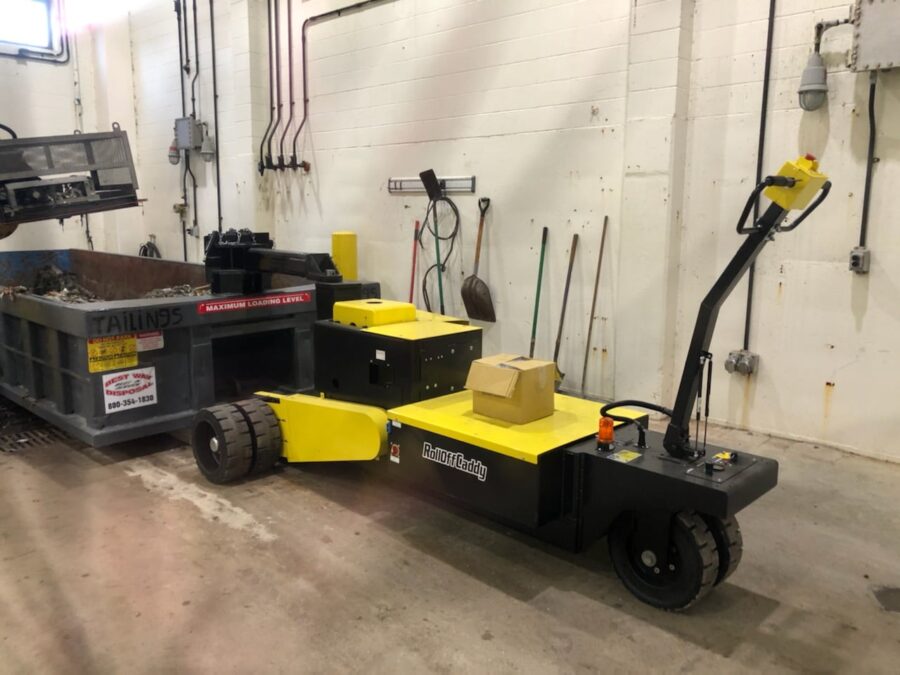
Featuring the Rolloff Caddy Container Mover

RollOff Caddy
RollOff Caddy Moves Compactors

While the term “rolloff” may imply that something is easy to move, when applied to compactors or containers, it doesn’t quite work out that way. Save time, improve productivity and protect employees with rolloff moving equipment from DJ Products.

Dangers of the Trash Room

Believe it or not, the trash room is one of the more dangerous spots in any business or multi-family property. When attempting to move a dumpster, employees can suffer cuts, contusions, and muscle and joint strain due to the heavy weight and sharp edges.

While cuts and contusions usually heal, muscle and joint strain can linger, resulting in chronic health problems. This ends up costing your company in manpower shortage and workers compensation claims.

Improve Operations With Rolloff Moving Equipment from DJ Products

Our RollOffCaddy Container Mover simplifies the task of moving compactors and containers while reducing the risk of injury. DJ Products lists RollOffCaddy configurations for moving containers up to 50,000 lbs. Lifting capacity varies by configuration and is separate from rolling capacity; confirm both for your load.

Another problem with bulky compactors and containers is that they can be awkward to navigate. The RollOffCaddy Container Mover maneuvers smoothly around tight corners and through narrow hallways. If you have to move a container outdoors, confirm the selected configuration’s suitable surfaces and grade limits. Ice and snow can reduce traction.

Top Features of the RollOffCaddy Container Mover

• Lift rating, batteries and drive configuration vary by model. Review the current specifications for the unit you select.

• Ergonomic design, such as variable speed twist grip, can reduce manual pushing effort.

• Safety features include a stop switch and horn. Ask which lighting options are supplied with your selected configuration.

• Other standard features include an onboard charger, battery discharge indicator, neutral throttle braking and high-tech speed controller.

We have a number of additional options so you can customize your RollOffCaddy Container Mover to fit your specific requirements.

Learn More About Our Rolloff Moving Equipment

Find out more about this product and the DJ Products trailer dolly line. We have wheeled cart moving solutions for trailers, cargo trailers, RV’s, semi-trailers, and boat trailers.

DJ Products has a full range of movers, pushers and tugs to meet any material handling needs. Contact us today at 800.686.2651 or use our handy online chat feature to learn more from our helpful Sales Engineers.