Battery-Powered Aircraft Tugs: A Buyer’s Guide to Aircraft and Hangar Fit

Choosing a battery-powered aircraft tug starts with aircraft compatibility, towing capacity, supported nose gear weight, route conditions, low-speed control, and charging requirements. Evaluate these together before selecting a model or comparing prices.

An aircraft’s weight helps narrow the options. The connection method, hangar layout, and daily workload determine whether a shortlisted tug fits the job.

For FBOs, flight schools, corporate flight departments, maintenance teams, and private hangar owners, the goal is practical: equipment that can handle the complete move, from connection and loading to final parking and unloading.

What should you compare when buying an aircraft tug?

Use the same requirements for every provider so you can compare proposals consistently.

Selection factor What to confirm
Aircraft compatibility Exact aircraft model, landing gear configuration, wheel dimensions, wheel pants, and approved towing method
Towing and support capacity Aircraft towing weight and the load the tug must support at the nose wheel
Route conditions Slopes, pavement, grass crossings, door tracks, surface transitions, and expected weather
Hangar fit Doorway clearance, wingtip path, turning space, and final parking position
Control Loading, gradual starts, small adjustments, stopping, and unloading
Battery and charging Expected workload, available charging time, electrical supply, and temperature limits
Ownership cost Equipment, attachments, batteries, maintenance, training, parts, and support

A proposal should explain how the recommended configuration meets these requirements and identify any operating limitations.

Start with the aircraft and daily workload

A flight school making repeated moves has different needs from an owner taking one aircraft out of a private hangar. An FBO handling several aircraft types also needs to understand connection changes between aircraft.

Before requesting quotes, gather:

  • Aircraft makes, models, and expected towing weights
  • Nose wheel, dual nose wheel, or tailwheel configuration
  • Photos and dimensions of the intended connection area
  • Wheel pants and nearby clearance restrictions
  • Number of moves per day and approximate distance per move
  • Hangar opening dimensions and the tightest parking turn
  • Route photos showing slopes, door tracks, and surface changes
  • Charging location and available charging time

For a mixed fleet, list each aircraft separately. Compatibility with one aircraft does not establish compatibility with every aircraft in the same weight range.

Understand towing capacity and nose gear support capacity

Towing capacity describes the aircraft weight a tug is rated to move under the manufacturer’s specified conditions.

For a tug that supports the nose wheel, the maximum supported nose gear weight is a separate limit. It describes the load the tug’s cradle or lifting arrangement can carry.

Both must suit the aircraft’s intended loading condition. Being within the towing rating does not automatically mean the nose gear load is within the support rating.

Use the aircraft’s documentation and weight-and-balance information to establish the relevant weights. Ask the aircraft manufacturer or a qualified aircraft professional for clarification where needed.

Then ask the tug provider to confirm those requirements against the exact configuration being quoted.

Check the conditions behind the rating

Ask whether the quoted towing capacity applies to your route.

An incline changes the force needed to move and control the aircraft. Surface conditions can affect rolling resistance, traction, or both. A level, dry pavement rating alone does not establish suitability for a sloped driveway, grass crossing, or winter operation.

Provide the slope, surface, and aircraft weight, then request a configuration recommendation for those conditions. A larger tug may be appropriate, but size alone does not establish that a route is suitable.

Confirm the connection method and aircraft clearances

Aircraft compatibility requires more than a towing rating.

Have the provider review the wheel dimensions, landing gear geometry, connection points, and available clearance. Confirm the proposed method against the aircraft manufacturer’s towing instructions and steering limits.

The FAA’s Aircraft Ground Handling, Servicing, and Marshalling guidance addresses towing equipment capacity, aircraft-specific procedures, and nose wheel swivel limits.

Questions to resolve include:

  • Does the tug use a tow bar, wheel cradle, or another attachment?
  • Is a separate tow bar needed during loading?
  • Will the attachment clear the wheel pants and surrounding components?
  • Can the configuration accommodate dual nose wheels?
  • What adjustments or attachment changes are needed between aircraft?
  • What manual effort is involved in connection and unloading?

Ask to see the complete loading process for a comparable aircraft configuration.

Evaluate control where space is tight

An open-ramp demonstration shows only part of the job. Your evaluation should also cover the doorway, the narrowest turn, and the final parking adjustment.

Observe how the tug handles:

  1. Approaching and connecting to the aircraft
  2. Loading or securing the wheel
  3. Starting gradually
  4. Making small forward and reverse adjustments
  5. Stopping and holding as specified by the manufacturer
  6. Unloading and disconnecting

Ask how speed control, acceleration, and braking work on the quoted model. Confirm what happens when the operator releases the throttle and what procedures apply on your route.

Also establish staffing requirements. Equipment that one person can operate may still require additional personnel for the aircraft or surroundings. FAA guidance recommends tow guides in congested areas.

Choose a battery and charger around your schedule

The useful battery question is: Will this configuration support our expected moves between charging opportunities?

Give the provider your aircraft weights, travel distances, move frequency, route conditions, and seasonal temperatures. Ask for a runtime estimate with those assumptions stated.

Then confirm:

  • Battery type and capacity
  • Compatible charger and electrical supply
  • Expected recharge time after normal use
  • Whether charging between moves is permitted
  • Operating, charging, and storage temperature limits
  • Battery maintenance and replacement requirements

Battery capacity divided by charger output does not establish a dependable full-charge time on its own. Charging behavior also depends on the battery, charger, starting charge level, and conditions.

For a busy FBO, available charging windows may influence the configuration as much as towing capacity. For a private hangar, reliable readiness between occasional moves may be the main concern.

Compare the full cost of ownership

Request a quote for the configuration your operation needs, including the attachments required for your aircraft.

Compare:

  • Purchase price, delivery, and required accessories
  • Battery and charger costs
  • Routine inspections and maintenance
  • Expected battery replacement costs
  • Operator training and setup
  • Warranty terms
  • Replacement parts availability
  • Technical support

A battery-powered tug has no combustion-engine exhaust during operation, but it still needs maintenance and appropriate charging arrangements.

Assess labor using the complete process. Include connection, loading, travel, positioning, and unloading, along with any guides or other personnel your procedures require.

AircraftCaddy options from DJ Products

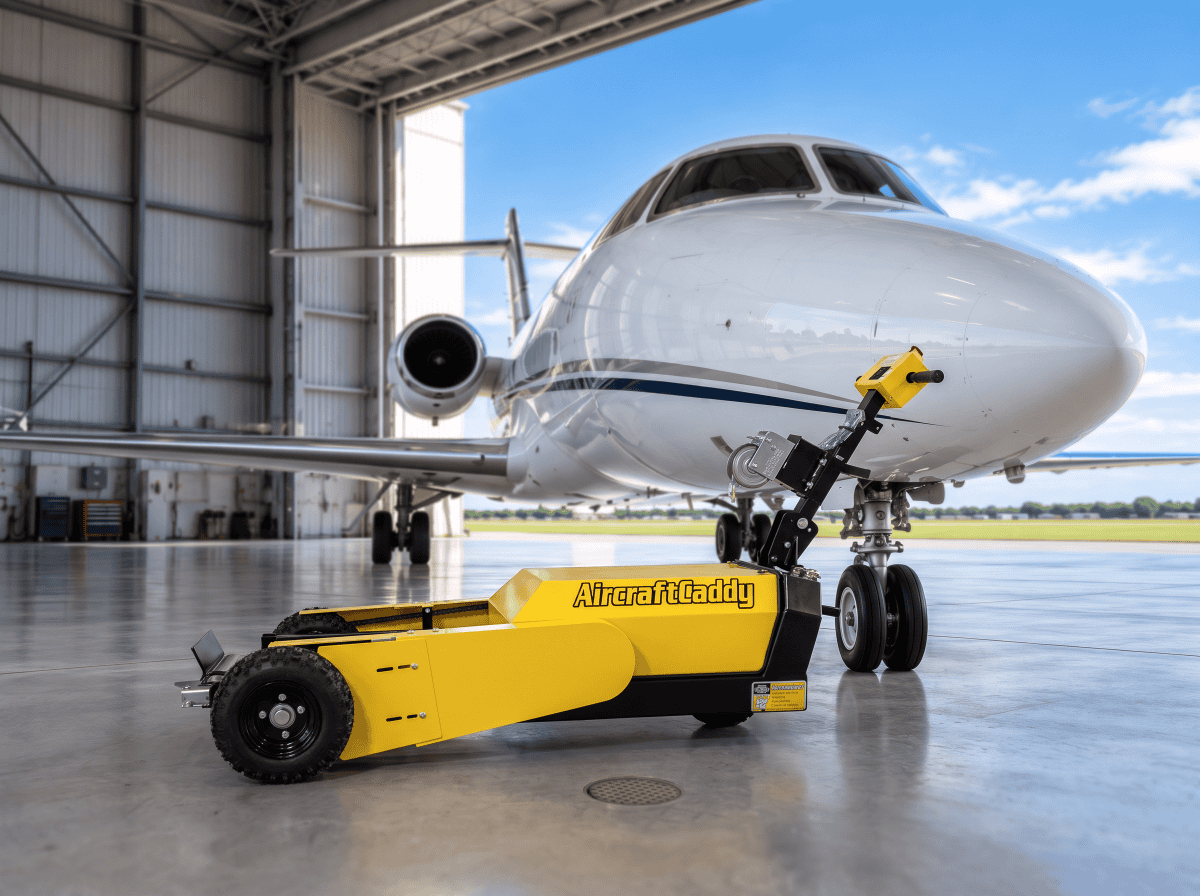
The AircraftCaddy range includes battery-powered aircraft tugs with published towing capacities from 4,000 to 35,000 lbs. The lineup includes lighter-aircraft models, higher-capacity units, Magic Arm configurations, and a dual nose wheel model.

AircraftCaddy model Published towing capacity
4K Jr. Up to 4,000 lbs
4K Up to 4,000 lbs
8K Up to 8,000 lbs
15K Up to 15,000 lbs
35K Up to 35,000 lbs
DNW Up to 35,000 lbs; designed for dual nose wheel aircraft

These ratings provide a starting point for a shortlist. Confirm supported nose gear weight, aircraft compatibility, attachments, and route suitability for the specific unit.

For lighter aircraft, explore the AircraftCaddy 4K / 8K. For higher towing weights, review the AircraftCaddy 15K and AircraftCaddy 35K.

The 4K / 8K, 15K, and 35K product pages list neutral throttle braking and adjustable acceleration and braking. Available attachments and options vary, so confirm the final equipment specification in your quote.

Frequently asked questions

Is aircraft weight enough to select a tug?

  • No. Also confirm aircraft compatibility, supported nose gear weight where applicable, route conditions, stopping requirements, hangar clearance, and battery needs.

Can a tug work with aircraft wheel pants?

  • Some configurations accommodate wheel pants. Compatibility depends on wheel dimensions, fairing clearance, and the loading attachment. Send photos and measurements for a review of your specific aircraft.

Does a towbarless tug eliminate every need for a tow bar?

  • Confirm the complete loading and unloading method. A tug’s connection during travel does not necessarily explain whether a separate tool is needed to load the aircraft.

Can battery-powered aircraft tugs operate on slopes or grass?

  • Suitability depends on the tug configuration, aircraft weight, gradient, surface, and conditions. Ask the manufacturer to review the route and provide operating limits.

How long will an aircraft tug run between charges?

  • There is no single runtime that applies to every operation. Request an estimate based on your aircraft weights, move distances, frequency, route, battery configuration, and temperatures.

What should I send when requesting an AircraftCaddy recommendation?

  • Provide the aircraft make and model, expected towing weight, nose gear photos and dimensions, wheel pant details, route photos, slopes, hangar clearances, daily moves, and charging availability.

Find the AircraftCaddy configuration for your operation

Bring the aircraft and route details into the conversation before choosing a model.

DJ Products can review your application and help identify an AircraftCaddy configuration to consider. Ask about pricing, available options, and demonstration arrangements for your operation.
Explore the AircraftCaddy range and request information.

Aircraft Caddy 15K Magic Arm for Safe Aircraft Moves

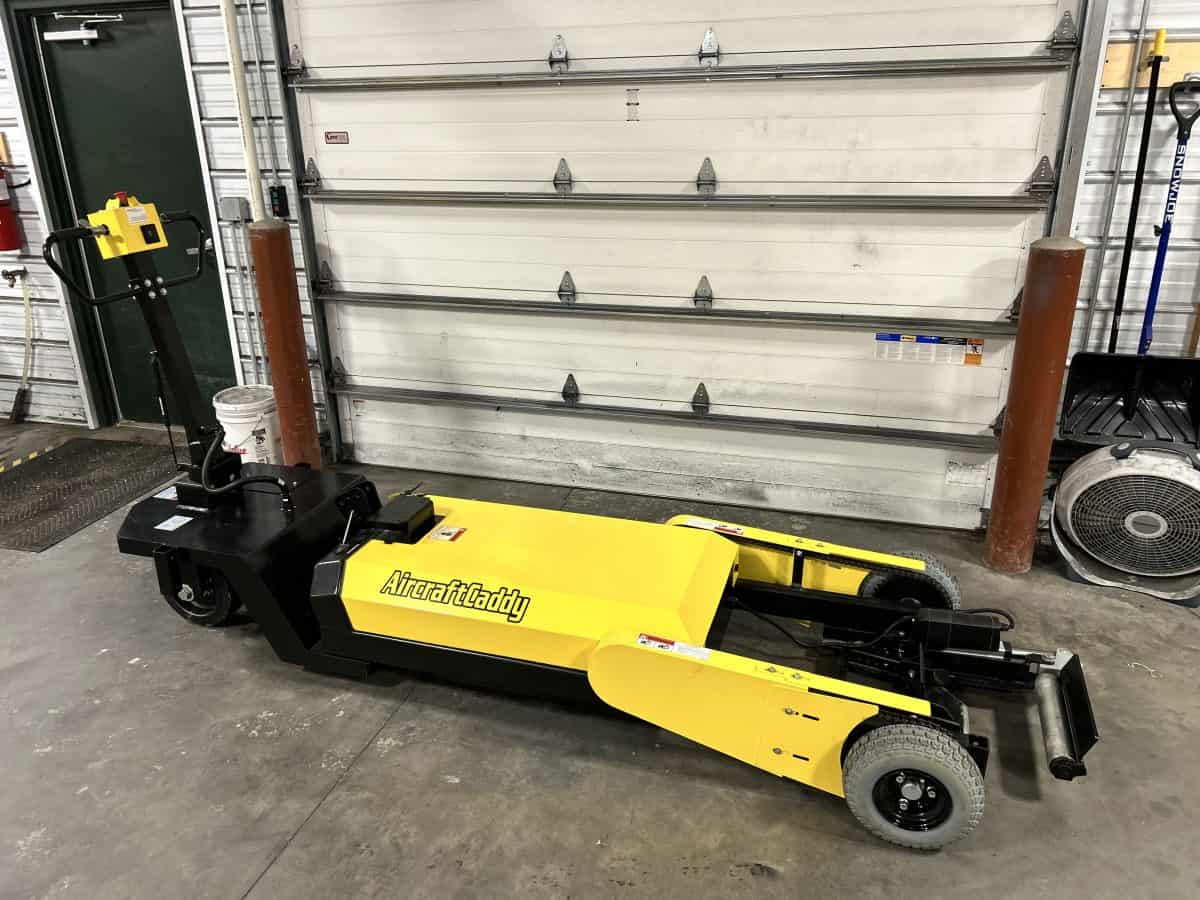
Tight hangars leave no room for hesitation. When clearance is limited, the right tug can make the difference between a smooth move and unnecessary stress. The Aircraft Caddy 15K Magic Arm gives one operator a safer, easier way to load and maneuver aircraft up to 15,000 lbs in tight spaces, hangars, and ramp staging areas.

Why the Aircraft Caddy 15K Magic Arm stands out

The strength of this unit is not just its pulling power. It is the way it improves control at every step of the move. The Magic Arm uses an electric actuator to power load the aircraft, helping reduce manual effort while giving the operator a more controlled way to position and move the aircraft.

  • One operator can safely load and maneuver aircraft up to 15,000 lbs.
  • Powered loading helps reduce manual effort during aircraft positioning.
  • Variable speed control, neutral throttle braking, and adjustable acceleration and braking support smoother starts and stops.
  • Quiet electric operation helps the operator stay more aware of the aircraft and surrounding space.

Built for precise aircraft movement

The Aircraft Caddy 15K Magic Arm is engineered for steady, predictable handling. It combines a heavy-duty steel frame, 36VDC drive system, 2:1 gear reduction, variable speed twist grip control, and 0 to 2 mph forward and reverse travel to help the operator move with precision instead of rushing the job.

That precision carries into the safety side of operation as well. When the unit powers on, the controller runs internal diagnostics. If the handlebars are out of neutral, the tug will not respond until they return to neutral. When the operator releases the handlebars, the unit comes to a quick but smooth stop and holds position with an electric brake.

Built for day-to-day use

This is a commercial-use machine designed for repeat aircraft handling. It runs on a three-battery 36V system, delivers nominal power of 1 hp with 2 hp peak, and provides maximum drawbar pull of 800 lbs. It also includes an onboard charger and battery discharge indicator to support daily use.

A full charge provides about eight hours of runtime, and the charger automatically shuts off when the batteries are fully charged. That makes the Aircraft Caddy 15K Magic Arm practical for daily operations without adding unnecessary complication.

Why it is a smart buy

Buying the Aircraft Caddy 15K Magic Arm means buying better control. For teams that move aircraft regularly, that means a more consistent way to handle valuable aircraft with less manual strain and more confidence.

  • It helps reduce the labor needed to move aircraft in tight spaces.
  • It gives operators more precise low-speed control during loading, maneuvering, and final placement.
  • It supports safer movement with startup diagnostics, neutral-position protection, and controlled electric braking.
  • It is built for commercial use, not occasional convenience.

Options that help match the job

The Aircraft Caddy 15K Magic Arm can be configured to better fit demanding environments. Available options include a nine-tooth gear option for heavier planes, inclines, or bumps that increases torque by 2.5x while reducing speed, along with manual or electric winch options, a safety stop switch, molded handlebar, virtual training, and a lithium battery option.

A practical fit note

Before buying, it is smart to confirm the aircraft nose wheel setup and turning limits. The Magic Arm configuration can interfere with wheel pants, and turning radius is limited by the aircraft’s nose gear turning limits.

Ready to move aircraft with more control?

Talk with DJ Products about the right Aircraft Caddy 15K Magic Arm setup for your aircraft and operating environment. Because towing capacity can vary based on surface conditions, load weight, wheel type, and other application details, a quick review helps match the right power and option package from day one. Call 800-686-2651 to get started.

Get a quote on the Aircraft Caddy 15K Magic Arm and spec the right unit for your operation today.

NEW PRODUCT: AircraftCaddy Magic Arm 8K

We’re thrilled to introduce one of the latest additions to our AircraftCaddy line… the AircraftCaddy Magic Arm 8K !

This AircraftCaddy model simplifies the process of loading and unloading your aircraft, up to 8,000 lbs.

Our AircraftCaddy Magic Arm 8K takes the stress and strain out of moving your aircraft. You no longer need to kneel on the ground to reach under the aircraft and hook up the nose wheel to our unit.

More About Our AircraftCaddy Product Line

The AircraftCaddy is the ultimate solution for moving aircraft in and out of the hangar. It allows you to move an aircraft quickly, easily, and by yourself! This high-quality aircraft tug can assist in moving an aircraft over grass, gravel, or uneven pavement. Most importantly, it prevents injury, since you no longer need to push aircraft by hand.

About DJ Products, Inc.

We specialize in finding electric-powered and motorized solutions to solve problems. Our solutions eliminate the strains and injury from manually pushing or pulling heavy carts, equipment, or materials. Less costly, smaller, and more maneuverable than traditional electric-powered equipment, our solutions are more versatile than forklifts, walkies, or motorized riding tugs.

Want more information? Contact Us.

Discover the Ease of Aircraft Handling with the AircraftCaddy

Hey there, aviation enthusiasts! If you’ve ever found yourself struggling to move your aircraft around, you’re in for a treat. Let’s chat about the AircraftCaddy from DJ Products and how it can make your life a whole lot easier.

What Exactly is the AircraftCaddy?

Imagine having a trusty sidekick that helps you move your aircraft effortlessly. That’s what the AircraftCaddy is all about. It’s a battery-powered tug designed to handle aircraft of various sizes. Whether you have a small private plane or something a bit larger, there’s an AircraftCaddy model that fits your needs perfectly.

Why You’ll Love It

Versatility

The AircraftCaddy can handle planes with or without wheel pants, making it super versatile for different types of aircraft.

User-Friendly

With its twist grip variable speed control and ergonomic design, maneuvering your plane becomes a breeze, even in tight spots.

Safety First

The walk-behind design gives you better control, which means fewer accidents and a safer environment.

Built to Last

Made with a heavy-duty steel frame, this tug is designed to withstand the daily grind.

Which Model is Right for You?

AircraftCaddy 8K

It can handle planes up to 8,000 lbs and works great on various surfaces like grass and gravel.

AircraftCaddy 4K

Perfect for smaller aircraft, this model is ideal for planes up to 4,000 lbs. Its compact size makes it easy for one person to operate.

Hear from Happy Customers

Don’t just take my word for it. Here’s what some users have to say:

“I’ve had my AircraftCaddy 4K Jr. for 3 years. It has been 100% reliable and has taken all the work out of moving my airplane.”

“The AircraftCaddy works great! I’m really impressed by the quality and service I’ve received from DJ Products.”

Why DJ Products?

DJ Products is all about providing innovative solutions for material handling. We focus on quality and customer satisfaction, ensuring each AircraftCaddy is built to the highest standards. Curious to learn more? Check out our Aircraft Moving Solutions and see how the AircraftCaddy can transform your aircraft handling experience.

Ready to make your aircraft handling a breeze? Contact us for more details and to get your hands on one.

Solving Aviation Challenges with an AircraftCaddy

In the world of aviation, efficiency, safety, and precision are paramount. Our AircraftCaddy is designed to address a range of pain points that aircraft owners face on a daily basis. Here’s how the AircraftCaddy can transform your aircraft handling experience:

Maneuverability in Tight Spaces

One of the most significant challenges in aircraft handling is maneuvering in confined hangar spaces. Traditional methods often require extensive space and can be cumbersome. The AircraftCaddy excels with its tight turning radius, allowing for precise movements even in the most restricted areas. This feature is particularly beneficial for hangars where space is at a premium, ensuring that aircraft can be positioned accurately without the risk of damage.

Reduced Physical Effort

Moving aircraft manually or with traditional equipment can be physically demanding and pose a risk of injury. The AircraftCaddy is designed to minimize physical strain on operators. Its ergonomic design and user-friendly controls make aircraft handling a safer and more comfortable task, reducing the likelihood of strain-related injuries.

Enhanced Safety Features

Safety is a top priority in aviation operations. The AircraftCaddy is equipped with essential safety features, such as emergency stop buttons, which allow operators to halt movement immediately in case of unforeseen circumstances. This ensures a higher level of protection for both the operator and the aircraft, reinforcing a safe working environment.

Operational Efficiency

Time is critical in aviation, and efficient aircraft movement is essential for maintaining schedules and productivity. The AircraftCaddy enhances operational efficiency by allowing quick and effortless positioning of aircraft. This streamlined process saves valuable time and improves overall workflow.

Versatility and Adaptability

The AircraftCaddy is versatile enough to handle various aircraft types and sizes, making it suitable for individual owners, Fixed Base Operators (FBOs), and other operations. It can manage aircraft weighing up to 35,000 lbs., providing a reliable solution for a wide range of towing applications.

Cost-Effectiveness

Investing in an AircraftCaddy can lead to long-term cost savings. Its durable construction and efficient operation reduce the need for frequent repairs and replacements. Additionally, the ability to maneuver aircraft precisely helps prevent accidental damage, further lowering maintenance costs.

Improved User Experience

Our customers’ feedback highlights the AircraftCaddy’s ease of use and reliability. Operators appreciate the smooth throttle control, balanced handling, and the ability to leave the caddy hooked up to the aircraft, which simplifies the process of closing hangar doors and accessing the aircraft. This user-friendly experience enhances overall satisfaction and operational efficiency.

By addressing these pain points, the AircraftCaddy stands out as an indispensable tool for aviation professionals. Its combination of precision, safety, and efficiency makes it a valuable asset in any hangar or airfield. Contact us for additional information.

Safety First: Ensuring Smooth Aircraft Movement with the AircraftCaddy

Two Airplanes Waiting to Be Pulled Out Of Storage by a Motorized Aircraft Caddy
Improve Hanger Maneuverability with AircraftCaddy Electric Aircraft Tug

At DJ Products Inc., we understand the intricacies and challenges involved in aircraft handling and movement within hangars and airfields. With safety and efficiency at the forefront, our AircraftCaddy solutions are designed to address the very challenges aviation professionals face daily. The AircraftCaddy is not just a piece of equipment; it’s a comprehensive tool that ensures precise, controlled, and safe movement of your aircraft. 

Precision and Control 

The key to preventing accidental damage to your valuable aircraft and the surrounding infrastructure lies in precise and controlled movements. Our AircraftCaddy excels in offering operators meticulous control over the aircraft’s movement, minimizing the risk of collisions and ensuring a smooth transition from hangar to runway and vice versa. Such precision not only protects your investment but also maintains a safe operating environment for everyone involved. 

Maneuverability in Tight Spaces 

One of the AircraftCaddy’s standout features is its tight turning radius, allowing for unparalleled maneuverability in even the most confined spaces. This ability makes the AircraftCaddy an ideal match for various aircraft parking and hangar environments, providing flexibility and reducing the hassle in planning and executing aircraft movements, particularly where space is at a premium. 

Reduced Physical Effort 

Another significant benefit of the AircraftCaddy concerns the operator’s wellbeing. Traditional methods of moving aircraft can be physically demanding, posing a risk of personal injury. Our AircraftCaddy requires minimal physical effort, making aircraft handling a safer, more comfortable task, and reducing the potential for strain-related injuries. 

Operational Efficiency 

Time is of the essence in aviation operations, and efficient aircraft movement plays a critical role in maintaining schedules and productivity. The AircraftCaddy’s design enhances operational efficiency, allowing for quick and effortless positioning of aircraft, subsequently streamlining the workflow and saving valuable time. 

Built-in Safety Features 

Safety doesn’t take a backseat with the AircraftCaddy. Designed with essential safety features like emergency stop buttons, the AircraftCaddy ensures that operators can halt all movement immediately in unforeseen circumstances. This built-in safety measure provides an additional layer of protection for both the operator and the aircraft, reinforcing our commitment to safety above all. 

In conclusion, the AircraftCaddy from DJ Products Inc. stands as an indispensable tool for aviation professionals. Through its combination of controlled precision, easy maneuverability, reduced physical demand on the operator, enhanced operational efficiency, and robust safety features, the AircraftCaddy delivers peace of mind in aircraft handling operations. Ensure smooth, efficient, and safe aircraft movement every time with the AircraftCaddy. Contact our knowledgeable sales engineers today and improve the maneuverability and safety of your aircraft at the hanger.


Make Moving Your Aircraft Easier with a Powered Aircraft Caddy

Image of a Small Aircraft in Need of a Powered Aircraft Tug
Move Your Aircraft Safely with a Powered Aircraft Tug

Having to move aircraft around your hangar requires the right kind of equipment. Otherwise, you run the risk of damaging your aircraft or ending up with injuries. While a tow bar is often used for moving aircraft, a powered aircraft tug offers better handling.

Tow Bar vs. Powered Aircraft Tug

A tow bar provides a manual way to push or pull aircraft. When using one, you need to be careful not to damage the propellers, wiring, and other aircraft components. It’s also possible to injure yourself when trying to move an airplane with this kind of equipment.

A powered aircraft tug provides an easier way to handle aircraft. Instead of having to strain muscles pushing or pulling, you can let the tug do most of the work. These tugs are able to move aircraft of varying sizes and weights.

Benefits of a Powered Aircraft Tug

Using this type of equipment to move aircraft comes with many important benefits, including improved safety and better maneuverability.

Increased Safety

Powered aircraft tugs, such as the AircraftCaddy, provide a safer way to move airplanes from one location or space to another. Rather than relying on physical strength, the tug handles the task of pushing or pulling aircraft. This helps lower the risk of muscle tears and other kinds of injuries.

Simple Operation

These tugs are easy to use, making them an ideal choice for anyone who has small to medium-sized aircraft to move around. High-tech speed controllers and other features offer simple ways to control the tug and move aircraft as needed.

Better Handling

Powered aircraft tugs are designed to be easier to maneuver. This makes them a great choice for hangars of all sizes. With better handling, you can move aircraft in tighter spaces while following the aircraft and tug manufacturers’ limits and site procedures.

Reduced Risk of Aircraft Damage

Using a powered aircraft tug helps keep your airplane safe from potentially costly damage. These tugs are made to move aircraft as smoothly as possible.

With a powered aircraft tug, you don’t have to deal with the challenges of manually moving an airplane. Contact DJ Products to learn more about our aircraft moving solutions.

When You Need to Move an Aircraft, You Get a DJProducts AircraftCaddy

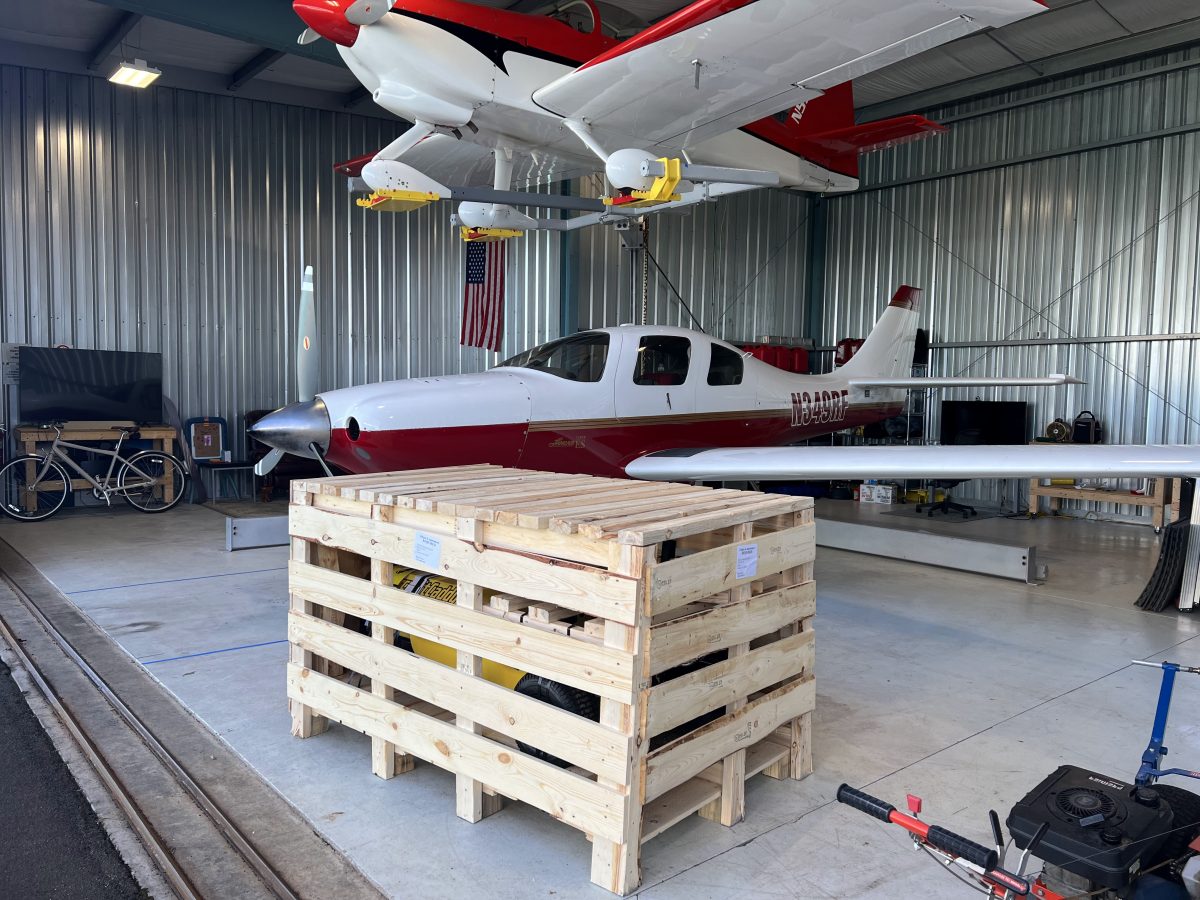
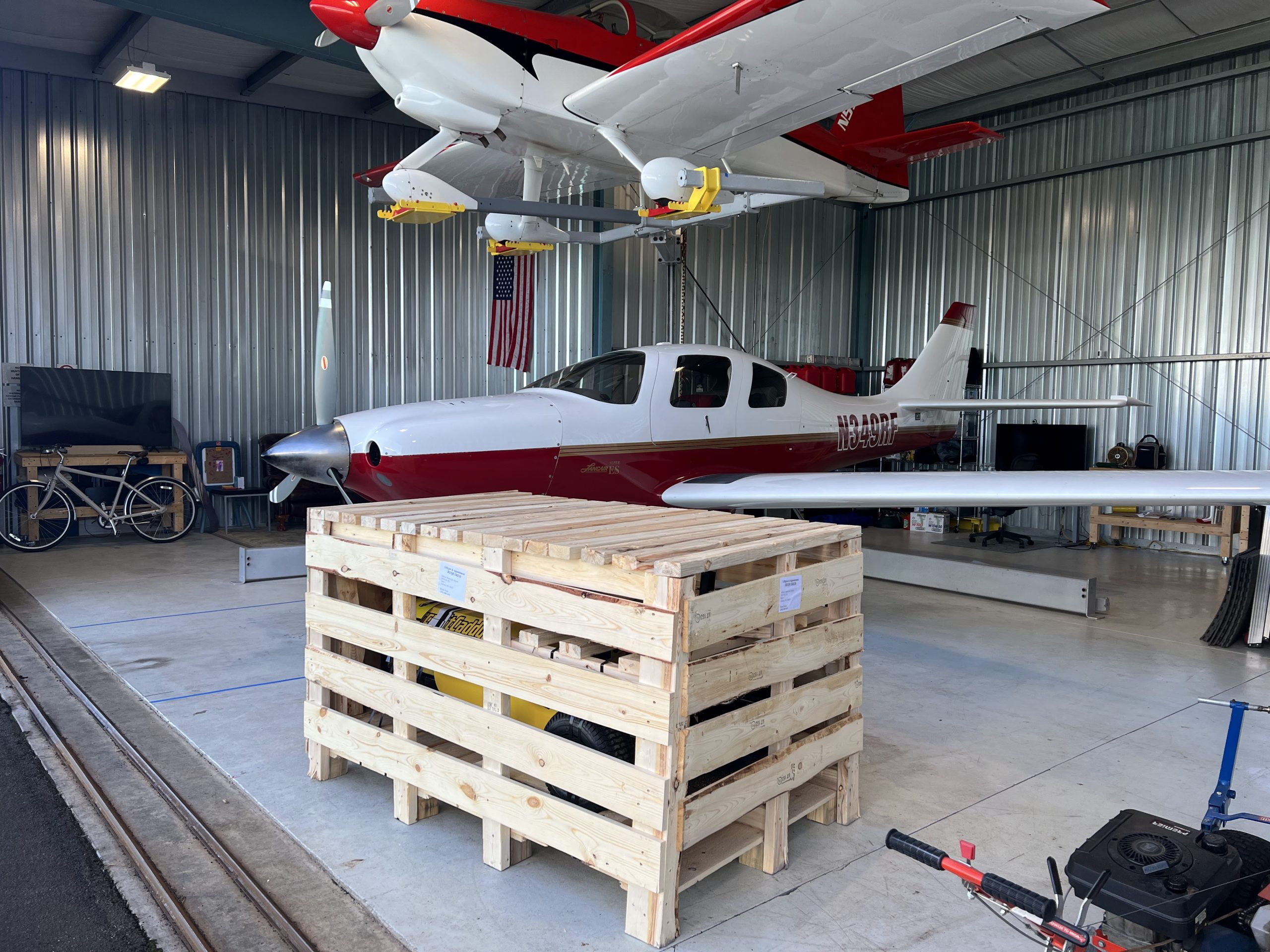
AircraftCaddy in Delivery Crate
AircraftCaddy Delivery

We value our customers, and we love to hear when they have had an exceptional experience with us. Here are some of the things they have had to say about the AircraftCaddy.

The Aircraft

This customer owns a few small aircraft including the Vans RV-6A and Lancair Super ES. They came to us because they were struggling to move their fully fueled Super ES especially if the ground wasn’t dry. They said that given the unusual design of tow plate the AircraftCaddy 4k was the clear winner over the competition due to its ability to tow more weight than they needed and a versatile mounting solution.

Receiving and Operation

When it came to operation of the Aircraft Tug, the client was overjoyed with the whole process form receiving to assembling the AircraftCaddy they said, “I spent more time breaking down the crate than I did getting it open, assembling the tug and operating it.” Operating the tug was also exceedingly easy, so much so that they were able to film the use of the tug with one hand and operate it with the other hand. They were able to remove the aircraft and put it back in the hanger all one handed.

The Benefit of the AircraftCaddy

So, what was the benefit of this tug over the competition? This is what the customer has to say “The ACC 4K just makes it easy. Irrespective of which plane I want to fly, I no longer have the deflating experience of having to worry about how I’m going to get the planes in and out of the hangar, nor do I need to worry about how long it’s going to take.” We will let you make the decision.

If you are looking for solutions for moving aircraft big or small contact DJProducts, Call 800.686.2651 or use the handy online chat feature to learn more from our Sales Engineers.

Testimonial on the Aircraft Caddy

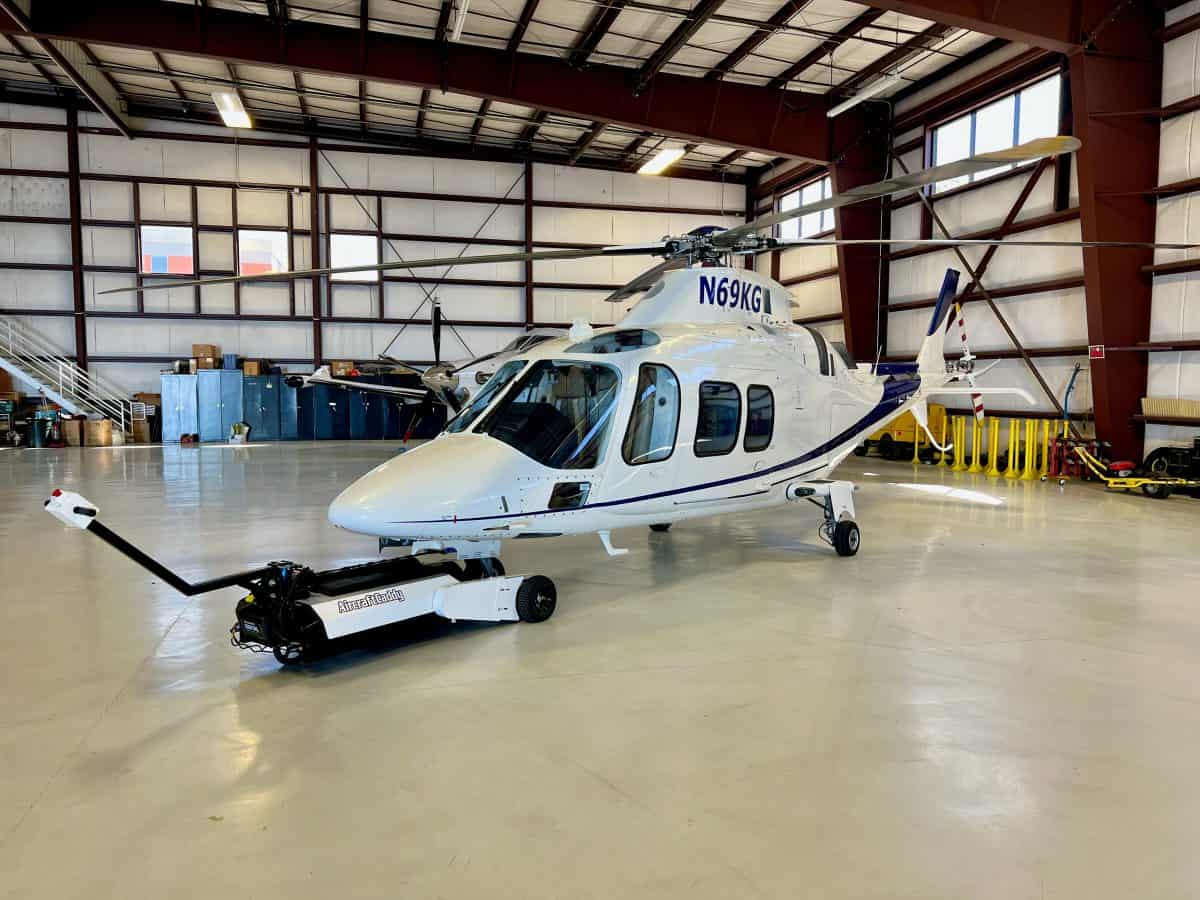
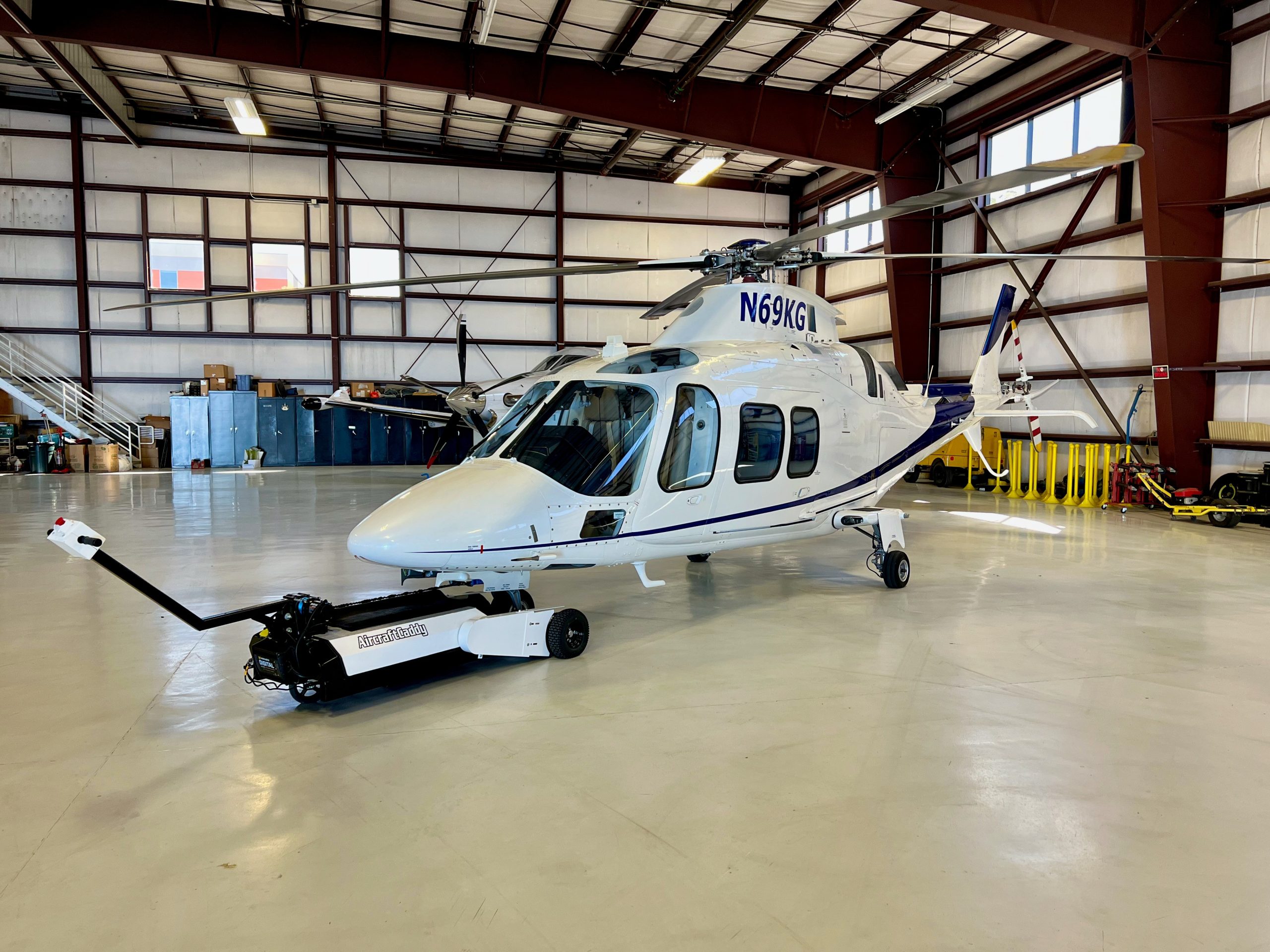
Aircraft Caddy pulling a helicopter

We’ve interviewed a recent customer to help give you insights as to why the DJ Products Inc. Aircraft Caddy is the best air tug on the market.

Q. What make & model of aircraft do you own and how were you moving it before the Aircraft Caddy?

A. An Augusta 109E – the helicopter is new to us, so we needed ground support that was appropriate.

Q. What didn’t you like about it how you were moving it?

A. The alternatives we considered were: 1) a tow-bar and tug which seemed cumbersome, 2) a radio-controlled wheel-tug, and 3) DJ Products Aircraft Caddy. The Aircraft Caddy seemed the most consistent with how we support other aircraft in the hangar.

Q. How did you find DJ Products Inc?

A. A fellow Augusta owner had an older model Aircraft Caddy and spoke highly about the utility.

Q. What was your experience in working with our sales rep on getting info, pricing and placing the order?

A. Our purchasing experience was seamless. We described our needs, and the company responded with a rational proposal.

Q. Was it easy to use and operate?

A. Describe experience in operating the unit? The Caddy works exactly as advertised. It is smooth, quiet, and more than capable of moving a 6500lb helicopter.  Additionally, while we have several other larger tugs in the hangar, it is also occasionally useful to grab the Aircraft Caddy to move a Pilatus around.

Q. How has Sales Support been since receiving the unit?

A. Support has been wonderful.  We had a defective tire that failed early in our ownership.  The company overnight shipped an improved replacement, and we were back up and running quickly.  This has been the only minor issue that required support.

Q. What do you feel is the biggest benefit of using the unit?

A. Cost savings? Injury savings? Efficiency? Safety? This is the perfect tug for an Augusta. It fits under the relatively low nose gear and clears the doors. The control position is far enough forward that an operator can see all the critical areas.  It is a reasonable size and is not obtrusive – even when left attached to the helicopter.

Q. Would you recommend this tug to others?

A. This is an excellent product.

We invite you to visit our Aircraft Caddy page to review all our models models and read detailed specifications.

How Can You Use an Aircraft Caddy?

Aircraft Caddy
Aircraft Caddy at Work

Moving aircraft in and out of hangar spaces presents a two-fold challenge. In addition to their large size, these vehicles are moved outdoors, where surfaces may be uneven or slippery from rain, snow and ice.

The Aircraft Caddy from DJ Products lets a single person move aircraft weighing up to 15,000 pounds. Find out how this battery-powered aircraft tug made a difference for one of our satisfied customers.

The Aircraft Caddy: One Customer’s Story

Our customer predominantly flies a Tradewinds Turbine A36, but also operates a Cessna Conquest 425. Originally, he was using a gas-powered tug, golf cart and four-wheeler to move his planes.

So how did that work out? As he explains, “The gas-powered tug was hard to start, slow and so heavy it was hard to move. The golf cart and four-wheeler required a higher skill level and we have had issues with hitting the hangar as the planes were put in.”

Some friends in Texas were also flying a Cessna Conquest 425, along with a Cessna Conquest 441. They tipped our customer off to the Aircraft Caddy, telling him they had been using one with great success.

Right from the start, our customer was pleased with how easy and efficient the ordering and receiving process was. “The unit was delivered right when it was promised and our Sales Engineer followed up to make sure everything was good.”

Our customer chose the same model being used by his friends in Texas, and he simply calls it “the best caddy we have ever used – simple, fast, and anyone could use it.” He makes a point of saying he has used the caddy on dry, wet and snow-packed surfaces, with excellent result at all times.

One of the benefits our customer discovered is our commitment to excellent service, as demonstrated by the numerous follow-up calls he’s received. In the biggest compliment we could receive, he has recommended our aircraft tug to other pilots at the airport, who have seen it in action.

Aircraft Mover Solutions from DJ Products

How much easier would the Aircraft Caddy make your life? Call 800.686.2651 to learn more from our friendly and helpful Sales Engineers.