

Indie Arts Themed Hotels – An Emerging New Trend

Indie Arts Themed Hotels - An Emerging New Trend
Indie Arts Themed Hotels – An Emerging New Trend

Visitors usually have to go to a local art museum to view and appreciate artwork. However, one hotel company is bringing art to the hotel scene with a bit of creative rebranding. Find out more about this inventive indie arts hotel concept that is expected to change the typical hotel guest experience.

Indie Arts at the Inn

Marcus Hotels and Resorts recently made an announcement that the InterContinental Milwaukee hotel will be adopting this new concept. The idea behind it is to create an intriguing blend of hotel surroundings and amenities mixed with the arts. Among the “Do Not Disturb” signs, powered hotel linen carts and other common hotel sights, guests will also see works of art arranged in curated exhibits.

The hotel also plans on hosting live performances on site as part of the indie arts concept, and guests will be able to watch artists at work at the on-site art studio.

Inspiration and Healing

Where did this innovative idea come from? Marcus Hotels and Resorts believes that the inspiration and healing that the arts provide will enhance the experience of hotel guests. This concept is also a way to pay tribute to Milwaukee’s art scene by displaying works of art from local artists in addition to international artists.

The indie arts hotel should be ready for unveiling by mid-2019. Once the hotel is officially open for business, guests will be able to explore Milwaukee’s art scene in greater detail while enjoying their stay.

If you need powered hotel linen carts to save time and manpower at your hotel, please contact DJ Products. You can also view our entire selection of hotel products to find equipment that helps you run your hotel with optimal efficiency.


Warehouse Key Performance Indicators (KPI) – What You Need to Know

Key performance indicators, or KPIs, have become standard elements of business plans in nearly every type of industry. In your warehouse, KPIs can be used to monitor and evaluate anything from purchases of material handling equipment to workplace safety.

Warehouse KPI's
Warehouse KPI’s – Why Use Them?

Why Use KPIs?

As the saying goes, you can’t know where you’re going until you know where you’ve been. KPIs provide you with specific criteria to evaluate performance in predefined areas. Armed with solid data, you can then make any necessary adjustments to refine the journey toward your company goals.

KPIs for Warehouse Operations

No two companies will have the same KPIs. While there are a number of measurements that are commonly used, the final mix is based on your business plan and what factors you consider important.

Here are some KPIs that apply to major areas in a warehouse business model:

Business Performance

– Gross and net profits

– Costs (broken down by labor, inventory, equipment, etc.)

Operational Efficiency

– Utilization of resources

– Waste

– Order fulfillment

Safety

– Workplace accidents (number of incidents, time lost, etc.)

– Monthly health and accident prevention costs

– Percentage of products and services assessed for health and safety effects

“Green” Practices

– Emissions (CO2, greenhouse gases)

– Renewable energy usage

– Percentage of recycled materials used

– Total energy created on-site

Safe, Efficient and Eco-Friendly Material Handling Equipment from DJ Products

Whatever your warehouse goals are, material handling equipment from DJ Products will help you attain them. Our battery-powered tugs, movers and pushers save on time, manpower and energy while reducing the risk of workplace injuries.

Visit our website and use the convenient online chat feature to learn more. Our experienced sales engineers are ready to help you find the best material handling solutions for your applications.

Tips for Helping Your Long Haul Drivers Manage Fatigue Enroute

Yard Trucks Can Lighten Loads for Drivers and Staff

Tired truckers are a huge problem. One that log books seek to prevent. However, like traffic rule books handed out to green drivers pre-licensure, log books are only as effective as those who follow their tenets. Luckily, CDL drivers can learn how to manage sleep without relying on them.

Get to Know Contributing Factors
Lack of oxygen, bright lights, noise and stress can all fuel fatigue, reducing the capacity to remain alert. While stress is tougher to tackle, oxygen is obvious and easy to address. Cool, fresh air is a fantastic fatigue-buster.

Monotonous, loud noise also has a prolonged fatiguing effect, making tasks difficult to perform. Luckily there’s fantastic tech these days, capable of providing both ear protection and entertainment.

Bright lights can seriously disrupt your concentration at night. Dim those interior lights and look at the fog line – and away from oncoming traffic.

Other Strategies for Managing Fatigue
From navigating yard trucks to planning a long-haul freight route, route planning will quickly show itself an ideal way to combat fatigue: Mapping routes and planning stops for rest in advance assures adequate down time, robbing your ego of “I’ll just try to make the next stop” syndrome and the dreaded ‘full’ rest stop.

Exercise tips from “Trucker Fitness” also don’t disappoint, helping you boost fatigue-busting endorphins and improving sleep quality. You cannot bank good sleep. Avoiding sleep debt/lousy rests actually safeguards sleep quality on-the-road. For those with the means, investing in a more comfortable sleeper unit can net amazing returns.

Are you protecting your employees from the fatigue and strain of shunting semi-trailers? Yard trucks can prevent muscle fatigue, injury, and other risks of moving heavy trailers. Safeguard against worker injury and boost productivity with the help of DJProducts today.

Mobile Technology is Coming to Warehouses in 2018

Make Sure You Are Using the Mobile Tech That Makes Sense for Your Business

The e-commerce market is rapidly expanding as consumers increasingly shift to online shopping. As warehouses and distribution centers spread and expand to meet the expanding needs of today’s online retailers, warehouses are being challenged to turn orders faster in efforts for retail venues to maintain a relevant online presence. To meet this challenge, they’re turning to real-time mobile technology in their warehouse equipment arsenal.

Different from Other Mobile Tech
In the warehouse environment, mobile technology differs from other applications. Used intensely for the duration of worker shifts, workers interact with devices hundreds-to-thousands of times per shift, making optimal design and operation critical to accomplishing tasks at hand, ensuring maximum productivity and accuracy.

Meeting Supply Chain Needs
Serving a range of industries, mobile warehouse technology featuring the latest capabilities, including UHF RFID for tracking warehouse equipment, assets, inventory, and workers, is becoming increasingly affordable.

Real-Time Location Solutions (RTLS) are growing in use and popping-up in warehouses nationwide, with its precision optimizing operational visibility, efficiency and safety.

Shipping warehouses can now scan, count, manage, and search for inventory in real-time, getting a complete picture of inventory at multiple locations. This not only reduces errors and improves customer service, but eliminates much of the legwork necessary for managing stock, pricing, and other product data that previously required a repetitive labor investment.

Compatible with Existing Automation & Technology
The latest mobile technology for warehouses, which is most effective when deployed collectively, is also capable of collaborating with existing and up-and-coming technology. From quick-picking drones to articulating arms working in tandem with sensor-fusion technology, precision industrial processes are the new standard.

Do you have the warehouse equipment solutions you need to remain relevant in today’s rapidly changing retail environment? Improve your operation with DJ Products today.

FedEx Changes Up Its Specialized Logistics and E-commerce Businesses

TrailerCaddy for Semi Trailer Moving

As a leading supplier of semi trailer moving options, DJ Products is always on the lookout for the latest news and trends affecting logistics and supply chain. E-commerce continues to have a major impact on the industry, as delivery and logistics titan FedEx Corp. realigns its specialty units to accommodate this fast-growing segment.

Meeting the Demands of a Changing Industry

In January, FedEx announced that its specialized logistics and e-commerce units are now under the umbrella of FedEx Trade Networks, Inc. As the company’s global freight-forwarding service, FedEx Trade Networks allows for a greater range of resources to serve these robust areas.

FedEx units affected by the restructure include:

– Custom Critical, their rush-delivery service

– Cross-Border, which serves global e-commerce

– Supply Chain, a third-party logistics survivor

– Transport & Brokerage, which offers customs clearance services

The move also marks the launch of a new operation called FedEx Forward Depots, which was created to incorporate on-demand services led by 3D printing.

Leveraging the Power of FedEX

The new unit will be headed up by Richard W. Smith, current CEO of FedEx Trade Networks and son of company creator Fred Smith. At the time of the announcement, FedEx President and CEO David J. Bronczek stated that this move would enable the company to “offer customers the full power” of FedEx’s resources in a more convenient fashion.

Safe and Efficient Semi Trailer Moving Solutions from DJ Products

Don’t sacrifice safety for productivity. With our popular Electric Yard Dog, a single employee can move semi trailers weighing up to 100,000 pounds, improving efficiency while reducing injury risk.

Visit our website and chat with our sales engineers to learn more about our full line of battery-powered tugs, movers and pushers.

OSHA on Dumpsters – Fatalities Do Happen

Most businesses have a dumpster on-site, many of which are pushed, pulled and otherwise manhandled without the help of a waste caddy. Far from the innocuous trash compartments we take for granted, they hold a deadly secret: These bland-looking boxes take the lives and limbs of many office workers annually – and that’s without getting into those who specialize in waste collection.

Not Just a Dirty Job, a Deadly One
Garbage collection comes in at #7 on the list of deadliest jobs, according to the 2009 Bureau of Labor statistics, robbing 25 lives for every 100,000 full time workers. Think because your office staff handles this job on rare occasions that they’re immune? Think again. Based on OSHA reports, dumpster accidents are frequent and serious.

Dumpsters and Trash Compactors Involve Many Overlooked Hazards
Every year, employees are pinned, crushed, punctured, suffer limb amputation, are exposed to chemicals and bacteria, trip and fall, and are even take calls when dealing with dumpsters and trash compactors. Worse, employers overlook these risks, assuming dealing with dumpsters and trash is common sense, and sending employees to deal with the dangers without proper instruction and safety equipment.

Dumpster Safety is Detrimental
It’s important to be aware of hazards and work cautiously around dumpsters and compactors:

– Keep the area free of clutter.
– Never move items within a dumpster with hands/feet, or climb into a dumpster.
– Don’t dispose of hazardous waste in solid waste containers.
– Use caution when opening/closing the lid, noting pinch points and carefully placing hands. Be especially careful on windy days.
– Learn the essential ergonomics of moving dumpsters, or ensure safety with a waste caddy.

Protect your employees and make disposal a snap with a waste caddy from DJ Product. Learn more today.

Diabetes is a Real Problem for Your Long Haul Drivers

Shunting trailers without the help of terminal tractors can be dangerous. And so can hauling those trailers. In recent studies, long-haul drivers have been shown to be exceptionally at-risk of Type 2 diabetes. Lifestyle, a main risk factor in this chronic condition across the board, is to blame.

What is Type 2 Diabetes?
Common in the United States, Type 2 diabetes has experienced a four-fold increase from 1980-2014. Growing in prevalence, this condition affects the way the body produces insulin, limiting its effectiveness in metabolizing sugar.

Drivers Have a Higher Risk of Type 2 Diabetes than Others
A 2010 National Institute for Occupational Safety and Health (NIOSH) study revealed keen insight into long-haul driver behavior and health. Truck drivers have a significantly higher risk of Type 2 diabetes than the average American: 14% of drivers suffer Type 2 diabetes, versus 9.4% of the general population.

What Unhealthy Lifestyle Choices Put Long-Haul Drivers At Risk?
The lonely, sedentary nature of long-haul runs are not conducive to healthy living, nor is eating outside of the home – the only option for drivers on long freight routes. Frequent sleeping away means no or minimal access to healthy, fresh, home-cooked fare.

Tight schedules combined with lackluster rest in strange hotels often increase fatigue and stress, limiting opportunities for exercise. In fact, more than one-quarter of study respondents reported no exercise in the past 7 days. Fifty-one-percent smoked. Sixty-nine-percent were obese (versus 33% of the general population); 17% morbidly obese – 10% higher than the general public. All of these are known risk factors for poor health and diabetes.

Are you safeguarding employees from health issues? Prevent injuries, save time and boost productivity with terminal tractors, the electric yard dog, from DJ Products today.

Amazon Becomes a Competitor to Nearly All Businesses in the New E-commerce Supply Chain

Amazon is Moving Into More Verticals Impacting Sales

There’s a good chance your business relies on Amazon services one way or another. It’s even more likely that you view Amazon Fulfillment as a competitor. One recent survey showed that 92% of distributors are feeling pressure from the online behemoth.

As the supply chain faces increasing pressure these days, how is your warehouse keeping up? Whether it’s picking merchandise faster with fancy robots or moving trailers around the yard more efficiently with a semi truck tow dolly, everyone needs to find an edge.

Top-of-mind concerns for distributors in 2018, according to Supply Chain Dive, include:

– Emerging technology

– Online sales

– Outsourced warehousing

– Regulatory effects on pricing

Constant change is the new norm. Amazon’s acquisitions frequently remake the landscape. Distributors find themselves partnering with Amazon Fulfillment even as the company feels like a competitive pressure. It’s becoming more likely that your warehouse serves as a commerce distribution center rather than a transport service for shipping goods to brick-and-mortar stores.

So, what does all this mean? The supply chain industry must operate as efficiently as possible while embracing new technology and equipment to stay lean.

Ship Faster with a Better Terminal Tractor

Speedy warehouses are only effective when the products can get on the road faster. Are you paying licensed shunt truck drivers to move trailers in and around the docks?

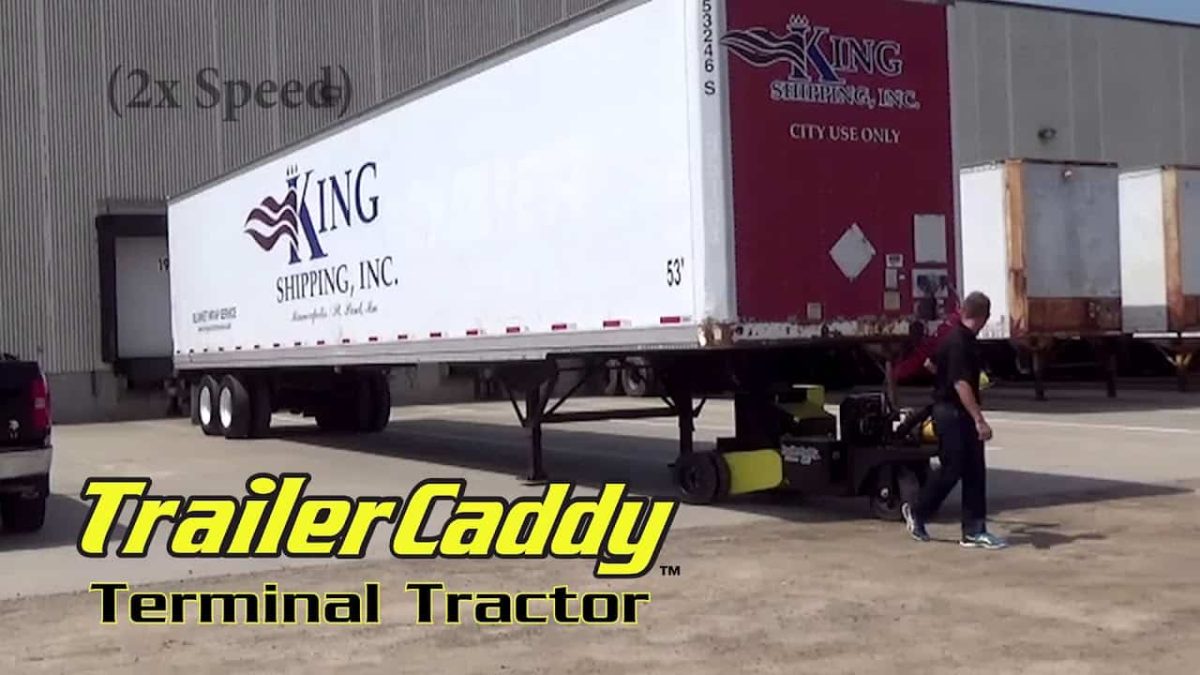
A highly maneuverable semi truck tow dolly like our TrailerCaddy Electric Yard Dog makes quick work of moving trailers. It’s safer, faster, less expensive to buy, and less expensive to operate.

Find out what the TrailerCaddy semi truck tow dolly can do to streamline your warehouse distribution and help your business operate as efficiently as the online giants. Contact DJ Products for a free demo or more info.

Tips for Improving Warehouse Efficiency

Expect the Unexpected

Warehouse management can often feel like a circus juggling act as you struggle to keep everything up in the air. Does your warehouse equipment help or hinder productivity in your warehouse? Here are four more tips to help you “keep your eye on the ball” and optimize warehouse efficiency.

Tips for Improving Warehouse Efficiency

1. Keep Aisles Clear of Obstructions

Leaving empty pallets or unshelved merchandise sitting in the aisles “just for a minute” can stretch into hours or even days, increasing the likelihood of accidents. Make sure employees are in the habit of keeping the aisles free of anything that doesn’t belong.

2. Optimize Warehouse Design to Meet Workflow Needs

Minimizing travel time is key to improving productivity. Design storage and layout of your warehouse to reduce the number of times a product has to be touched, eliminating need for time-wasters such as repalletizing or restacking.

3. Analyze Order Processing Cycle Time

Do you know how long it takes to process the average order in your warehouse? One distribution center was stunned to discover that less than 40 percent of their order processing cycle time was spent in actually working on the order. Analyze your current order processing steps and identify weak spots.

4. Establish a Culture of Safety

Workplace accidents have both short- and long-term effects on your overall productivity and the injured worker’s health. Enforce use of appropriate safety equipment, train employees in proper procedures and post safety tips and reminders in visible places.

DJ Products: Your #1 Choice for Safe and Efficient Warehouse Equipment

DJ Products offers a comprehensive line of battery-powered tugs, movers and pushers to accommodate the needs of any application. Visit our website and use the convenient online chat feature to learn more.

How to Become a More Efficient Logistics and Terminal Manager

How to Become More Efficient at Your Job
How to Become More Efficient at Your Logistics and Warehouse Management Job

As a logistics and terminal manager, semi trailer moving is just one of your many responsibilities. How do you keep operations moving smoothly and effectively in the face of business growth? Here are valuable tips for improving productivity while reducing expenses.

1. Plan Ahead

The tried-and-true 5 P’s – “Proper planning prevents poor performance” – are still words to live by. In addition to optimizing available time, resources and manpower, planning makes you better equipped to handle any unforeseen circumstances that arise.

2. Embrace Automation

Information is a crucial management tool, and technology provides more extensive and accurate data than what has ever been available before. Automation saves time and eliminates the mistakes that occur during manual data collection.

3. Make Customer Service a Priority

“A chain is only as strong as its weakest link” has become a cliche because it’s true. Implement regular training classes and workshops that encourage all employees to work at their highest level.

4. Use Appropriate Warehouse Management Methods

Excellent warehouse management involves maximizing utilization of space and manpower in relation to the type of goods. Set specific procedures and goals so that employees understand the importance of their roles in smooth workplace operations.

5. Streamline Transportation

Transportation is one of the largest expenses in logistics and supply chain. Review and upgrade routing, packaging and other factors that affect delivery.

6. Analyze Metrics

The most detailed data in the world is useless on its own. Analyze data to find out what works and what doesn’t, and make appropriate changes.

The Electric Yard Dog from DJ Products

Our popular TrailerCaddy terminal tractor lets employees perform semi trailer moving up to 100,000 pounds safely and efficiently. Visit our website for real-time assistance from our helpful sales engineers.