

Will Your Drivers’ Workdays Be Extended to 17 Hours by the Feds?

Will Your Drivers' Workdays Be Extended to 17 Hours by the Feds?
Will Your Drivers’ Workdays Be Extended to 17 Hours by the Feds?

For decades, hard-working drivers have called for changes to be made to the hours involved in their workdays. Now a proposal to extend 14-hour days to 17-hour days in a workday has been brought to the table. Because of this newest development, valid concerns have emerged. What do longer hours mean for the overall health of drivers? Or for those who rely on the safe transport of goods?

What can be done to reduce possible accidents? Employing fail-safe technology like battery operated semi trailer movers provides simple solutions to address dangerous exhaustion that arises as a result.

You Are Not a Machine

One recent article questions if extending the hours in a workday are worth the risk. Do drivers recognize their need for rest? Will they adhere to the strict safety policies and revere the constraints placed for their safety and to ensure a higher quality of service?

More than three-fourths of truck drivers are clocked in at over 50 hours a week. Sadly, some of them are even encouraged to falsify their work diary. Close to half say they follow that implied mandate for fear of losing their job. Those hard-working drivers need someone in their corner to help them complete work safely and take their load when others won’t.

We Do When Others Don’t

At DJ Products, we quit the guesswork, and rely on premiere equipment to ease the issues that can result via overworked employees. Our quality semi trailer movers utilize precise speed control and require no special licensing to operate. We let busy drivers rest so our machinery can do the heavy moving. Safety is important on the job. Our products not only safeguard quality products but improve a diligent employee’s quality of life.


Tips on Hiring Temporary Warehouse Staff from a Temp Agency

Tips on Hiring Temporary Warehouse Staff from a Temp Agency

In a survey sponsored by warehousing and transportation company KANE, a flexible workforce was the second-most sought-after feature in a third-party logistics (3PL) provider. If you use temporary labor as a way to manage demand spikes, there’s more to it than making sure they can operate your warehouse equipment.

Managing temporary workers is not the same as managing your permanent workforce. Here are some valuable tips to optimize productivity and minimize problems with temporary labor.

1. Work with the Same People Whenever Possible

Maintain a log of temps you have employed along with a brief evaluation of their work. When you’re ramping up your staff, specifically request the associates who have done the best job for you.

2. Establish a Standard Training Protocol

No matter how experienced temps may be, you can’t afford to “wing it” with a few minutes of on-the-spot training. Create a program that outlines everything a temp needs to know to be a productive team member and build presentation time into that day’s schedule. Don’t forget to include information about the company’s culture and general policies.

3. Allocate Workloads Strategically

Leave the essential and more complicated tasks to your full-time staff. Assign temps to easier, less critical jobs.

4. Make Safety a Priority

Don’t assume that temps are familiar with basic health and safety practices, even if the procedures are industry-standard. Provide temps with written guidelines to safe working practices and emergency policies.

Maximize Safety and Efficiency with Warehouse Equipment from DJ Products

Our battery-powered tugs, movers and pushers are safe and easy to operate for both full-time and temporary workers. Visit our website and use the convenient online chat feature to learn more from our cheerful sales engineers.

Fuel Haulers Embrace 30-Minute Break Exemption

Fuel Haulers Embrace 30-Minute Break Exemption

What does a 30-minute break exemption mean for the fuel haulers who work more than 12 hours each day? Quite a lot actually. For short haul runs that are under 100-miles, fuel haulers can now avoid taking the federally required 30-minute breaks. The more time they have alotted to haul and unload with no lag between jobs the better it is for their bottom line.

Similarly, a terminal tractor that helps move trailers into position without hard labor–the more cost-efficient it is for time-conscious drivers.

Watching the Clock

Close to 40,000 truck drivers now can benefit from the 30-minute break exemption. Those thousands of haulers will bring more business to other industries as well. This newest exemption could mean more hauling/unloading and a busier schedule for fuel haulers. While this can be a positive change, more hauls also could increase labor.

Don’t worry! Technology advances can help address any issues that present themselves. Precision machinery can drive those in the trucking industry to better profit margins.

Investing In Solutions

The best machinery ensures deadlines are met, safety guidelines are followed, and labor is lowered. A premium trailer tractor can do the difficult work so a driver on a time clock doesn’t have to. As the old adage says “work smarter not harder.”

DJ Products is a company that ensures time management and safety precautions are equal in priority. The products we offer our clients, like our terminal tractor, keep the most important things in focus. Your safety, your bottom line, and your efficiency are important to you. Visit DJ Products and find out why what matters to you matters to us as well!

New Powered Housekeeping Cart for Linen & Cleaning Carts

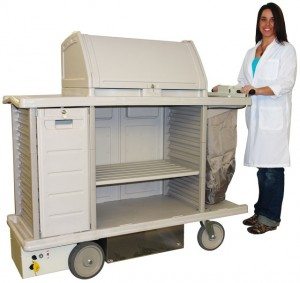
DJ Products, Inc. of Minneapolis has introduced a walk behind self-propelled, battery powered housekeeping cart that transports cleaning and linen supplies used for housekeeping in the hospitality industry. The Powered Housekeeping Cart is motorized for moving supplies used for daily duties in hospitality and hospital environments, eliminating the manual pushing of these heavy supplies and linens, especially where carpeting makes them very difficult to push.Powered Housekeeping Cart

Continue reading “New Powered Housekeeping Cart for Linen & Cleaning Carts”

Are Load-Boards Right for You and Your Fleet?

Kenworth Previewed Hydrogen-Powered Semi Truck at Consumer Electronics Show
Could Load-Boards Work for Your Fleet?

In the trucking industry, the process of semi trailer moving is often filled with unknown variables. Reliable machinery, logistics and increased efficiency will improve the working relationships between owners, brokers, and shippers.

The utilization of Load Boards can be a positive tool when used to benefit warehouses, product acquisition, and transactions, but it can also bring added challenges. One quality machine can help bring assurance to all the moving parts involved. The addition of a premium terminal tractor will provide a reliable constant to unpredictable operational hazards.

Who Needs Load Boards?

For start-up companies, new or small business owners, using a Load Board is a simple way to accrue the resources needed to ensure product delivery and acquisition. Deadlines are important for increasing profit margins. A Load Board is utilized to post loads, available transportation for delivery and acts as an extra line of communication between owners, shippers, and brokers.

If you’re a broker and need a load to be delivered ASAP and can’t find a truck, a Load Board can help. But trusting an unknown shipper/truck driver or broker to handle a transaction appropriately can be an experience in uncertainty.

How They Handle Loads

If you’re working with an inexperienced driver, new warehouse workers, or a large load, our TrailerCaddy can benefit your bottom line. Late drivers and warehouse workers (that need a little help negotiating through unloading/loading) can inadvertently freeze product delivery and thus lower profit.

Efficient use of time in the industry benefits everyone. A TrailerCaddy makes semi trailer moving simple, allowing warehouse workers to move loads where needed and inexperienced drivers more efficient at unloading and loading so they can move on to the next job. Visit DJ Products to discover simple answers to complicated tasks!

World’s Shipping Industry Sets Aggressive Goal to Obtain by 2050

World's Shipping Industry Sets Aggressive Goal to Obtain by 2050
World’s Shipping Industry Sets Aggressive Goal to Obtain by 2050

Are you using an eco-friendly electric terminal tractor to handle your semi trailer moving needs? The global shipping industry has fully embraced a green mandate with an agreement to cut carbon emissions in half by the year 2050.

Seeking an International Solution to Carbon Emissions

The landmark deal was finalized on April 13 by members of the UN International Maritime Organization. Plans call for a minimum 50 percent total reduction in greenhouse gas (GHG) emissions against the benchmark measure of 2008.

During the two-week discussion period held in London, not all of the organization’s 173 member nations were initially in accord. Saudi Arabia and the United States raised objections to earlier drafts, while some members, including the Marshall Islands and the EU, lobbied for higher reduction goals.

In the end, stakeholders expressed satisfaction with the final terms of the agreement. Peter Hinchcliffe, secretary general of the International Chamber for Shipping, called it a “clear signal” for the shipping industry to develop zero carbon dioxide fuels.

The Fight Against Global Warming

The United Nations Paris climate agreement of 2015 did not include aviation and shipping. While the aviation industry subsequently forged its own emissions plan, shipping’s reliance on bunker fuel to run long-distance ships presented a greater challenge.

Shipping currently produces approximately two percent of carbon emissions worldwide. Experts at the World Bank have warned that the figure could eventually reach 15 percent if steps are not taken to halt growth.

Go Green with the Electric Yard Dog from DJ Products

Our battery-powered TrailerCaddy terminal tractor easily accommodates semi trailer moving up to 100,000 pounds. The Yard Dog is ergonomically designed and includes a number of safety features to reduce the risk of workplace injuries.

Call 800.686.2651 for more information.

How Much Does a Dumpster Weigh? Are You Unknowingly Putting Employees In Harm’s Way

Are You Expecting Staff to Move Very Heavy Loads in Dumpsters Potentially Causing Injury?

Dumpsters are the most convenient way to handle trash disposal for your business, office building or multi-family property. But how much do you understand about the task of dumpster moving? Are you unwittingly putting your employees at risk of serious injury?

Dumpsters: Small but Mighty

Since dumpsters are on wheels and trash is contained within four sturdy sides, moving them from one spot to another may not seem like a problem. As with many other situations, appearances can be deceiving.

All-purpose dumpsters generally come in sizes of two yards, four yards, and six yards. These numbers sound relatively modest, partly because dumpsters are designed to be compact enough to fit in unobtrusive locations in the workplace.

Volume Does Not Equal Weight

You may be surprised to learn that dumpsters can accommodate weights of 400 to 1,400 pounds of waste. This means that the average male weighing 200 pounds would be moving up to seven times his total body weight.

Another factor to consider is that size and weight are not always proportional. For instance, a sheet of paper on its own is almost nothing so you can fit many of them into a box, but in bulk paper makes a heavy load.

Another example is cardboard boxes, which can take up a lot of space even when they’re broken down, but they’re relatively light. Such a load can be easily outweighed by a small container holding scrap metal.

Electric Dumpster Moving Tugs from DJ Products

Dumpster movers such as our popular WasteCaddyLite let a single employee easily move full dumpsters weighing up to 2,000 pounds with less risk of workplace injuries. Visit our website to learn more from our friendly sales engineers.

Three Tips to Keeping Your Warehouse Staff Cool in Summer’s Heat

Workers In Distribution Warehouse

Heat is a good thing when you’re lying on a beach near some refreshing water, but not so much when you’re working indoors in scorching summer temperatures. With doors frequently opening and closing, relying strictly on air conditioning can be a losing proposition. Keep warehouse staff productivity up on hot days with these “cool” tips.

  • Make sure your warehouse has the proper amount of insulation. This will also help the building stay warm during the winter.
  • Adding a coat of white paint to the roof deflects the sun’s rays, reducing the amount of heat building up in the warehouse.
  • Stagnant air feels much warmer. Ceiling and floor fans keep the air circulating  so that it feels cooler. Ceiling fans have seasonal settings so that air blows downward in summer and gets drawn upward in winter. Industrial ceiling fans use high volume and low speeds to compensate for the frequent opening and closing of doors.
  • Use vinyl strip doors on the docks to allow easy in-and-out access while reducing the movement of air. Place solar film overlays across windows to cut down on heat.
  • While using exhaust fans to dehumidify the air will reduce heat, misting fans and evaporative coolers are also helpful.
  • Encourage your employees to drink plenty of water regularly, not just when they’re thirsty.

Excessive stress and strain on the job can intensify the effects of heat on your warehouse staff. Battery-powered tugs like our CartCaddy 5WP allow your employees to easily move heavy, awkward loads. Call 800.686.2651 and let our knowledgeable Sales Engineers help you find the best solution to increase your warehouse productivity.

Words of Wisdom: Make Sure to Read the Fine Print on the Load Rate Confirmation

Young cheerful photographer with beard, while working in his office
Read the Fine Print on Load Rate Confirmations

A number of companies use our terminal tractor to increase efficiency in their yards, but what happens when a facility doesn’t share that sense of urgency? One husband-and-wife owner-operator trucking team recently shared their story of a great job that turned into a disaster to warn about the importance of reading the fine print on the load rate confirmation.

Too Good to be True?

After delivering a load in Phoenix, Gary and Ondena Caraway were left without an outbound job. Ultimately, they found and booked a job for Amazon through Mercer, the carrier from which the Caraways lease their truck. The job required a deadhead into Las Vegas, but the rate seemed to be enough to make it worthwhile.

The first sign of trouble came when the Caraways dropped their trailer at noon for loading. While it was promised for 4 p.m. that same day, it wasn’t ready for pick-up until 4:30 the next morning.

An Unpleasant Surprise

The Caraways left Las Vegas on Thursday afternoon with an appointment to deliver the load to the Amazon facility in Edwardsville, IL at 4 a.m. the following Sunday. On the way, Gary pulled up Mercer’s mobile app to complete the required documentation.

At that point, Gary noticed the fine print stating that unloading time was 12 to 48 hours. As if that wasn’t bad enough, the process ended up stretching out to a full week. Based on the number of bobtails the Caraways saw at a nearby truck stop, they’re convinced that theirs was not an isolated situation.

Move Trailers Safely and Efficiently with the Electric Yard Dog from DJ Products

Time is money, and our electric terminal tractor lets you optimize your operations for maximum productivity. Call 800.686.2651 to learn more.

Coast Guard Wants to Fast Track Production of New Icebreaker Ship

Coast Guard ship docked at the Portsmouth harbor in New Hampshire.
The Coast Guard is Working to Upgrade Ships

The Coast Guard is eager to design and build the first of six new icebreakers ahead of the previously proposed schedule. The Polar Star is the sole Coast Guard heavy icebreaker still in operation. It was commissioned in 1976 and is now frequently down for repairs.

Suppliers of government and DoD military contract equipment must adhere to (GSA) processes and demonstrate they can produce top quality products efficiently and quickly. There are currently five companies vying for the contract, but bids remain open to anyone capable of completing the project. Rear Admiral Michael Haycock announced in April of 2018 that the Coast Guard hopes to take delivery of the first new icebreaker by the end of 2023.

“It’s a little bit like a marriage”

According to Military.com, the initial plan had a delivery date of 2028. The rough condition of the Polar Star necessitated the delivery date be pushed up to 2023. The Polar Star crew had to contend with numerous breakdowns during the most recent season at sea. Problems ranged from a flooded engine room to a failure of one of the three main gas turbines.

Haycock said he knows it’s going to be a challenge for designers and builders to meet the updated timeline. He compared the situation between the Coast Guard and contractors to a marriage saying, “If you’re equally unhappy, you know you probably got it right.”

At DJ Products, we understand the requirements of companies that produce DoD military contract equipment. We have high standards for our equipment and customer service. We have a wide line of materials and equipment movement solutions that meet military and DOD requirements. Contact us to speak with one of our sales engineers and to arrange a product demo.