What Is Material Handling?

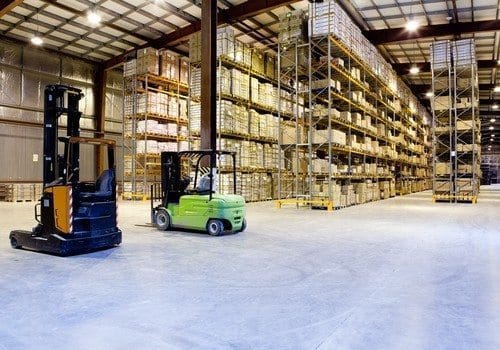
Say the words “material handling” and many people think of forklifts carrying pallets across a warehouse floor. But material handling is so much more. There isn’t an industry or business that doesn’t handle materials, whether it’s steel on an auto assembly line or boxes of paper in an office. If you buy, sell or use anything (i.e., materials), it has to be moved and that, in its most basic essence, is material handling.

Efficient material handling can reap huge rewards for businesses. It can markedly increase efficiency, eliminate unproductive and duplicate efforts, improve production completion time and decrease worker accidents and injuries — all of which decrease costs and improve your bottom line. The key to maximizing your material handling investment is versatility. Material handling equipment that can be easily tasked to multiple uses, used by workers of any age or size, and that can maneuver easily in any environment, whether across an open floor or down a crowded corridor, will give you maximum return on your investment.

DJ Products is the nation’s premier manufacturer of ergonomically-designed electric carts and motorized cart pushers, the most versatile material handling equipment on the market today. DJ Products makes carts, pushers and movers for a wide variety of applications, from heavy industrial environments to hotel and hospital settings to retail establishments. We make heavy-duty tugs capable of moving 20,000 pounds of heavy equipment down an assembly line. We make compact cart pullers that can quietly move linen carts down a crowded hotel corridor or maneuver diagnostic equipment around a cramped hospital room. We make specialized equipment for the automotive industry that can just as easily maneuver cars, trucks or even trailers across a storage lot as around a showroom floor. And that’s just a sampling of the uses customers have found for our products.

But it’s ergonomic design that sets DJ Products’ equipment apart. Ergonomic design ensures that the equipment, not the worker, carries the load, significantly decreasing the risk of expensive and debilitating musculoskeletal injuries to employees. Ergonomic design assures optimal equipment management by any operator, no matter his or her age, physical size or strength. Adjustable features, strategically located and carefully designed controls, superior maneuverability in tight spaces, and excellent safety features are built into every DJ Products cart, pusher and mover.

Visit the DJ Products website today for complete information about our full line of ergonomically-designed material handling equipment.
Electric Mover Turns Workers into Supermen!

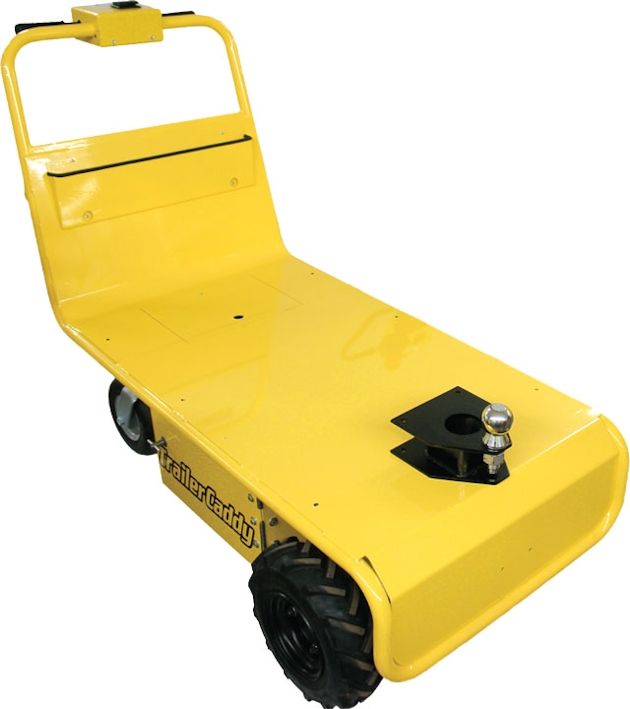
TrailerCaddy Motorized Trailer Puller
We admit it isn’t faster that a speeding bullet, and you won’t find leaping tall buildings in the specs; but it can make you feel more powerful than a locomotive. If you’ve ever wanted to flex Superman muscles but your body is more Clark Kent, our incredible TrailerCaddy electric mover is just what you’ve been looking for. This powerful DJ Products electric mover turns ordinary workers into Supermen and Superwomen, allowing them to effortlessly transport heavy trailers and vehicles — no tights or capes required!DJ Products’ versatile TrailerCaddy electric mover pushes and pulls trailers that require lifting on one end before maneuvering. Heavy equipment trailers, RVs, campers and boats are easily moved down assembly lines, from manufacturing plant to storage lot, across dealer lots, on and off showroom floors, or into position at trade shows — no need to hook up to a truck when you need to move these vehicles short distances, just slide in the TrailerCaddy and a single worker can do the job, effortlessly. Click here to watch a video of DJ Products’ amazing TrailerCaddy in action.

Like all DJ Products electric mover, the TrailerCaddy electric mover is ergonomically designed to take the strain off workers. The sore backs, strained muscles and exhausting overexertion that plague workers who wrestle with large trailered equipment are eliminated by DJ Products’ ergonomic design features. Any worker of any size or physical ability can easily move trailers, vehicles or equipment using DJ Products’ electric TrailerCaddy trailer mover. Ergonomic design significantly decreases worker injuries and their associated medical, insurance, worker’s compensation and lost man-hour costs, representing a considerable savings to employers.Less bulky than traditional equipment, DJ Products TrailerCaddy electric mover is sleek, compact and designed to maneuver easily in tight spaces, diminishing potential damage to surrounding parts and equipment when moving bulky vehicles. The ergonomic variable speed twist grip prevents carpal tunnel syndrome while allowing operators instant and complete control over the unit at speeds of 0 to 3 mph in both forward or reverse. A high tech speed controller, neutral throttle braking and electric adjustable acceleration/braking ensure safe operation and maximum operator control of the unit. Click here for complete specs on DJ Products’ TrailerCaddy trailer mover.

Technology Changes the Way Material Handling is Performed in 2015

Large warehouse
Business Growth and Automation

When your business grows, can you handle the surge in labor? Technological advances in material handling are making things easier with automation. From manufacturing equipment, to warehouse distribution, to shipment — industrial tugs and other automated material handling solutions are driving growth in all industries.

Forecasts through 2019 call for a compound annual growth rate of more than 8 percent in the material handling industry. The numbers from BCC Research point to high-tech advances ranging from robotics to wearable tech as a source of growth for the next 20 years.

Tech that Makes Material Handling Faster, More Agile

Buzzwords like scalability and flexibility have been around for years. The new tech available are turning those concepts into a key part of everyday operations.

Consider the effects of adding industrial tugs to a warehouse. With a manual wheeled cart, a single employee can only move “X amount” of products around the warehouse floor in a given day. With a motorized tug that pushes or pulls the cart, the employee avoids the physical strain of maneuvering the heavy items all day.

Busier than usual one day? Automated solutions help your existing workforce accomplish more. If order volumes vary by day or season, a warehouse can keep costs down with a right-sized workforce using smart solutions that provide the flexibility and scalability required at all times.

Growing Your Business with Automated Material Handling

If your staff moves inventory, equipment, or vehicles around the worksite, we have industrial powered carts to increase productivity (and reduce worker injury, too).

Check out the WagonCaddy and other industrial tugs at DJProducts.com for more info.

MHIA Launches New Overhead Group

With a plethora of fatal crane accidents peppering the news this year, crane and hoist manufacturers are taking some safety cues from their ergonomically-savvy brethren in the material handling industry. Joining with the Material Handling Industry of America (MHIA) to form the just-launched Overhead Alliance (OA) group, crane, hoist and monorail industry organizations will be promoting alternative methods of lifting and moving materials that reduce accidents, improve workplace health and safety, reduce product damage, improve workflow, lower costs and reduce environmental impact.

Focusing the combined resources of the Crane Manufacturers Association of America (CMAA), Hoist Manufacturers Institute (HMI) and Monorail Manufacturers Association (MMA), OA will give these affiliated trade associations a common voice within the material handling community. Over the next year, OA plans to launch a campaign promoting safer, healthier, greener alternatives to traditional lift trucks for lifting and moving materials, including the use of bridge, gantry and jib cranes and hoists. Not only are lift trucks notorious gas guzzlers, they account for the majority of serious and fatal material handling accidents.

OA will make its national debut at MHIA’s ProMat international exposition in January 2009 where it plans to emphasize the “lean and green” (i.e. ergonomic and energy efficient) benefits of overhead lifting to handle materials. Safe procedures for manual handling and ergonomic lifting that are designed to improve workplace safety and protect workers’ health are also on OA’s promotion agenda.

Material handling equipment that minimizes manual lifting and carrying prevents injuries. The U.S. National Institute for Occupational Safety and Health (NIOSH) reports that back injuries, primarily from improper lifting and carrying of light loads, cost American businesses $10 to $14 billion in workers’ compensation costs and nearly 100 million work days annually.

A world-leader in the production of ergonomic carts for moving and lifting material and equipment, DJ Products manufactures ergonomically-designed, energy-efficient electric and battery-powered cart pullers, pushers and scissors lifts. Already “lean and green,” DJ Products material handling equipment is built to be energy-efficient while maximizing the health and safety of your workers. Visit our website for complete information on DJ Products equipment for manufacturers, warehouses, logistics centers, retailers, hospitals and the hospitality industry.

What It Will Take to Succeed in Business in 2009

A small business owner I admired embodied three qualities that got him through many tough times in the material handling business: innovation, positive thinking and hard work. These same qualities can help us weather the current storm successfully.

Innovation. A great believer in innovation, my friend was the first in his region to buck the industry and offer new electric-powered forklift trucks and hand-operated movers when they first came on the market. Decades ago he foresaw the advantages of cleaner, more efficiently powered material handling equipment. Had he still been in business, he’d have been among the first to embrace safer, ergonomically-designed, even more energy efficient, battery-operated material handling equipment. Embracing new technology as it becomes available positions you to reap the rewards of improved energy efficiency, increased maneuverability, innovative safety features and greater flexibility of use.

Positive thinking. Even during tough times, my friend was a great believer in the power of positive thinking. He ran his business and lived his life in accordance with a quote from Henry Ford that he kept prominently displayed on his desk: “Whether you think that you can, or that you can’t, you are usually right.” My friend would have been the first to see the opportunities in a depressed market. Bargains abound for the savvy businessman. This can be a good time to expand your territorial or product base by partnering with or buying out a faltering competitor. Depression of the construction industry has led to aggressive pricing in commercial markets making this a good time to build or expand facilities. This can also be a prime time to upgrade your technology. Many firms are offering unbeatable deals or deferred payments to stimulate business. Plant and business closures are also creating great deals on used equipment.

Hard work. My friend knew that positive thinking alone never accomplished anything. No slouch when it came time to roll up his sleeves and get dirty, another favorite saying was, “God helps those who help themselves.” To survive the current recession, you’re going to have to be innovative, flexible and forward thinking; but you’re also going to have to reign in unnecessary expenses, tighten up financial practices, maximize worker and production efficiency, and work hard to stay ahead of the competition.

Moved Wheeled Equipment Safely with Powered Movers

Have wheels, will travel? This phrase may apply to people with cars but it does not necessarily apply to carts used in industrial and warehouse settings. Sometimes moving even well designed wheeled equipment and machinery is no simple task. This is where a power tugger or cart mover from DJ Products can make a big difference. Our material handling solutions make it possible for one operator to move heavy-duty wheeled equipment with a reduced risk of injury.

With carts that are heavy but don’t seem ridiculously heavy, there is the temptation to go ahead and push or pull it—just get a couple of workers and the job will be done, right? Well, maybe. The job might be done…but your employees may experience damaging muscle strain afterwards.

A DJ Products CartCaddyShorty power tugger is a motorized cart mover manufactured to help transport carts or equipment that require turning and that can typically be pushed or pulled with one or two people. Perhaps if workers pushed or pulled these loads once or twice they’d be okay. But when a few workers repeatedly strain to transport heavy loads at work, this can take its toll on their musculoskeletal system.

Our CartCaddyHD cart mover can be used to maneuver carts or equipment of up to 50,000 pounds forwards or backwards as needed. It has a mover arm that can be used for a variety of carts and equipment so your employees won’t need to spend time trying to fashion different attachments.

Call us at 1-800-686-2651 to talk to a Sales Engineer about these and other material handling solutions for your business.

Michigan Poised to Adopt Ergonomic Standard

A new initiative in Michigan could presage an expected federal push to mandate ergonomic equipment and procedures in business and industry. Last week, Michigan state regulators unanimously voted to advance a proposed state-wide ergonomic standard. Unless blocked by the state legislature, as a similar initiative was in 2006, the new standard could take effect this year.

If implemented, Michigan would follow California, becoming the second state in the U.S. to implement its own ergonomic rules. While the federal government has established ergonomic guidelines for many industries, they are currently voluntary, although that is expected to change. During his campaign, President Obama promised to enact tougher workplace safety standards early in his administration.

With the unanimous support of the state’s General Industry Safety Standards Commission and the Occupational Health Standards Commission, Michigan political analysts believe that, this time around, any efforts to block the proposed state-wide ergonomic standard will fail. Supporters of ergonomic equipment and procedures point to their proven record in reducing preventable injuries that each year cost businesses millions of dollars in medical and insurance costs, worker’s compensation claims, and lost man-hours. According to Michigan’s Worker’s Compensation Bureau, about 40% of worker’s compensation claims paid in 2006 and 2007 were related to preventable ergonomic injuries.

The proven ability of ergonomically-designed material handling equipment to prevent repetitive stress and musculoskeletal injuries and reduce concomitant production and human resources costs is well documented by the U.S. Department of Labor and the Bureau of Worker’s Compensation. While opponents have expressed concern that Michigan’s ergonomic imperative will increase the cost of doing business in a state already struggling to survive economically, statistical and experiential evidence show that return on investment in ergonomic equipment is generally realized in the first year of ownership.

Michigan’s proposed standard would “assess risk factors that may contribute to work-related musculoskeletal disorders and establish a minimal rule for training,” according to the Michigan Department of Energy, Labor and Economic Growth. The standard will only apply to general industry businesses, not construction. Public hearings must now be held by Michigan’s Occupational Safety and Health Administration (MIOSHA) before the rule can be formally adopted, possibly as early as this summer.

Global Competition Requires New Strategies

Not so long ago some were predicting the death knell of U.S. manufacturing. As the recession brought Detroit’s Big Three to their knees, put the brakes on consumer spending, forced massive layoffs and shuttered cash-strapped plants across the country, American manufacturing seemed to be in its death throes. But as they say, what doesn’t kill us makes us strong. Strong competitors assimilated weak ones. Loose financial and operational practices were tightened. Costs and expenses were pared down. From the assembly line to the board room, American manufacturers are running a tighter ship — and it seems to be paying off. Manufacturing declines have been slowing since December. In July new orders resulted in the biggest production jump in more than two years. Customers are beginning to restock and assembly lines are running again. The light at the end of the tunnel is getting brighter; but there is concern that unless U.S. manufacturers make major changes to their business model, the light could still go out. 

A recent national study found U.S. manufacturers distressingly unprepared to compete in an increasingly global economy. Conducted by the American Small Manufacturers Coalition in conjunction with Manufacturing Extension Partnership, the Next Generation Manufacturing Survey polled more than 2,500 U.S. manufacturers. The report identified six essential next generation strategies manufacturers must adopt to compete successfully in global markets:

  • Customer-focused innovation
  • Talent recruitment, development and retention
  • Systemic continuous improvement
  • Supply chain management and collaboration
  • Sustainable product and process development
  • Global engagement

More than 25% of American manufacturers — over 90,000 firms — were considered at risk because of their inability to meet world-class achievement levels in any of the six strategies. Unless U.S. manufacturers are able to adopt next generation strategies, America may not be able to compete in global markets.

Charting the Future of Material Handling Solutions

Over the last several years the material handling industry has become an integral part of logistics and supply chain management. Today it stands poised to break out onto the global business stage. This is the vision of George Prest, head of the Charlotte, NC-based trade association MHI, the foremost advocate for the material handling sector.

Prest began implementing this shift when he became CEO of what was then Material Handling Industry of America just over two years ago. The organization became rebranded to MHI to advance its scope beyond domestic limits. He also presided over the launch of Modex, a biennial trade show incorporating all aspects of supply chain along with material handling. The next show is scheduled to open March 17, 2014 at the Georgia World Congress Center.

A key initiative has been the birth of the U.S. Material Handling and Logistics Roadmap. Industry members gathered with academics and consultants to brainstorm ideas regarding challenges to be faced over the next 12 years and action plans to address them. Their findings are in the process of being formalized and an early draft of the report began circulating in late 2013.

These events correspond with Prest’s belief that the future is something to be embraced, not feared. He’s excited about the changes in logistics and supply chain and how material handling is the thread that unites them.

DJ Products is proud to be part of such a vital and innovative industry. Our material handling tugs offer solutions for a variety of applications including hospitals, hotel, warehouses, factories and aircraft. Contact our Sales Engineers at 800.686.2651 to learn how we can help answer your material handling questions.

Ergonomics = Respect for Workers

Companies that value and respect their workers are proactive about ergonomics, said Peter Budnick, PH.D., founder, president and CEO of Core 3, Ergoweb and Ergobuyer, at a recent material handling conference. “A well formulated ergonomics strategy supports and accelerates continuous improvement in any organization, facility or supply chain.”

Integration of ergonomic practices and equipment into manufacturing and business operations improves productivity, waste reduction, quality control and safety. Ergonomics can operationalize a company’s respect for people, said Budnick, who added that many companies misunderstand ergonomics and therefore don’t recognize its value. He considers ergonomics “essential in an effective continuous improvement system” in any business or industry. 

Ergonomics takes a human-centered approach to task and tool design. It recognizes differences in the individual characteristics and capabilities of workers and strives to accommodate those variables in the design of equipment and structuring of tasks. The goal of ergonomics is to prevent soft tissue, repetitive motion, repetitive stress and musculoskeletal injuries. Nearly half of all lost work days can be attributed to musculoskeletal injuries. These injuries cost U.S. industry more than $61 billion per year in lost productivity and an additional $20 billion in annual medical and workers compensation benefits.

The value of respecting workers has been proven time and again. Toyota has made it a pillar of its business execution plan. When workers are valued, productivity and quality increase while injuries and negativity decrease. Implementation of an ergonomics program is an important way to show workers that you respect them and value their health and safety. In formulating an ergonomics program, evaluate tasks, equipment and work environment for the following factors:

  • force applied
  • awkward or fatiguing postures
  • repetition or frequency
  • duration, both of the task and the number of times per day it is performed
  • vibration
  • contact pressure
  • velocity of movement
  • environmental factors including lighting, temperature, noise, etc.

The goal of ergonomics is to eliminate the discomfort and stress these factors cause workers. On the DJ Products website, we provide a handy Ergonomic Load Calculator that can assist you in evaluating the force needed to move loads in particular workplace environments. Our experienced staff can assist you in designing ergonomic solutions to that will benefit your workers and increase productivity.