

Alaska’s Governor Sets Up Task Force to Evaluate Enhanced Rail Usage

Alaskan Weather Can Be Cold and Brutal. Minimize the Time and Labor your Employees Spend Outside with a Railcar Mover.

Alaska Governor Bill Walker has good reasons for establishing a task force to analyze the possible benefits of a commuter rail service that would connect Anchorage and the Matanuska-Susitna Valley. Commuter rail lines reduce pollution and traffic congestion. Cities with commuter rail stations often see economic growth, new businesses, and new jobs. DJ Products helps rail yards operate more efficiently with solutions like our railcar movers. They allow one person to move up to 200,000 pounds simply and safely.

Alaska Commuter Rail Advisory Task Force

According to Railway Age, initial findings of the task force are due to Governor Walker by May 31, 2018. The task force is made up of several mayors and some transportation experts. The commuter rail would connect the two largest population centers in The Land of the Midnight Sun.

The initial costs of commuter rails often lead many to oppose their construction. However, commuter rails are less costly to maintain than highways. Commuter rails decrease traffic congestion, while adding additional highway lanes does not. The sole transportation link that currently connects the two Alaska communities has a daily average of 50,000 drivers.

Other benefits of commuter rail lines

Commuter rails consume less energy per passenger mile than automobiles and it saves time and money for passengers. Both commercial and residential property values typically increase with the introduction of new commuter rail service to communities. In addition to the economic benefits, rail lines are less harmful to the environment than large highways.

Our battery-powered railcar movers are also energy-efficient and economically beneficial. They reduce workplace injuries and workers comp claims. By allowing one person to smoothly move large rail cars, they maximize manpower. Contact DJ Products for more information and a demo.
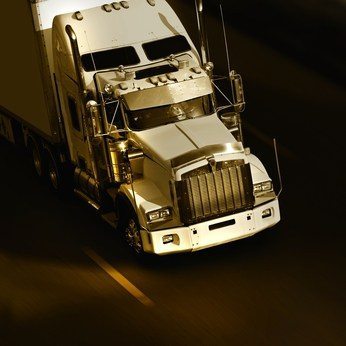

Tips for Keeping Your Semi Truck Fleet in Top Shape

Tips for Keeping Your Semi Truck Fleet in Top Shape

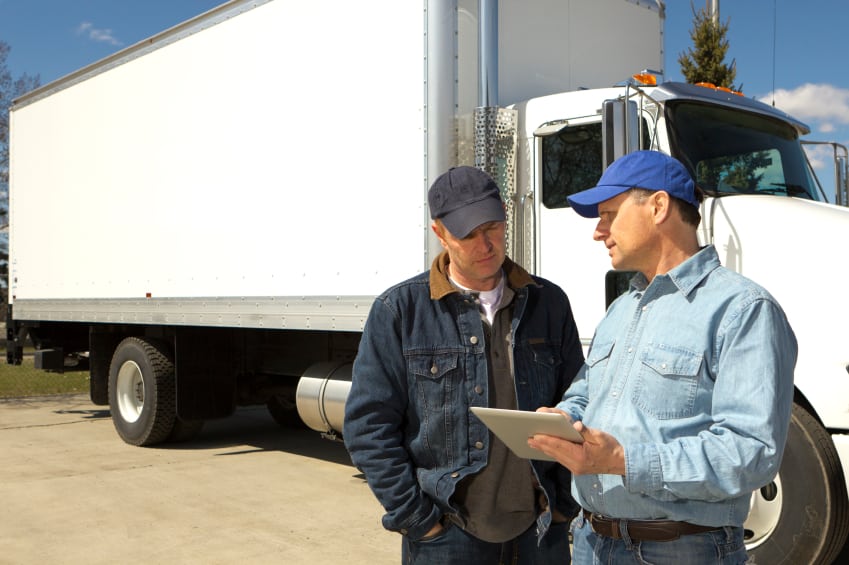
When trucks aren’t working, your company pays a heavy price in lost productivity and increased expenses. Keep your semi truck fleet in top operating shape by using a semi trailer mover and following these standard maintenance tips.

Semi Truck Fleet Maintenance Checklist

– Check oil levels regularly, especially before the start of long-haul jobs. Lack of oil can trigger extensive damage in the truck’s engine, which is expensive to repair or replace.

– Check the radiator and its overflow bottle. Top off radiator fluid as needed and repair small leaks immediately. It’s no fun getting stopped dead in your tracks thanks to an overheated engine.

– Tires with low pressure can reduce fuel mileage and interfere with steering, while over-inflated tires are vulnerable to punctures and damage from road debris. Check tire pressure weekly, and more often during times of weather changes or extensive highway driving.

– If your trucks have dual fuel tanks, parking sideways on a hill causes fuel to run into the lower tank. Once the engine is started, the fuel uptake system will pull in air instead of fuel. Make it a practice to park front to back rather than side to side on slopes.

– When trucks sit idle for a period of time, insects can build nests that block the fuel vent. Be sure to check the vents on any trucks that haven’t been moved in a few days.

– Have the brakes checked frequently to address problems before they go too far.

Electric Semi Trailer Mover Solutions from DJ Products

Our best-selling Electric Yard Dog lets a single employee safely and easily move trailers weighing up to 100,000 pounds. Visit our website and learn more about our battery-powered semi trailer mover from our sales engineers.

A Safety Checklist for Warehouse Managers – What to Put Into Action

A Safety Checklist for Warehouse Managers - What to Put Into Action
A Safety Checklist for Warehouse Managers – What to Put Into Action

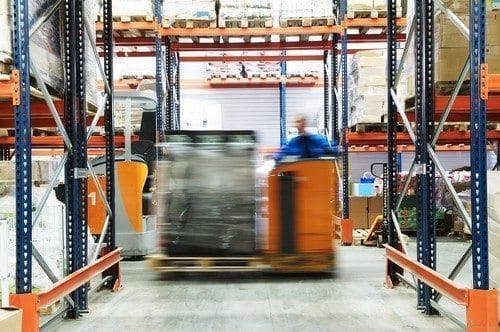
As a warehouse manager, you can improve productivity and employee morale by being proactive about safety. Upgrade working conditions by using warehouse tugs and implementing this checklist of safety practices.

1. Create a Culture of Safety

Establish a shared concern for safety among employees. Set mandatory standards and communicate expectations through verbal and visual reminders, including safety tips posted in appropriate areas.

2. Review Workplace Conditions

Maintaining a safe workplace is an ongoing job. Conduct regular walk-throughs of the warehouse with an eye out for blocked aisles, exposed electrical cords and other common safety hazards.

3. Hold Training Sessions

Schedule periodic training to reinforce safety behavior and update employees on current regulations. Encourage questions and discussions and give occasional pop quizzes to keep awareness high.

4. Recognize and Reward Safety Practices

Recognition is always an effective way to internalize behavior. Start a program that allows employees to nominate co-workers who have demonstrated excellent safety practices and provide rewards.

5. Establish a Safety Committee

Involve employees directly by creating a safety committee that empowers them to take responsibility. Members can take questions and concerns from other workers, follow through on solving problems, and taking charge of training programs.

6. Have Clear Emergency Procedures

Provide first-aid kits, fire extinguishers and other emergency safety equipment and make sure everyone knows where they’re located. Emergency exits should be clearly marked and all employees should know the protocol for evacuation in case of fire or other dangerous situations.

Warehouse Tugs: An Effective Solution for Workplace Safety

Electric warehouse tugs from DJ Products include a wide range of safety features to reduce the risk of workplace accidents and repetitive-use injuries. Visit our website and learn more about our full line of material handling equipment.

Tips for Keeping Your Warehouse Staff Safe from Forklift Injuries

Tips for Keeping Your Warehouse Staff Safe from Forklift Injuries

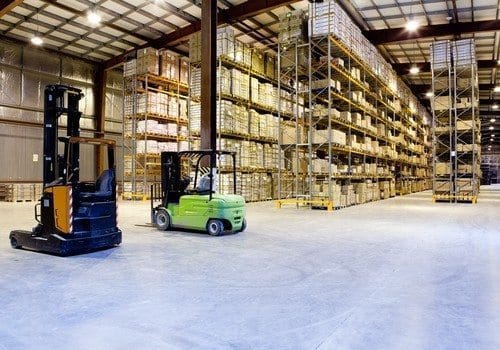
If your business doesn’t have the advantage of tugger carts, and is relying on forklifts for the movement of products and inventory, safety training is essential to prevent dangerous and costly accidents. You can’t just hop-in and go – it takes more than a little traditional driving experience to operate these heavy machines.

Tips for Safe Forklift Operation
Employees should be fully trained and qualified to operate lifting equipment, not only for their own safety, but for that of your staff as well.

– Pre-Operational Safety
Operators should have clean, dry hands, and begin by examining the forklift for damage, including steering, brakes, mast, tires, and other control issues. Drivers should buckle-in for operation, adjusting seating and mirrors for comfort and safety.

– Load Stability
Before moving loads, always ensure they are securely and stably positioned across both forks, and within permissible heights.

– Movement
Survey surroundings for staff/obstacles before driving. Know site rules, including speed and height limitations, and staying on designated paths. Remain vigilant of people and surroundings, keeping your distance from employees, objects and vehicles. Ensure a safe stopping distance. (You can control your maneuvers – but not those of others.) Be mindful of bumps, debris, loose road surfaces and clearance issues, watching for signs of load limits.

– Ramps
Drive forward up the ramp; down in reverse.

– Delivery
Do not move/unrack the load unless visibility is optimal. Keep your body clear of the lowered mast to avoid serious injury. Do not let anyone near/under the machinery or forks.

– Safety
Never leave a running forklift unattended. Park in designated areas with forks lowered and park brake engaged. Always remove the key.

Keep workers safe from forklift injuries. Discover more about tugger carts from DJ Products today.

Warehouse Management Tips: What Type of Leader are You?

Warehouse Management Tips: What Type of Leader are You?

Warehouse managers are responsible for a wide range of tasks in order to keep their operation running as smoothly and efficiently as possible. While some leaders don’t mind overseeing employees and finding ways to encourage them, others would rather spend their time handling tasks, such as selecting new equipment for warehouses.

If you’re among those who don’t necessarily enjoy being in charge of others, you can still be an outstanding manager. The following tips can provide you with some insight on how to make the most of your skills.

Focus on Problem Solving

One of the most effective ways to ensure that your warehouse keeps running as efficiently as possible is by putting an emphasis on problem solving. Have workers engage in coming up with ways to handle problems that come up in day-to-day operations. Having challenges to face at work can provide workers with motivation to do their best on the job.

Delegate Leadership Tasks

When possible, find employees that have earned your trust by proving to be dependable and highly competent. Assign certain leadership tasks to these employees rather than having to handle all of them on your own. Giving these tasks to trusted employees helps boost morale in the workplace while also giving them a reason to trust and respect you.

Improve Communication

Having solid communication skills is one area that you can’t compromise on. If you struggle with communication, work on improving those skills in order to encourage your workers to put forth their best efforts on the job.

If you need high-quality equipment for warehouses that helps improve safety and productivity, contact DJ Products. We carry a wide selection of equipment that allows your workers to do their jobs more efficiently.

What to Know and Do When OSHA Makes a Surprise Visit

What to Know and Do When OSHA Makes a Surprise Visit

Does your warehouse maintain appropriate safety standards? Is your material handling equipment in good working order? An OSHA inspection can occur when you least expect it, so use these guidelines to be prepared at a moment’s notice.

During the Opening Conference

– Wait until designated management personnel are on site.

– Ask for a copy of the complaint and determine whether the inspection is safety- or industry hygiene-related.

– Designate an employee representative. If your warehouse is organized, a union official may serve. If not, choose a member of your safety committee.

– Limit the scope of the investigation to areas corresponding to the complaint.

During the Walk-Around

– Stay with the inspector at all times, but involve as few others as possible.

– Provide information only when asked, and don’t go beyond the parameters of the questions.

– Take pictures of anything the inspector photographs.

– Keep copies of any documents requested by the inspector and take detailed notes of the walk-through, recording the areas inspected, how much time was spent in each and the names of any employees who were interviewed.

– Repair minor violations on the spot to show good faith.

– If the inspection is related to industrial hygiene, find out what tests OSHA will be conducting and consider having simultaneous testing done by a third party.

During the Closing Conference

– Listen carefully and take notes.

– Be conservative when establishing timelines for correcting any violations.

– Refrain from arguing with the inspector.

– Discuss your company’s established safety programs to demonstrate your commitment to good health and safe working conditions.

Material Handling Equipment that Exceeds OSHA Standards

Ergonomics are not regulated by OSHA, so use of our material handling equipment shows your concern for the health and safety of your employees. Visit our website for more information.

Should You Be Tracking Your Semi Trailers by GPS?

Should You Be Tracking Your Semi Trailers by GPS?

Innovative products and new developments in technology can improve efficiency in your trucking business. GPS tracking of your semi trailers can be a valuable tool for your fleet managers. Motorized trailer dollies from DJ Products maximize manpower while preventing injuries and damage to property. If you don’t currently use GPS on your trailers, consider these benefits of 24/7 asset tracking.

Different trackers for different needs

There are GPS devices available at affordable prices for every size of company and for every type of trailer in use. You have the option of advanced systems that constantly monitor speed, location, and can allow managers to label which trailers are full and which are empty using color codes. You can also opt for lower cost systems that simply help monitor trailer locations.

Very affordable to operate and maintain

GPS tracking units use low-voltage, internal batteries that operate for long periods of time without needing recharges. They can also alert fleet managers when their power is disconnected. This is just one of the many ways GPS trackers help prevent loss due to theft.

Easier to compile driver and cargo data

The electronic logging device (ELD) rule went into effect in December 2017 and applies to logging devices for truck activities. Currently, there are no requirements for cargo and trailers. However, with GPS tracking on trailers, fleet managers can easily monitor driver activity and track deliveries in real time.

At DJ Products, we specialize in providing affordable, energy-efficient, user-friendly solutions that help businesses just like yours operate more profitably and safely. Our motorized trailer dollies make it possible for one person to easily move trailers weighing up to 100,000 lbs; no CDL or health card required. Contact one of our sales engineers for more information.

Should You Consider Cloud Services for Logistics Management?

Should You Consider Cloud Services for Logistics Management?

Still using local software for logistics management? Cloud-based services have taken hold in this industry like so many others. Perhaps you like your current solution and live by the motto, “if it ain’t broke, don’t fix it.” On the other hand, sitting still can be dangerous. Logistics in the cloud can be more efficient and scalable—and perhaps surprisingly, also more secure.

Cloud services help you know exactly where your inventory is and where it needs to be. As the makers of TrailerCaddy yard dog trucks, we know how much agility and safety matter at a warehouse or distribution center and how they can benefit your bottom line. Terminal tractors keep each trailer positioned exactly where it needs to be.

Benefits of Cloud-Based Logistics Management

The experts at Inbound Logistics recently offered a rundown of why warehouse and transportation firms should be using cloud-based WMS or TMS for logistics:

– Reduced IT costs

– Scalable for growth or seasonal fluctuation

– Enhanced data security (more redundancy)

– Business continuity and backup disaster recovery

– Internet of Things for labels, tags, sensors, etc.

In practical terms, moving to the cloud means your data is always backed up. Services have a predictable monthly cost and software updates occur automatically. When technology changes, your cloud services provider will already be a step ahead. Cloud storage is a great way to improve distribution efficiency.

DJ Products Electric Yard Dog Trucks

What happens on the ground matters as much as what’s in the cloud. Our TrailerCaddy Terminal Tractors are high-performance, low-cost yard dog trucks that don’t require a CDL driver. Move any trailer up to 100,000 pounds with tight maneuvering and better safety.

Ask DJ Products how our yard dog trucks can improve logistics and supply chain management.

Warehouse Efficiency – Top Tips from Industry Experts

Warehouse Efficiency - Top Tips from Industry Experts
Warehouse Efficiency – Top Tips from Industry Experts

As your preferred material handling equipment supplier, our primary goal is your success. A panel of industry experts was recently asked to reveal each person’s single best tip for increasing warehouse productivity, and we’re sharing the best answers with you.

What’s the Single Best Way to Improve Warehouse Productivity?

Optimize Pick Routes

It’s a basic equation: the easier it is for employees to perform their tasks, the more they can complete. Review pick routes and modify them as much as possible to have them end close to the packing and dispatch area.

Control Inbound and Outbound Freight Costs

When it comes to eating away at profits, freight charges are at the top of the list. Hire a consultant to help you bid more competitively. The profit will more than pay for the expense.

Incorporate Mobile Computing

Studies show that each step by a warehouse employee costs four cents. Replace fixed workstations with mobile ones that allow associates to process data on the spot.

Use Digital Communications

Accurate communication keeps operations running smoothly, but it’s difficult to keep everyone on the same page when they’re constantly in motion. Create a centralized digital workplace hub that includes communication and chat apps along with productivity software.

Invest in Quality Equipment

Hardware often seems like an obvious place to cut costs, but it frequently ends up being counterproductive when productivity suffers because employees don’t have the right tools to perform their jobs.

Electric Material Handling Solutions from DJ Products

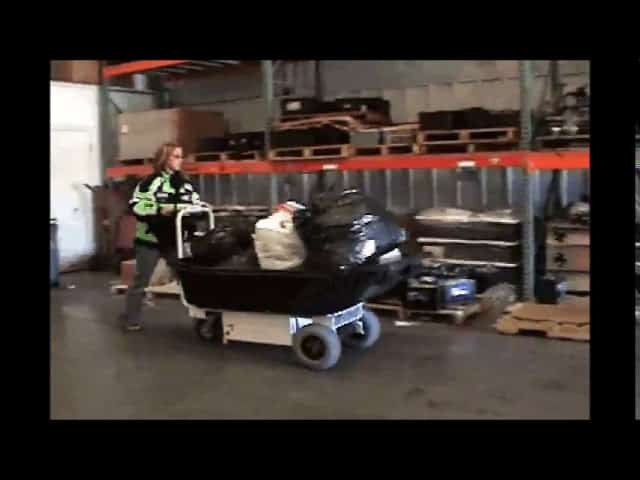
Battery-powered movers such as our popular CartCaddyLite are cost-effective ways to improve efficiency and safety while reducing expenses. Call 800.686.2651 to learn why DJ Products is your first choice for a dependable material handling equipment supplier.

Experts Share Their Tips on Running More Efficient Distribution Centers

Experts Share Their Tips on Running More Efficient Distribution Centers

As a warehouse manager, you undoubtedly understand just how important it is to find ways to boost productivity. Increased productivity helps ensure that all tasks are handled promptly and efficiently, no matter how busy your warehouse is. While using certain types of equipment, such as a powered trailer dolly, can improve productivity, there are several other ways to accomplish this as well.

Offer Easy Access to Top Selling Products

One of the most effective ways to increase warehouse productivity is by making sure that all of your best-selling products can be easily reached. Providing convenient access to these products makes it easier for warehouse employees to reach them and prepare them for shipping.

Invest in an Automated Inventory Management System

This type of system helps you maintain more accurate inventory management. Having greater accuracy means that you will know when inventory items are getting low, so you can restock. It also means that you will not end up with too much inventory for items that do not sell as well. Maintaining accurate inventory levels also helps boost your profitability.

Seek Input from Employees

Warehouse managers can also talk to employees about ways to increase their productivity. Turning to employees can help managers come up with effective ways to help them perform their jobs more efficiently. Managers can hold periodic meetings with employees to brainstorm new ways to become more productive and put these suggestions into practice. Getting employees involved helps boost morale, which can also lead to a boost in productivity.

At DJ Products, we offer equipment that can help you increase warehouse productivity. If you need a powered trailer dolly or another piece of equipment for your warehouse, please visit us to view our entire selection.