
Tips to Retain Skilled Warehouse Staff and Lower Turnover

Improve Productivity of Your Order Pickers
Skilled Workers Help Your Operation with Improved Efficiency

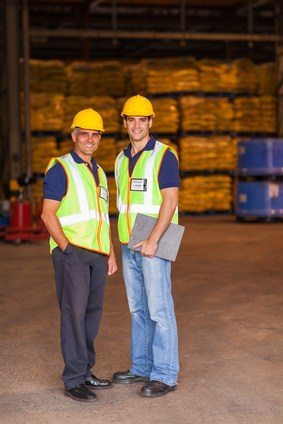
No matter how state-of-the-art your warehouse equipment is, your business won’t be successful without skilled workers to operate it. Growing competition for a shrinking pool of qualified labor makes today’s workforce more fluid than ever before.

High turnover has a negative impact on productivity and profitability. Here are some strategic ways to attract and retain high-quality warehouse staff members.

Offer Good Benefits and Working Conditions

Everyone works for a paycheck, but money is not the only factor candidates look for in a desirable job. Experts cite unhappiness with company culture and limited career paths as major reasons why workers change jobs.

In addition to salary, consider these benefits when creating an employment package:

– Incentives such as bonuses, paid time off and off-site team-building activities

– Healthcare insurance

– Access to training and education

– Well-defined career options

Make Jobs More Attractive to Younger Candidates

As the workforce ages, the millennial generation has been reluctant to fill in the gap. Invite schools to visit your warehouse and learn more about the advantages of a career in supply chains and logistics. You can also set up apprenticeships or internships for local students.

Be Flexible with Working Hours

Traditional shifts are difficult to manage, especially since many companies now operate around-the-clock. An annualized hours model keeps payroll consistent while staffing is flexible to accommodate fluctuations in activity.

Analyze, then Train

Training is required for new employees, new warehouse equipment and new technology. Carefully assess your needs to ensure that the right people are trained for the right jobs.

DJ Products: Tomorrow’s Warehouse Equipment Today

Our tugs, movers, pushers and other electric warehouse equipment incorporate the latest innovations in technology and safety. Call 800.686.2651 to find the perfect solution for your specific applications.


What’s Impacting Your Hotel Revenue in 2018?

Has Your Hotel Room Reached its Full Potential?

Is your hotel seeing the amount of revenue growth you were anticipating in 2018? Our hotel supply movement carts are valuable for improving room turnaround times, but there are other important factors that affect occupancy and average daily rate (ADR) increases.

What steps can you take to raise the bottom line? Here are four current trends you can leverage to positively impact your hotel’s profitability.

Resort Fees

While resort fees have long been a standard practice in destinations such as Las Vegas, hotels in urban markets have only recently begun introducing them at their facilities. Resort fees aren’t subject to occupancy tax, which makes them a good way to gain additional revenue without raising room rates.

Labor Costs

The rising costs of benefits, particularly healthcare insurance, are in turn making labor increasingly expensive. Forecasts and budgets have to be drawn up carefully to accommodate these ongoing changes.

Operators are also taking a closer look at labor-intensive amenities that may cost more than they’re worth. For example, some hotels now provide turndown service on request as opposed to an automatic feature.

Guest Experience

Hotels often remodel during upswings in anticipation of the next downward turn in the cycle. When properties are all comparable in terms of updated decor and facilities, customer service and the overall guest experience become the best ways to set yourself apart from the competition.

Business Travel

As companies across the board look for ways to become more profitable, business travel becomes an expense to cut back or eliminate altogether.

Boost Productivity with Hotel Supply Movement Carts from DJ Products

We offer a wide range of hotel supply movement carts that let your staff perform housekeeping tasks safer and more efficiently. Visit our website for more information.

Amazon: Changing the Face of Logistics Forever

Is the Future of Warehousing all Digitized and Robotic?
With the Growing Presence of Technology, It Makes You Wonder How the Future Will be in Twenty Years.

Are your yard trucks scrambling to catch up with Amazon’s fulfillment strategy? Amazon.com has a reputation for changing the shipping industry with its bold, innovative ideas. How will the trickle-down effect of such changes affect your business?

Rapid Response

Amazon’s dominance in the retail industry is courtesy of its uber-efficient supply chain, which it’s continuously evolving to deliver products in the quickest way possible. Their 2005 introduction of 2-day ‘Prime’ shipping changed the industry, leaving competitors scrambling to keep up. (When they did, Amazon introduced 1-hour shipping.)

Accomplished via sophisticated information technology, a vast network of warehouses, multi-tier inventory management, and unparalleled transportation has Amazon’s supply chain at the head-of-the-pack worldwide.

A Logistics & Retail Giant

Amazon’s supply chain relies heavily on outsourced inventory management: Third-party sellers comprise 82% of sales. However, it doesn’t rely on third-party shipping logistics, insourcing shipping via its own delivery vehicles for same-day/1-hour shipments.

Amazon also offers greater shipping options, including 1-hour, 1-day, 2-day/Prime, first-class and ‘free-super-saver.’ Warehouses are strategically placed with location and size key to success. Each warehouse is ever-closer to metropolitan/city centers: 70 fulfillment centers nationwide and a staff of 90,000 make the most of its ‘pure-push’ strategy for warehouse-sourced sales.

Storage is divided into 5-areas:

– Prime books/magazines

– Pallet/full-case Prime high-demand storage

– Prime high-demand items (less-than-case)

– Irregularly-shaped/low-demand inventory (reverse-storage)

– Modern-demand, small items

Amazing Automation

Amazon Robotics pick/pack without human assistance, speeding shipments. 45,000+ robots bring goods to people for picking. (Next-gen robots will pick, and drone-based delivery testing continues…)

Manufacturing to Support Retail Sales

Amazon’s realization it could provide third-party items more cheaply/quickly to customers have prompted Amazon to enter the manufacturing arena as well.

Scrambling to keep up with Amazon’s shipping standards? Give your operation a boost with yard trucks from DJProductstoday.

eCommerce Warehouse Needs Are Boosting Commercial Real Estate Investment

Buying Online Is Only Going to Grow in the Future.
Transportation concept. Isolated on white

Are your tugger carts operating on prime real estate? E-commerce has online retailers shopping for commercial space. Duke estimates over the next few years, another 339-million square feet of industrial space will be needed.

Low Space Availability Drives Up Prices, Spurs Development

In an assessment by Morningstar Credit Ratings, trends in the industrial real estate sector point to a strong demand for warehouse space as e-commerce and manufacturing explode. This has resulted in reduced space availability, encouraging developers to create more. For every billion in online sales, over 1-million-square-feet of warehouse space is needed.

Stock from the online retail giant Amazon, with its 70-fulfillment center’s nationwide, is seeing earnings power increase with every dollar of net e-commerce sales growth. Though growth in this sector has posed challenges to the retail sector, it’s been a boon for others, including industrial REITS

This drives demand for logistics landlords who can turn ‘flex’ space into an industrial real estate goldmine. Rental space in this sector is likewise seeing an increase in rental rates and demand as vacancies dry up and e-commerce platforms expand.

Can Anything Stop the E-Commerce Boom?

The biggest threats to the e-commerce industry, and subsequently industrial real estate, outside the obvious – a highly unlikely decline in online purchases, include the very real threat of a decline in manufacturing activity. Given continually escalating tariffs, an outright trade war isn’t entirely out of the realm of possibility.

Should the sector experience a downturn, however, the supply end of the industrial real estate spigot could be turned off relatively quickly, allowing for a quick return to market equilibrium.

Can your tugger carts handle the e-commerce boom? Grow with the burgeoning industry with the help of DJ products today.

Tire Safety Tips Every Semi Truck Driver Should Know

Maintaining Your Vehicle Is of the Utmost Importance When You're on the Road Often.
Maintaining Your Vehicle Is of the Utmost Importance When You’re on the Road Often.

Is your semi trailer mover toting unsafe equipment? Keeping an eye on the condition of the tires on both your trailer and hauler is key to avoiding costly citations, worsened gas mileage, and potentially deadly wrecks. Put these things on every pre-inspection checklist to ensure a safe, efficient arrival at your destination…

Air Pressure Check

Inform yourself about tire air pressure specifications for your tires and load, making sure tire pressures are at the proper setting for your hauler and cargo. Use an accurate gauge, checking when tires are cold (pre-trip), ensuring adequate pressure and avoiding under-inflation. If maintaining air pressure is a problem, inform your maintenance department ASAP. Low pressure is a major cause of blowouts, fires, and other tire issues.

Check Tire Wear and Damage

Uneven tread wear is a sign of improper air pressure and potential alignment issues. Now, not later, is the time to check for and manage air leaks, axle alignment, tire repair and replacement needs.

Tread Check

Low tread depth impacts traction, reducing your hauler’s ability to brake quickly and efficiently. It can also increase the likelihood of hydroplaning on wet roads, and blowouts – especially when you run over road debris. To ensure safety and keep your hauler on the road, ensure a minimum tread depth of 4/32 on every major tread groove of your steering tires.

Mid-Trip Incidentals

When mid-trip, immediately replace missing valve caps to keep gunk out of valve stems and safeguard tire pressure. If you hit/run-over road debris, don’t keep on trucking. Always pull over and check for tire damage and foreign objects.

Looking for new ways to shorten transportation times, reduce damage, and increase safety? Learn more about semi trailer mover from DJ Products today.

Robotics Disrupt Warehouse Picking Systems with Productivity Advances

Robotics Disrupt Warehouse Picking Systems with Productivity Advances
Ecommerce and the Speed of Fulfillment Drives New Robotic Technology into Warehouses

The rise of e-commerce has increased demand for automated material handling equipment in the warehouse and logistics industry. In particular, the field of robotics is becoming a primary source of solutions for a wide range of warehouse and distribution center applications.

Automation: The Key to Raising Productivity

As more purchasing is done online, order turnaround and delivery time becomes an important way for companies to set themselves above the competition. In addition, facilities are forced to keep greater quantities of SKUs in stock, making traditional methods of warehouse management less efficient.

According to a recent study by Allied Market Research, the global warehouse robotics market is expected to reach $5.2 billion by 2023. E-commerce currently surpasses even the automotive industry for the largest share of this growing market.

How Robots “Stretch” the Workforce

Robots are an ideal way to handle picking and other repetitive tasks so human workers are free to focus on activities that require more precise skills. This is a distinct advantage in light of today’s labor shortage, especially when warehouses need to ramp up for peak seasonal periods.

Loading docks are another prime target for the influx of robotics. Mobile robots designed to load and unload trucks, such as the ones from Bastian Solutions that debuted at the Modex trade show last spring, are well-suited to withstand extreme weather while lifting heavy loads.

Crystal Parrott, vice president of Dematic’s Robotics Center of Excellence, says the robotics industry is still evolving. Next steps include using artificial intelligence to refine robots for more complex tasks.

Quality Material Handling Equipment for All Applications

Customers say that tugs, pushers and other electric material handling equipment from DJ Products are like adding another worker to the team. Call 800.686.2651 to learn more.

Are Flying Cars Coming to Your Local Field in the Future?

Depositphotos_10761576_s
Are Flying Cars Coming to Your Local Field in the Future?

Will your aircraft caddy soon be toting flying cars? The Kitty Hawk Flyer is touted as the future of the flying car industry. Tested atop Lake Las Vegas amidst journalist fervor, the California-based company put on quite a show.

Potential Use within Urban Communities

The 254-pound Kitty Hawk Flyer, classified as an FAA Part-103 ultralight aircraft, requires no pilot’s license. With just 12 moving parts, including 10 propellers and 2 cockpit controls, the recreational vehicle is a cinch to operate. The Flyer sports no altimeters, fuel indicators, gauges, or computer read outs. With a carbon fiber body that resembles an oversized drone bedecked with pontoons, it’s as simple as they come.

Easier to Operate than a Video Game System

The Flyer’s flexibility and ease-of-use put it front-and-center as a likely predecessor to the much anticipated flying car. Brittney Miculka, flight training manager for Kitty Hawk, said she could teach someone the basics of flying it in about 20-minutes. However, new pilots typically undergo a 90-minute training session that includes training in a simulator, as well as additional training on how to escape the vehicle in the unlikely event it overturns in the water.

Early Testing with Clipped Wings

Kitty Hawk is under extensive restrictions in its early testing phase at Lake Las Vegas, facing a 6-mph top speed, 10-foot height restriction, and low wind tolerance. However, this didn’t seem to diminish the excitement of the company, its investors, and the plethora of journalists who traveled from as far away as England, Germany, and Japan to see it in action. Kitty Hawk officials have yet to release cost and availability information, but the future awaits…

What will you soon be carting with your aircraft caddy? Reveal the future with DJProducts today.

A Little Whimsy: How Truckers Can Reduce Their Carbon Footprint

ELD Changes Impact More Than Just the Trucking Industry
A Little Whimsy: How Truckers Can Reduce Their Carbon Footprint

With 6.5 percent of all greenhouse gas emissions in the United States being produced by heavy-duty freight transportation, CO2 reduction is a serious goal for the industry. Our battery-powered semi trailer mover is easy on the environment with no sacrifice of power and efficiency.

The promise of electric semis from Tesla, Nikola and other manufacturers is still beyond the horizon, but there is literally a green option truckers can implement to significantly reduce their carbon footprint.

How Big Is a Trucker’s Carbon Footprint?

According to the U.S Energy Information Administration (EIA), each gallon of diesel fuel burned by heavy-duty trucks releases 22.4 pounds of CO2 into the atmosphere. At an average distance per haul of 450 miles, which consumes 64 gallons of diesel, total CO2 emissions amount to 1,442 pounds.

When you consider that for-hire truckers transport an average of 217 loads each year, the number for each works out to 312,914 pounds of CO2. How can this amount be offset?

Investing in a Cleaner Environment

A tree can actually absorb up to 48 pounds of carbon per year. Planting 6,519 trees equals a 100 percent offset of a truck’s annual emissions. While that number may sound intimidating, a single tree can cost as little as a dime, resulting in a total cost of only $651.90 or $0.006 per mile.

Another option is purchase of carbon offsets, which are credits used to finance carbon absorption projects. Full coverage via carbon offsets would cost approximately $1,420 or $0.013 per mile.

Eco-Friendly Solutions from DJ Products

Our battery-powered semi trailer mover is safe for the environment as well as your workers. Use the handy chat feature on our website to learn more about the benefits of our Electric Yard Dog.

A Focus on Ergonomics Can Prevent Warehouse Injuries

iStock_000020130432_Small
Thinking Smarter About How We Travel and Transport Never Hurts to Think About.

Warehouse and fulfillment center workers perform a number of physically demanding and repetitive tasks on a daily basis, creating a high risk for musculoskeletal injuries. Our warehouse equipment is ergonomically designed to be safer and less stressful on muscles and joints.

Create a culture of safety awareness in your warehouse by training employees to incorporate these ergonomic principles in their everyday activities.

Placing and Picking Items

– Take a position squarely facing the item’s location to avoid twisting the spine.

– Keep movements between shoulder and knee height as much as possible.

– Don’t stack carts in such a way that the field of vision is obstructed.

Packing Shipments

– Maintain a neutral posture: straight neck and back, shoulders down, elbows at right angles, wrists straight.

– Organize products and packing materials in a way that eliminates excessive stretching, twisting or lifting.

– Minimize intensity of gripping, pinching and other forces required to complete tasks such as taping and filling packages.

– Use carts, roller tables and other conveyances to limit the need to manually carry items.

Receiving and Shipping

– Don’t overload pallets. Balance loads with larger, heavier items on the bottom and smaller, lighter items on the top.

– Use mechanical assistance such as our tugs, movers and pushers to transport heavy or bulky loads, especially ones that usually require two or more workers.

– Follow proper lifting techniques: stand as close as possible with feet shoulder-width apart, bend at the knees instead of the waist, lift from the legs. Reverse these steps when lowering items.

Improve Safety and Reduce Downtime with Warehouse Equipment from DJ Products

Workplace injuries cost time and money, putting a double whammy on productivity. Let our sales engineers recommend the best electric warehouse equipment for your applications. Visit our website to learn more.

Will Tiny Robotic Warehouses Soon Prepare Local Grocery Delivery Orders?

e96d6584-6e72-45b5-9c70-0e03ba039c67
Is the Future of Warehousing all Digitized and Robotic?

As online shopping moves into the food and beverage category with grocery and restaurant delivery, a Boston-area start-up is taking the trend one step further. They’re combining robots and warehouse equipment to create “micro fulfillment centers” inside existing supermarkets.

Streamlining Grocery Delivery

In October, Takeoff Technologies is scheduled to kick off the first of what they project to be several micro fulfillment centers. The host store is yet to be named, but the center will occupy approximately 20 percent of the facility’s 50,000-square-feet.

Robots are sourced from Knapp, a leading warehouse and supply chain automation company. The mechanical “workers” will shuttle bins of merchandise to human counterparts, who will inspect the items for damage and assemble them into orders.

Benefits of New Technology

The micro fulfillment centers offer a number of potential advantages over the current online grocery ordering model:

– Orders can be ready for customer pick-up in as little as 30 minutes.

– The bin system means robots don’t require optimization to handle every item.

– Order-picking by robots is more efficient than using human workers to shop alongside in-store customers.

Humans and Robots Working Side-by-Side

Max Pedro, co-founder and president of Takeoff, says that their micro fulfillment centers can be operational within three months, as opposed to three years for traditional full-size warehouses. Pedro further explains that artificial intelligence and data science will be used to optimize product slotting in bins.

Takeoff’s platform is in line with the strategy of fulfillment centers across all industries, where human and robot workforces are being combined for their complementary strengths.

Maximize Efficiency with Warehouse Equipment from DJ Products

Boost productivity of your warehouse staff with our electric tugs, movers and pushers. Visit our website to chat with one of our knowledgeable sales engineers.