

Decrease Injuries in Your Warehouse with a Focus on Ergonomics

A Focus on Ergonomics Prevents Injuries in Your Warehouse

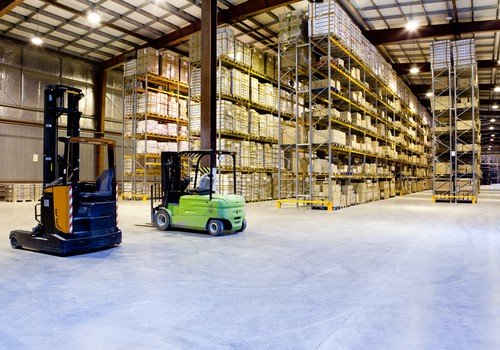
Workplace injuries put employees’ well-being at risk and can cost your business a considerable amount of money. Adopting ergonomic practices and investing in tugger carts and other equipment can help reduce these risks. Keep the following in mind in order to improve workplace safety at your warehouse.

Placing Items

Warehouse workers are at risk of injuring their back or other parts of their body while picking up items and moving them to another location. You can reduce this risk by having employees use lifting mechanisms to retrieve items that are heavy or large. Using carts for picking items that are on or near ground level also helps lower the risk of injuries.

Packing Items

Items that are bigger or heavier can put workers at risk of being injured while they are packing them. Workers can also be hurt after items are packed if they are not in a secure crate or container. Ensuring that workers have equipment for packing large or heavy items and putting them in secure crates or containers helps keep employees safe from injuries on the job.

Shipping and Receiving Items

Workers can become injured while removing large or heavy items from pallets. Ergonomic practices that reduce this risk include having mechanical equipment available to handle the task of lifting and moving heavier items. Making sure that items being shipped are placed in secure containers and crates can also help lower the risk of warehouse employee injuries.

If you are interested in tugger carts for your warehouse, please contact DJ Products. Our carts can make it easier and safer for employees to move heavy equipment and items.


Warehouse Injuries – Pallet Rack Collapse Tops the List

Watch Out Above You for any Potential Hazards - Like Falling Wooden Pallets.
Watch Out Above You for any Potential Hazards – Like Falling Wooden Pallets.

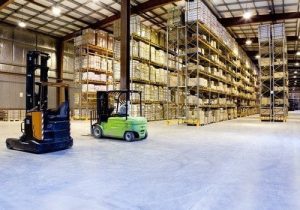
You stock your facility with the warehouse equipment necessary to keep employees safe. Unfortunately, even small issues can result in serious injuries to workers when overlooked. Though accidents will happen, making staff aware of safety hazards and arming them with the proper training and tools minimize risks.

Four Commonly Overlooked Warehouse Hazards

The most common warehouse hazards are:

1. Pallet Rack Collapses: Pallet rack collapses occur when materials aren’t stowed in an orderly manner. They are exceptionally dangerous when resulting from high tiers, where even small items can become dangerous projectiles with momentum. Stacking items/pallets with the heaviest/largest items on the bottom and lightest/smallest on top, firmly positioned and wrapped with adequate space between pallets for lift truck access can prevent dangerous, costly accidents.

2. Slips, Trips and Falls: Although the easiest to prevent, this segment constitutes the majority of general industry accidents, causing 15% of accidental deaths (2nd to motor vehicle fatalities). Clear, clutter-free work areas, unobstructed aisles/walkways where hazards are quickly cleaned/quarantined, and proper lighting are key to mitigating risk.

3. Hazmat Incidents: Both small and large-scale hazardous material spills threaten worker safety. Here, employee knowledge of proper cleanup and containment procedures leading to the speedy resolution of spills are key, as is access to the proper personal protective equipment and current safety data sheets.

4. Forklift Crashes: Both environmental hazards and operator mishaps contribute to fatal forklift accidents. Proper training on warehouse equipment, inspecting machinery prior to use, knowledge of industry-specific standards, as well as selecting machinery that is easy to use can reduce the risk of forklift-related injuries and deaths.

Move beyond the basics, minimizing employee risk. Boost employee safety and productivity with the latest in warehouse equipment from DJ Products today.

Top Tips for Keeping Your Warehouse Organized from the Dock Forward

Efficiency Works Best When There is Proper Management and Organization.

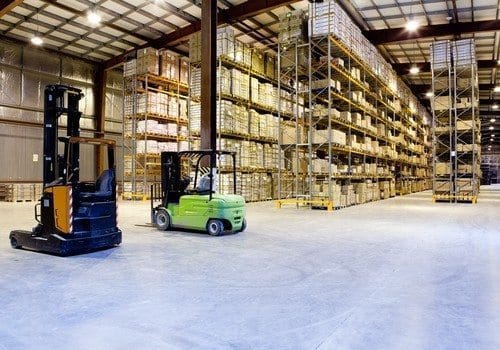
In the trucking industry, nothing is worse than a disorganized warehouse. It can really slow down your company’s daily operations and put you dangerously behind schedule. But the good news is that there are ways to remedy this.

The right material handling equipment can help you in more ways than you probably realize. We’d like to offer some helpful organization tips that you can put to use right away.

Tips for Organizing Your Warehouse

Keeping your warehouse organized doesn’t have to be difficult. In fact, by making a few simple changes you’ll notice that your daily operations will run much more smoothly.

Tip #1: Label everything. It might seem like you’re taking an extra step, but really, labeling everything as it comes through the door will save you a lot of time and frustration in the long run.

Tip #2: Keep any high velocity items in easy to reach places. This will help your workers stay more efficient and you’ll be much more likely to get orders out on time.

Tip #3: Finish all orders before the shift ends. It’s way too easy for orders to get lost or forgotten during shift changes. Make sure your workers have the time they need to get them all finished.

Tip #4: Implement regular cycle counts instead of waiting to do inventory at the end of the year. This one step can change everything for your business. You’ll be able to stay on top of any problems.

Tip# 5: Resolve to use the best in material handling equipment to keep things running efficiently. You might not know exactly what you need, but we can help you at DJ Products.

The best time to get organized is right now. Contact us for assistance!

Trailer Load Theft is a Serious and Growing Problem

Don't Leave Your Vehicle and Your Company's Transported Products Susceptible to Theft.
Don’t Leave Your Vehicle and Your Company’s Transported Products Susceptible to Theft.

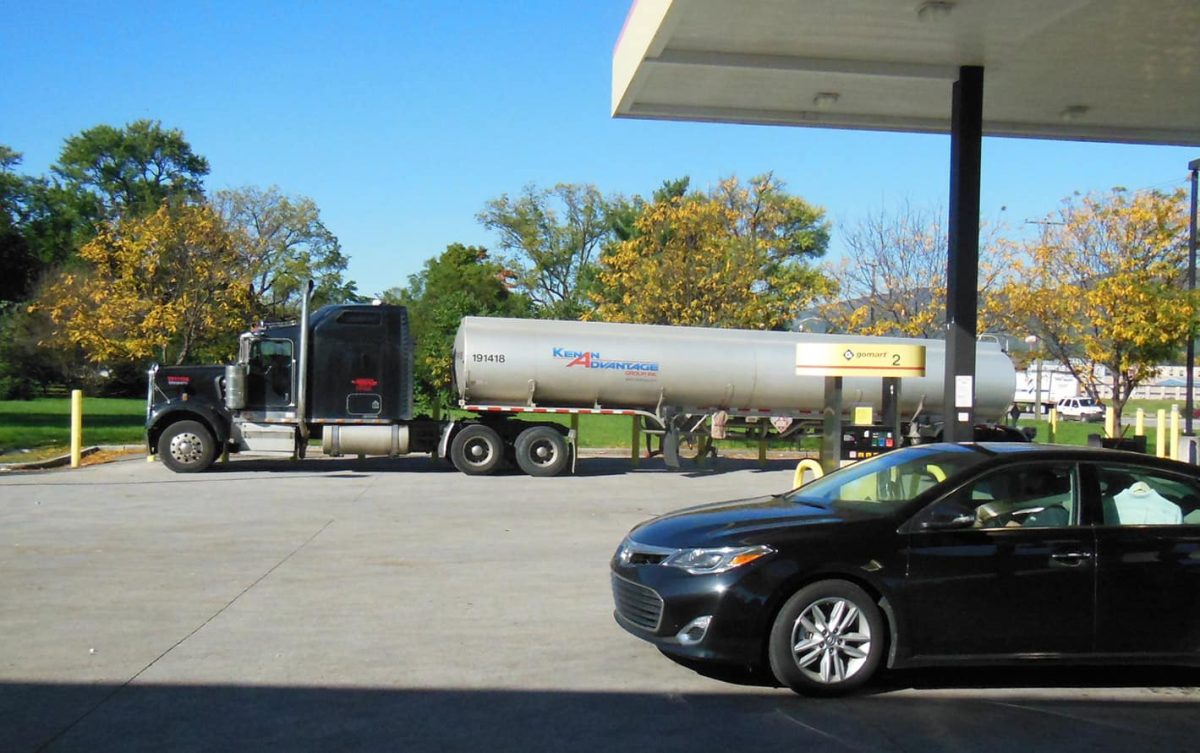
Using a powered trailer mover in the yard protects from damage and injuries, but what about threats to safe transport of goods? Valuable loads carried in commercial trucks make them appealing targets of cargo thieves.

Trailer load theft isn’t a new problem, but improvements in technology give the bad guys new tools that make them even more dangerous. Here’s what you need to know about cargo theft along with tips to protect drivers and product.

Types of Trailer Load Theft

“Straight” thefts occur when cargo is stolen directly from an unattended trailer, often at a truck stop or parking lot. These incidents are generally crimes of opportunity where the thief takes advantage of a situation, sometimes on the spur of the moment.

“Strategic” thefts are planned crimes where the thief uses sophisticated methods to fraudulently obtain possession of the cargo.

What Is Social Engineering?

Social engineering is an increasingly popular technique in which thieves search Internet sources such as public load boards for possible targets. Sometimes they may even post fake loads and solicit bids to get carrier information.

Tips to Prevent Cargo Theft

According to experts, educated and alert drivers are the best defense against trailer load thieves.

– Be well-rested and attentive to surroundings at all times.

– Conduct a walk-around inspection of the truck before and after every stop.

– Fuel up before loading.

Shippers can also take steps to reduce theft risk:

– Work only with licensed brokers who implement thorough vetting of carriers.

– Always verify driver, truck and pickup confirmation numbers at the pickup point.

Make Safety a Priority with Our Powered Trailer Mover

Our best-selling Electric Yard Dog is designed with top-of-the-line safety features to reduce risk of worker injury and trailer damage. Contact us for more information.

Nashville Becomes a Hub for Amazon’s Growing Logistics Focus

Amazon is Going to Need a Warehouse to Store all of it Products.

Think your business’ supply chain logistics issues are overwhelming? In recent news, Amazon will be opening an Operations Center of Excellence in Nashville, Tennessee in efforts to optimize its ultra-complex supply chain – one that delivered 5-billion packages in 2017 through Prime alone.

Hello, Paycheck!

Announced alongside its HQ2 location on November 13th, the Nashville operations center is expected to add 5,000 white-collar jobs to the area, sourcing talent from the flourishing region. Considered an up-and-coming locale and hosting a booming job market, the city saw an influx of more Millennials from 2010-2015 than NYC, marking its illustrious reputation as a popular destination. With the potential for an Amazon job with a median salary of $158,000 these figures may continue to rise.

Hot Market

Already a hub for the healthcare industry, many supply chain gurus already call Nashville home, with companies like Dollar General and Tractor Supply likewise utilizing the area as the home-base of their (industry-lauded) supply chain operations. Of course, it doesn’t hurt that schools with leading logistics programs like Auburn and University of Tennessee are nearby. The area is simply in an ideal locale for sourcing and retaining talent.

Room-to-Grow

Could a mega-warehouse be next? Break out your motorized trailer dollies! While Nashville may not a perfect fit, there’s a chance that it may offer a decent market for future warehouses, with access to seaports in Georgia and the Carolina’s. But its not as ideal as the 80-acre warehouse location opening next year in Tucson, Arizona, or prospective locations in Louisville, Kentucky; Charlotte, North Carolina; or Reno, Nevada. Employing 1,500 people, fulfillment sites comprise 20% of Amazon’s workforce.

Location tapped-out? Streamline your operations, boosting efficiency and productivity with the help of motorized trailer dollies from DJ Products today.

Could Carbon Neutral Air Travel be the Next Big Step?

Could Carbon Neutral Air Travel be the Next Big Step?

Carbon neutral air travel is on the horizon. Using groundbreaking ‘ionic wind’ technology, the world’s first-ever ‘solid state’ plane has successfully flown over 60 meters without the aid of moving parts or a propulsion system, lending credence to the potential for heavier-than-air flight without jets or propellers. Might it be paired up with your aircraft caddy in the not-too-distant future?

Space Age

Using a powerful electric field to generate charged nitrogen ions, and then expelling them from the back of the aircraft to generate thrust, this latest aircraft invention was inspired during MIT Aeronautics Professor Steven Barrett’s childhood. A big fan of Star Trek, Barrett envisioned a future with silently-flying aircraft, operating with no moving parts such as propellers, turbines, or jets.

Ahead of Its Time

Investigating the physics that might make such flights possible, he came across the concept of ionic wind, which was initially investigated in the 1920s. It didn’t make much of a splash at the time, with researchers concluding it wouldn’t work for airplanes.

However, Barrett wasn’t deterred. He and a team of graduates worked to improve their understanding of how it might be possible to produce ionic winds efficiently, and how those winds might be applicable to propelling an aircraft.

Inspired

The battery-powered, nearly silent miniature prototype that resulted from their research led to the creation of a propulsion system with a thrust-to-power ratio comparable to that of conventional jet engines. Though the technology is in its infancy, the successful flight of the amazingly thin, light-weight aircraft could pave the way for highly-efficient, non-polluting air travel. Future tests will seek to scale-up the plane’s size and range.

Inspire a safer, more efficient future with an aircraft caddy from DJProducts. Contact account rep Kari Koznick today.

Hate a Smelly Dumpster – How to Solve the Problem

Ways to Deal with Everybody's Least Favorite Chore - Taking Out the Trash.
Ways to Deal with Everybody’s Least Favorite Chore – Taking Out the Trash.

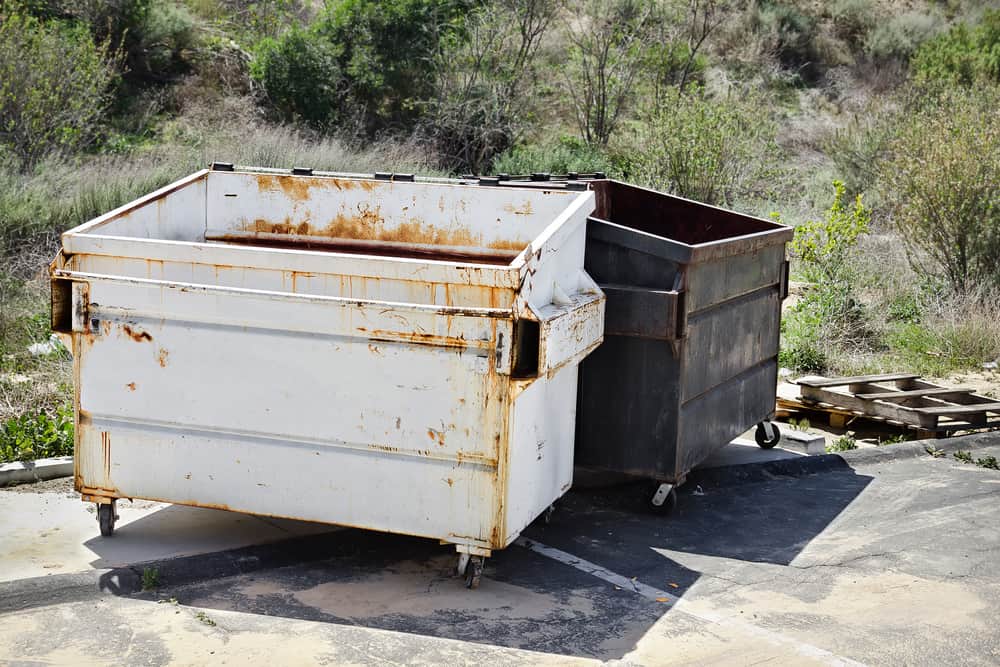
Most businesses – large or small – have dumpsters. They’ve been around since the 1930s, and they made it so much easier for companies to deal with all their trash. Of course, the need for them has grown over the years as businesses have grown in the United States.

While dumpsters are important, they can also be problematic. No one wants to deal with their smell, but there are ways to combat it. Whether you’re thinking about how to cover it up, or you’re considering investing in dumpster moving equipment, we have some information that can help you solve this problem.

Make Sure Trash is Sealed

All trash should be sealed before it’s tossed in the dumpster; and this includes cardboard, which can become the perfect breeding ground for bacteria when it’s wet. Also, use garbage bags that are no less than 2 mm thick to ensure the bags don’t break.

Air the Dumpster Out Periodically

It’s a good idea to open the side doors and the top of the dumpster daily to air it out. This will help keep moisture to a minimum, but it should only be done during the daylight hours. Airing it out at night will only attract pests.

Avoid Putting Food in the Dumpster

If at all possible, try to avoid putting food in the dumpster. This might seem like an unnecessary change, but food will only attract mice and other animals. Composting is a much better option.

Move it With Dumpster Moving Equipment

Sometimes dumpster placement is the real problem. Dumpster moving equipment is the best way to relocate it. You’ll prevent needless injuries from trying to move it manually, and you’ll save a lot of time in the process.

We can help! Contact us today!

Our January Tips to Reduce Costs in Your Warehouse Operation

How Can You Make it More Efficient For Your Warehouse Employees in 2019?

Does your warehouse staff finish the year in a scramble to bring expenses in under budget? Our industrial tugs maximize labor and reduce costly injuries to provide savings all year long.

In 2019, resolve to make reducing costs a year-round priority. Implement these measures in January to make financial awareness and expense-cutting part of the workplace culture.

Optimize Storage Space

Expansion is costly and time-consuming, especially today with warehouse space at a premium. Review the warehouse layout and inventory storage system to find wasted space and make changes where necessary.

Institute Cross-Docking

The more time product spends in your warehouse, the faster costs add up. Cross-docking, by which incoming products are immediately loaded onto outbound trucks for delivery, dramatically reduces storage, shipping and labor expenses.

Buy Used Containers

Used containers in good condition are often available at significant savings from reputable vendors. Purchasing used containers is a good practice to demonstrate eco-awareness and green workplace policies.

Reduce Energy Usage

Conscientious energy usage is another way to save money as well as the environment. High-quality building insulation, motion-sensitive lighting systems and hands-free faucets are just a few of the methods to cut back on excessive energy use.

Improve Labor Productivity

Labor is often the single largest element of any company’s operating costs. Hiring and training new workers is expensive and disruptive, so start a plan to improve employee retention. In addition, cross-training makes workers feel more accomplished and ensures that absences or temporary shortages won’t impact productivity.

Industrial Tugs from DJ Products: “Like Adding Another Staff Member”

Why assign two workers to handle heavy loads when one can easily complete the job with the help of one of our battery-powered industrial tugs? Learn more by calling 800.686.2651.

Federal Railroad Administration (FRA) Issues Final Statement on Rail Modernization Standards

Laws Concerning Railroad Transportation of Goods are Changing. Stay Up to Date Here!

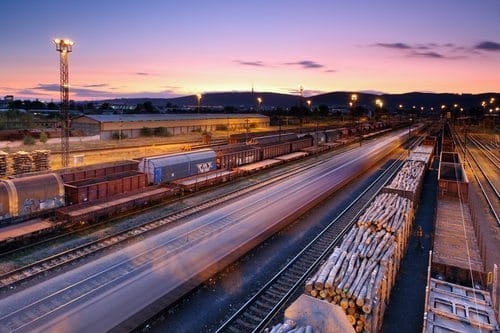
Railroad companies are now able to pair technological advancements with more current standards of safety protocol at railroads across the nation. The FRA (Federal Railroad Administration) has recently finalized more modern performance-based safety standards.

This recent initiative has begun paving the way for faster railway speeds. In an era where speed is a requirement, safety procedures and innovative efficient machinery have to rise to meet those demands.

Being Swift to Safety

Increased efficiency due in part to implementing speed-enhanced procedural changes can be a positive addition to any transaction or logistics-based company. In the same measure, speed can also bring with it an uncontrollable element.

How do you emphasize the importance of efficiency without compromising quality or the safety of your employees? You incorporate effective multi-functional barriers. Investing in high-grade machinery like a railcar mover can facilitate speed and safety in one simple transaction.

A railcar mover utilizes durable materials and advanced technology to fulfill difficult tasks. If you’ve discovered the only way to increase efficiency safely is to implement tested quality machinery into your daily procedures, you’ve joined the thousands of companies across the nation that understand the current market.

Do you have tasks that require the moving of hundreds of thousands of pounds indoors and outdoors? At DJ Products our railcar mover couples an industry standard heavy-duty coupler with a battery operated system to guarantee quality and ease of use.

Test DJ Products

If you agree that an extra hand makes light the work, our railcar mover has the ability to provide help where it’s needed. Keep your operations running smoothly and speedily with machinery that is made to meet your highest expectations. Visit DJ Products today and watch your productivity speed up the rails towards success.

Is Your Supply Chain Keeping Step? Smaller, Digital and Nimble are Key.

Connecting Your Fleet Digitally to Quickly Relay Information is a Smart Business Tip.

Supply chains have embraced tools such as our battery-powered yard trucks that make physical tasks easier. But when it comes to adapting digital technology, the industry has remained behind the curve.

This attitude has been showing signs of changing, as factors including a labor shortage and rise of the Internet of Things (IoT) are driving supply chain managers toward smaller, digital and more nimble operations. Here’s a look at some of the ways technology is changing the supply chain industry.

Move to the Cloud

Experts predict that by 2020, planning systems will remain on premises while 90 percent of spending for execution systems will be for cloud-based applications. The IoT will provide the means to create a digital network allowing for data flow from start to finish of operations.

Improved Forecasting

Another benefit of the IoT is the ability to replace short-term forecasting with demand sensing, which uses advanced math techniques and near real-time data for more accurate forecasting.

Preventing Disruptions

Shippers with a more resilient supply chain will be better equipped to identify and manage risks, making them less vulnerable to reduced capacity and inventory problems.

Shift to Micro-Logistics

Following Amazon’s lead, many manufacturers are evaluating a transition to micro-logistics, which entails a group of small, localized warehouses rather than the traditional DC model.

Less Is More

Whether due to financial struggles or strategic purposes, consolidation among transoceanic shipping companies, third-party distribution services, and over-the-road carriers will likely increase. As a result, 3PL agreements will center on value rather than price.

Move Trailers Safely and Quickly with Yard Trucks from DJ Products

Our Electric Yard Dog is less expensive than a new yard truck or shunting service and reduces risk of damage and injuries. Call 800.686.2651 for more information.