
Our Predicted 2023 Warehouse and Distribution Center Trends

Trailer Dolly
The Future of Warehousing

Warehouses and distribution centers are heading into 2023 with many opportunities and challenges. Safety improvements are always important, making the use of trailer dolly solutions an ongoing trend. From supply chain and inventory solutions to increased interest in the use of automation, these are some of the other top trends in the warehouse and distribution industry for the new year.

Electric Delivery Vehicles

More companies are looking into using electric delivery vehicles to help cut down on pollution, noise, and costs. This involves the use of smaller vehicles, such as vans and small trucks, rather than box trucks. The use of these smaller vehicles is more practical in some areas, while also offering a way to reduce environmental damage.

Autonomous Lift and Reach Trucks

The use of forklifts in warehouses and distribution centers comes with a risk of injuries. Businesses are exploring the possibility of using autonomous lift and reach trucks to improve safety and efficiency. These trucks can make it easier to move items around with a lower risk of worker injuries.

Neighborhood Distribution Centers

Real estate costs and limited inventory on the market are pushing business owners to find other solutions for storing products. Some are turning to neighborhood distribution centers or mini-warehouses for storing goods. These localized distribution centers and warehouses could help make up for a lack of larger warehouse space.

Automation

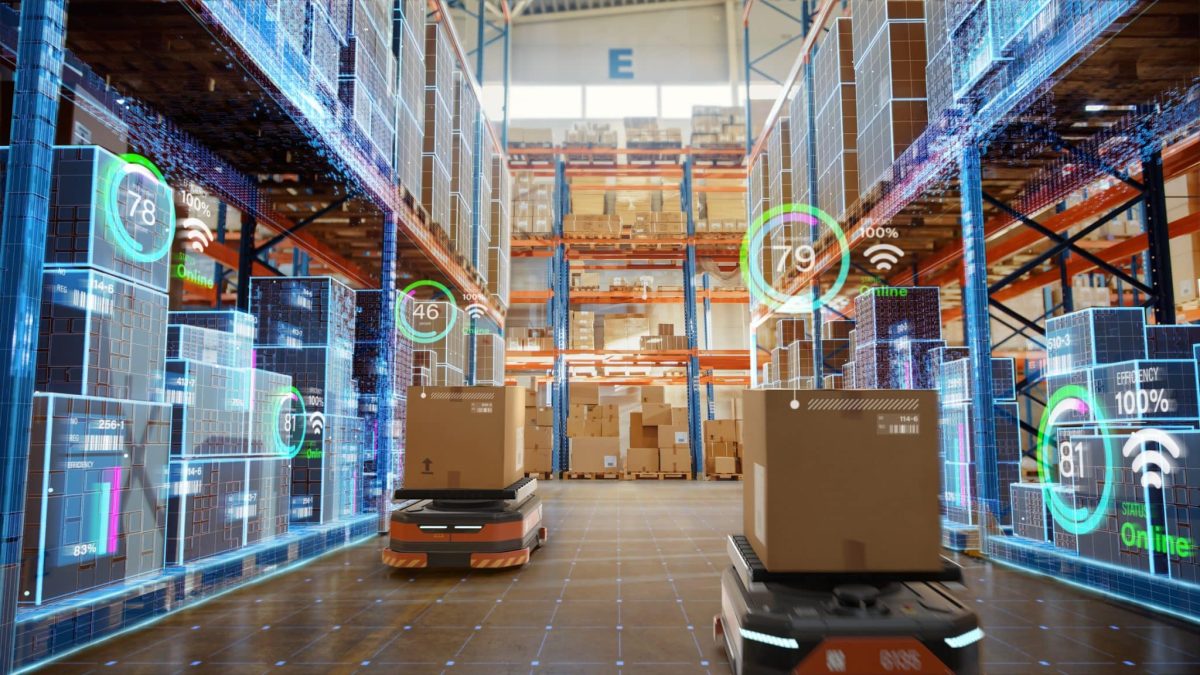
With the rise in eCommerce, warehouse and distribution center owners are showing a growing interest in adopting automation. The use of automation can offer a solution to the problems the industry faces due to supply chain issues, labor shortages, and rising costs.

Supply and Inventory Solutions

With the supply chain improving in some areas, companies are looking into solutions for managing inventory more efficiently. Some companies face shortages of certain products, while others are dealing with too much inventory. Solutions might involve reducing prices on overstocked items or finding ways to obtain low inventory items.

If you’re looking into solutions for moving large vehicles safely in warehouses, hangars, or other facilities, please contact DJ Products. We offer trailer dolly solutions that make it much safer to pull or push large vehicles and other items.

Should You Hire Temporary Staff at Your Warehouse?

Should One Hire Temporary Staff?

Of course, ultimately, a question like this can only be answered by the management staff at any warehouse, but consider these warehouse management tips when it comes to hiring on a staffer.

  • When compared to permanent employees, staffers have an overall productivity and effectiveness of 99.8%. That figure essentially means there is no difference in how a staffer performs than a regular employee.
  • Most staffing services offer their own insurance and benefit packages, and that keeps overhead lower when you hire a staffer than when you hire on a full/part time employee.
  • The best staffing companies routinely do pre-employment testing for drug use, honesty and health. When your staffer comes to work on that first day, you’ll know they are ready to go.
  • For seasonal work, which overloads your regular employees, a staffing service can’t be beat.

Try Before You Hire

Perhaps the best reason for a staffing service is searching for a new employee. Contract a staffing service for a worker, see their performance and their interaction with other employees, then make a decision on permanent employment. If that particular staffer doesn’t work out, you can terminate their contract through the staffing service, with essentially no hassle in doing so, which may be one of the best warehouse management tips you can have.

The Bottom Line

Yes, there may be some downsides in hiring a staffer, like overall employment cost and possible union pressure, but in virtually all situations, the question of whether or not to hire from a staffing service should be a resounding “yes!”

For more information, check out our blog at DJ Products, Inc.

Part 4: Why Businesses Fail

Financial experts seem to be teetering on the verge of labeling the country’s current economic situation a recession. It’s a label the government seems loathe to use, believing it will wreak further havoc on the stock market and send the economy spiraling down even further. No matter what you call it, things are difficult and it looks like they’re going to stay that way for a while. The economy is slow, credit is tight, fuel is high and bankruptcies are up. For many companies, the combination has delivered a knockout punch and they’re down for the count.

Last week we started a series on Why Businesses Fail (see our July 14-18 posts). We figure it’s better to learn from the mistakes of others than repeat them yourselves. This week we continue our list of the most likely reasons businesses fail:

  • Inappropriate inventory. You can’t sell what customers don’t want. Too much or the wrong inventory causes cash flow problems, wastes sales time and drains profits. By constantly tracking individual inventory items, you can make adjustments and effectively manage product flow on a weekly and monthly basis. Don’t make the mistake of relying strictly on accounting summaries to track inventory. Accounting tracks inventory by dollars, lumping moving and non-moving inventory into an average. To adequately control inventory, you need to track the actual physical items.
  • Excessive capital investments. Americans seem to equate success with things. Bigger cars, bigger houses, the latest gadgetry. In business there can be a tendency to buy newer, bigger, more expensive tools and equipment as a mark of success. But success in business is really based on the quality of the product or service you produce. That’s what drives sales and repeat business. Equipment purchases should relate to your ability to improve or maintain the quality of your product. Certainly, you need to update equipment as technology changes to be competitive. And often the expense of new technology can be recouped in short order by savings in energy, floor space or worker health and safety. But capital equipment purchases should always be evaluated for their ability to enhance the production of a quality product. 


If you’re looking for a cost-saving solution for your capital equipment investment, turn to the material handling experts at DJ Products. At DJ Products we manufacture ergonomically designed electric carts and motorized cart pushers for business, industry and service providers like hospitals. Our products are smaller and more maneuverable than traditional powered equipment like fork trucks, walkies and riding tugs, yet are capable of moving the same sized loads with ease. A smart capital investment, our products are less costly than purchasing traditional powered equipment. Because our carts, tugs and equipment movers are ergonomically designed, you’ll also realize an attractive savings in worker health and safety costs, including medical bills, insurance payments, workers’ compensation and lost man-hours. Visit the DJ Products website to check out our full line of ergonomically designed electric and motorized carts.


To be continued

More Tips to Improve Warehouse Efficiency

Continuing our Monday post, today we provide more tips to ramp up warehouse efficiency by improving material handling processes in distribution centers. In a recent Supply Demand Chain article, TriFactor systems engineer Greg Tuohy offered these suggestions:

  1. Re-evaluate pick tech. Eliminate paper-based picking in favor of auto-enhanced technology. Implementing radio frequency (RF), pick-to-voice or pick-to-light technology can make your operation more efficient. Evaluate the density of SKU locations, throughput, product characteristics and specialized procedures such as serial number tracking to determine the pick technology best suited to your operation, Tuohy advises.
  2. Evaluate pick method. Decide which picking method is most cost effective for your operation. Piece picking where the picker walks the aisles picking and completing one order at a time is the most time-consuming and, therefore, most costly. Small, maneuverable powered tugs can facilitate far more efficient batch picking where all orders are picked simultaneously in a single pass. Dolly pullers and electric tugs can also be used to streamline operations that use assembly-line style zone and wave picking. Powered carts and tugs help streamline your operation by increasing the speed and volume of work that can be accomplished by each worker.
  3. Multi-task. Practice task interleaving which combines picking with the put-away process, Tuohy suggests. Interleaving ensures that operators and equipment are always tasked, that time and energy are not wasted on empty loads. The idea is to create a continuous loop where equipment is always loaded, bringing materials to pick locations and returning empty pallets or delivering picked product to shipping locations.
  4. Minimize downtime. Equipment requires planned maintenance. A proactive maintenance plan will minimize downtime and save time and money. Planned maintenance should be conducted on equipment and automated systems on a regular schedule. Correct small problems immediately and keep frequently needed spare parts on hand.
  5. Protect power supply. Assess the vulnerability of your power supply. Lightning strikes, power outages and power spikes can wreak havoc with distribution systems, says Tuohy. Work with your local electric company to install surge protectors and other recommended protections. Battery-powered carts and tugs with enough juice to work through an entire shift can be the lifeline that keeps your operations moving when Mother Nature throws a fit.

Obama’s Mandate to Transform America

“The deepening recession creates the opportunity for federal intervention and government experimentation on a scale unseen since the New Deal,” wrote Charles Krauthammer in a column for the Washington Post Writers Group that was widely published last month. Krauthammer is one of many Beltway watchers who have been predicting “a domestic transformation as grand as Franklin D. Roosevelt’s” once President-elect Obama takes the oath of office barely a week and a half from now. Krauthammer believes that Obama’s statement, “This painful crisis also provides us with an opportunity to transform our economy to improve the lives of ordinary people,” presages what will become the key thrust of the new president’s administration: the transformation of America from the ground up.

It’s hard to argue with Krauthammer’s view, particularly given the details about the President-elect’s economic stimulus plan and jobs initiative that are beginning to trickle into the press. As Krauthammer points out, the current situation is a community organizer’s dream and that’s always been Obama’s self view. He sees himself as a world changer but it’s his own world he most wants to change. He’s got Hillary Clinton and Robert Gates on board to keep the dogs of war at bay so he can focus his energies on rebuilding America.

The economic meltdown and jobs crisis have given Obama the public mandate to foment massive changes in governmental policy. People are clamoring for help and looking to Obama to provide it. A definitive win in November and the healthy Democratic majorities that rode into the House and Senate on Obama’s coattails gave him the political mandate and clout to drive new policies through Congress. The massive bailout funds already approved, with another huge chunk of money on the way, put at Obama’s disposal what Krauthammer calls “the greatest pot of money in galactic history.” Combined, current social, economic and political forces would seem to give Obama almost unlimited power to effect change.

That change is certain to increase regulation, government oversight and red tape. Bush administration regulations that critics say weakened the EPA and OSHA at the expense of environmental responsibility and worker safety are expected to be rescinded by Obama’s team in favor of measures that place the burden of responsibility and expense of accountability back on the doorsteps of manufacturers and American business owners.

Next time: Rolling with the punches; taking a proactive approach to coming change.

Functional Equipment doesn’t necessarily mean Basic Equipment

Many of the duties performed in a warehousing environment are repetitive, especially if much of the material distributed is similar.  Employees in the receiving department follow the appropriate procedure from unloading to stocking and the shipping department will follow their detailed procedure for pulling, stationing and prepping the materials to be picked up by the freight carrier.

This seemingly simple operation might lead people to believe that any old equipment can perform the job – all the employees are doing is moving materials from one spot to another right?  This assumption couldn’t be further from the truth though, the procedures followed in many warehouses and distribution centers follow a similar path – but if safe, reliable and properly designed equipment weren’t available, the business would never be able to keep up with the competition.

Some warehouses would probably be able to function for a very brief period with just the most rudimentary materials, like hand trucks and pallet jacks – provided that the material is to large or cumbersome to be handled manually.  There are probably some distribution centers that could squeak by for a brief period with outdated propane fueled forklifts that are prone to breakdown and require regular maintenance but operating in this fashion would certainly mean the most difficult road for the employees and the biggest risk of not being capable of accurately fulfilling orders.

The ergonomically designed and battery powered lifts from DJ Products are the solution to any material handling problem plaguing a warehouse or distribution center.  These lifts and carts are easy to operate, quiet, safe and the most reliable available.  These days, just keeping up with the competition in the distribution industry may not be enough to survive – you have to give your employees every edge to be able to fulfill orders as quickly and accurately as possible.  The edge often begins with the equipment used to get the job done, that’s why many warehouses and distribution centers are turning to the lifts and carts produced by DJ Products for their material handling needs.

Are Drones in the Future for Warehouses?

Until recently, talk of drones centered around military applications. Now a couple of major companies have raised the possibility of this technology being put to use in supply chain and logistics capabilities. Amazon and United Postal Service have both revealed that they’re researching the concept of package delivery via these unmanned aircraft.

Drones are also considered to have potential as sophisticated security systems for shipping valuable loads. They would be programmed to fly overhead to monitor any obstacles and threats to the vehicle as it made its journey.

Qimarox, a Dutch manufacturer of material handling components, has come up with a use that’s more down-to-earth, literally and figuratively. They anticipate drones being used in warehouses to build pallet loads, picking up materials from a conveyor belt and placing them on the pallets. While weight would be a major consideration, the company believes there is a way to solve that problem.

This is seen as a stepping-stone to full automation of the material handling process. The drones could be easily reprogrammed as needed to accommodate variables such as speed and capacity. Qimarox has currently commissioned a company to create a dynamic 3D software model in order to study the process in action.

While the possibilities are thought-provoking, actual use of drones is still many years away. Right now you can modernize your warehouse with the efficient, eco-friendly material handling solutions from DJ Products. We offer a full line of tugs and pushers ergonomically designed for safe and efficient handling by a single employee. Please contact one of our friendly Sales Engineers at 800.686.2651.

Looking to Save Money in Your Warehouse? Look for New Packaging Solutions

New Packaging Solutions

The shift toward dimensional weight shipping rates has triggered a cascade of changes on warehouse management. Many warehouses are sidestepping the higher rates by using polybags or Tyvek mailers instead of boxes.

Along with the potential savings, soft bags present a new set of challenges compared to the familiar and reliable process of handling rectangular boxes.

As Alexander Communications points out, polybags require new technology for picking and scanning. The ultimate cost savings, however, should drive warehouse managers to analyze whether products can be mailed in polybags and how to make the process effective.

Key considerations for using packaging solutions to circumvent dimensional weight shipping charges:

  • Scanning and sorting solutions must be able to handle irregular shapes.
  • Material handling can become more efficient because more items can fit in a cart and be transported with motorized warehouse tugs.
  • Warehouses can often find ways to ship some, if not all, products in bags. Using both bags and boxes does not necessarily present an insurmountable challenge.
  • Customers can be charged dynamic rates based on actual shipping — or flat rates that protect your margins when boxes must be used.

Be sure to not overlook the changes that polybag shipping will have on material handling inside the warehouse. Instead of a pallet with several large boxes, you may have a cart weighted down with many more products in polybags. Warehouse tugs automate this movement to streamline the process and protect workers from injuries.

When cost savings are on the line, the boost in productivity from warehouse tugs can maximize the benefits of new packaging solutions. Visit DJProducts.com for more info about industrial cart movers.

How DJ Products Can Help You Be a Survivor

As we’ve said in this space before, it’s going to take a firm hand on expenses, the guts to embrace innovative ideas and products, and the flexibility to act quickly when opportunities present themselves to survive the current recession.  DJ Products’ ergonomically-engineered carts, tugs and movers can help you get the jump on the competition and position your business to move boldly — and successfully — into the future.

Cost effectiveness, worker safety, healthcare issues, energy and environmental concerns, immigration and a changing workforce — these are among the most powerful issues that confront businesses owners today. Customers, workers, the public and the government will all be watching how we address these issues in the course of business. It’s no longer enough to produce a fine product. Today, we’re also graded on how we produce that product and the cost or benefit to our workers and the environment, not just our customers. Government oversight and a watchful press have added a few links to the food chain.

Here’s how DJ Products’ ergonomically-designed carts, tugs and movers can help you successfully meet these challenges:

  • Cost effectiveness is key when every penny counts. When DJ Products’ ergonomic carts and movers are integrated into your workplace or production operation, full return on investment is typically realized within the first year or two through increased production and worker efficiency and decreased healthcare, disability and workers’ compensation costs.
  • Worker safety is one of the issues at the top of President-elect Obama’s to-do list. Stricter OSHA regulations regarding ergonomic issues are expected early in his administration. During his campaign, Obama promised workers a safer work environment which industry experts predict will mean tougher ergonomic standards and increased government oversight. Implementing an ergonomic program built around DJ Products’ carts, tugs and movers will put you ahead of the game as regulations tighten up. Ergonomically designed to take the physical burden off your workers, DJ Products’ carts improve workplace safety significantly.
  • Healthcare issues will be another key thrust of the incoming administration. Many of the plans being discussed in the press will increase the already difficult healthcare burden on employers. Ergonomic equipment is a proven way to significantly — and immediately — decrease employee medical, insurance and disability costs.

To be continued on Friday

Always be Prepared

The Occupational Safety and Health Administration, also known simply as OSHA, is responsible for setting and enforcing the standards of safety in the workplace.  The main goal of OSHA is to reduce on the job injuries and fatalities by assuring that workers are performing their jobs in the safest environments possible.  Since it’s inception at the end of 1970, OSHA has dramatically reduced the incidents of accidents in the workplace and they continue to inspect facilities and enforce their policies in an effort to make working people even safer.

Between the federal and state run divisions of OSHA, more than 100,000 facilities are inspected each year and those not meeting the standards could receive heavy fines depending upon their infractions.  The number one violation cited by OSHA has to do with forklift operation.  This should serve as a warning to all warehouse and distribution environments that if they are operating outdated and unreliable equipment or if they haven’t properly trained their employees on correct usage procedures of equipment that they could suffer citations and heavy fines from OSHA.

There is much more at stake though than a fine, operating your facility with under trained employees or old and unreliable equipment could make your facility run poorly, inefficiently and it can put the health of your employees in jeopardy.  In order to have the safest facility possible you need to be running equipment that was designed for the tasks that your employees perform and you need to properly train your workers to operate that equipment.

Electric lifts and carts from DJ Products are designed with safety and performance in mind – they are easy to operate, ergonomically designed and can last for an entire shift on a single charge.  Properly using the right equipment is the first step to a safer, more effective and more efficient workplace – and it will eliminate the most cited infraction of the standards set by OSHA and keep you one step closer to compliance.