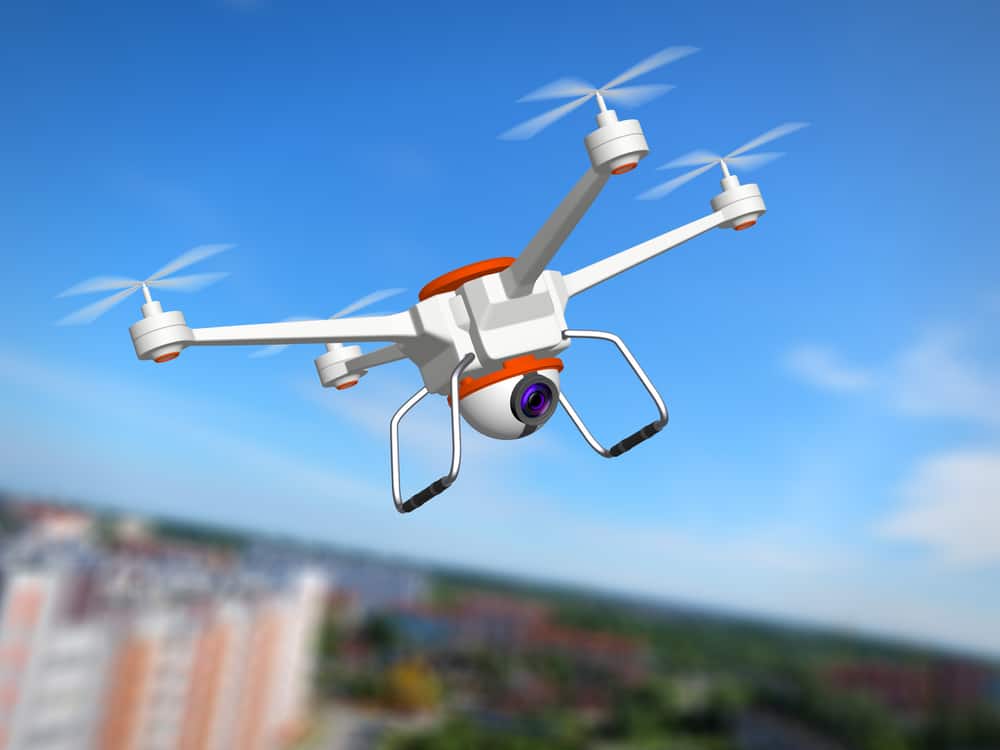
Tips for Storing Your Small Aircraft Over the Winter

With winter underway, it’s important to make sure that your small aircraft is properly stored for the season. This helps reduce the risk of damage to it and ensures that your aircraft will be ready for you to use again when the weather improves. If you need to move your plane into storage or move it to a different area of your storage facility, keep in mind that an aircraft caddy makes this process go much easier.

Protect Against Rodents and Other Pests

Mice and other pests can make your airplane their home in winter if it provides them with shelter and warmth. When you put your plane into storage, make sure that it doesn’t give these pests any entry points. Cover or close up holes that rodents and other pests can use to get inside.

Fill the Fuel Tanks

Even if you won’t be using your plane in winter, you should still keep the fuel tanks filled up. Doing this lowers the amount of moisture in the tank, which reduces the risk of condensation building up.

Remove the Battery

Keeping the battery inside your plane means that it could end up being exposed to conditions that are too cold. Storing the battery in a location that keeps it safe from extreme cold can help prevent it from being damaged.

Do an Oil Change

Giving your airplane’s engine a fresh oil change, which will help to ensure that it runs smoothly when it starts up again. This will eliminate contaminants that may affect its performance.

If you’re looking to get an aircraft caddy for your small plane, please visit DJ Products. We have a fine selection of these products available. Contact Kari Koznick for more information on our aircraft products.
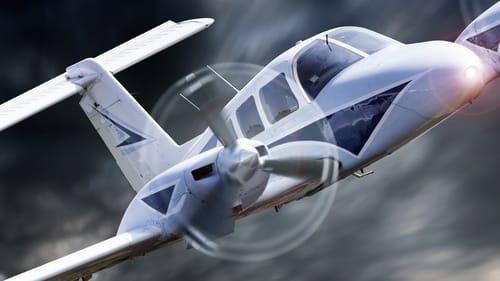
Could Carbon Neutral Air Travel be the Next Big Step?

Could Carbon Neutral Air Travel be the Next Big Step?

Carbon neutral air travel is on the horizon. Using groundbreaking ‘ionic wind’ technology, the world’s first-ever ‘solid state’ plane has successfully flown over 60 meters without the aid of moving parts or a propulsion system, lending credence to the potential for heavier-than-air flight without jets or propellers. Might it be paired up with your aircraft caddy in the not-too-distant future?

Space Age

Using a powerful electric field to generate charged nitrogen ions, and then expelling them from the back of the aircraft to generate thrust, this latest aircraft invention was inspired during MIT Aeronautics Professor Steven Barrett’s childhood. A big fan of Star Trek, Barrett envisioned a future with silently-flying aircraft, operating with no moving parts such as propellers, turbines, or jets.

Ahead of Its Time

Investigating the physics that might make such flights possible, he came across the concept of ionic wind, which was initially investigated in the 1920s. It didn’t make much of a splash at the time, with researchers concluding it wouldn’t work for airplanes.

However, Barrett wasn’t deterred. He and a team of graduates worked to improve their understanding of how it might be possible to produce ionic winds efficiently, and how those winds might be applicable to propelling an aircraft.

Inspired

The battery-powered, nearly silent miniature prototype that resulted from their research led to the creation of a propulsion system with a thrust-to-power ratio comparable to that of conventional jet engines. Though the technology is in its infancy, the successful flight of the amazingly thin, light-weight aircraft could pave the way for highly-efficient, non-polluting air travel. Future tests will seek to scale-up the plane’s size and range.

Inspire a safer, more efficient future with an aircraft caddy from DJProducts. Contact account rep Kari Koznick today.

You Can Damage Your Plane with Improper Manual Handling – What to Know

Being Precautious Could Save Your Passengers and Your Life.

When you have a smaller aircraft, pulling or pushing it by the propeller might seem like an easy and convenient way to move it around. However, this manual handling can end up causing significant damage to your airplane. Find out why you should use an aircraft caddy for moving your plane around instead of moving it manually.

Damage Risks

Grabbing your airplane by the propeller and pulling or pushing it to where you need it to go can result in damage to the blades. For example, pulling or pushing the propeller’s tips can cause them to become bent, which affects their ability to work properly. Even when you have others to help you, it’s important to avoid manually handling your airplane by the propeller blades.

Using an aircraft caddy allows you to move your airplane smoothly without risking damage to any part of it. Keep in mind that damage to your propeller can make your aircraft unsafe to operate.

Injury Risks

Pushing or pulling an airplane manually can put you and others at risk of having injuries. From pulled muscles to more serious injuries, it’s important to avoid taking this risk when you need to move or reposition your airplane. Moving your airplane with a tug that’s designed to support its weight helps eliminate the risk of personal injuries.

Our tugs and caddies offer safer and more convenient ways to pull aircraft around or move them to a different location, whether you need one for a 4,000-pound airplane or one that can move up to 35,000 pounds.

If you’re looking for an aircraft caddy, please contact DJ Products. We carry a wide range of high-quality aircraft tugs to make it easier and safer for you to move your airplane.

Drones and Small Aircraft – Can They Co-Exist?

Do Drones Impinge on Airspace for Aircraft?
Do Drones Impinge on Airspace for Aircraft or Can They Co-Exist?

Our battery-powered aircraft caddy lets workers safely maneuver small planes on the ground. Do drones pose a safety risk to small aircraft in flight?

The Federal Aviation Administration (FAA) seems to believe the answer is yes, and the agency is dragging its feet establishing permanent regulations for drones. Studies show that small aircraft and drones can actually safely share the skies.

Threat of Drone-Aircraft Collisions

With the FAA on high alert about drones in the airspace, they currently receive more than 100 reports per month concerning unmanned aircraft operating near manned aircraft. According to the Academy of Model Aeronautics, few of these incidents involve true risk to passengers.

In 2015, Bard College conducted a study about drones in close encounters with manned aircraft. The analysis of 921 reports showed that drones came within 200 feet of an aircraft in 158 cases, while only 28 pilots took evasive action.

Greater Risk: Drones or Birds?

With approximately 10 billion birds in the U.S., these flyers are far more likely than drones to be found in the air at any time. Using the assumption that drones are similar to birds in size and ability to evade aircraft, a pair of researchers from George Mason University estimated the likelihood of a serious drone-aircraft collision.

– Drones are likely to strike aircraft once per 374,000 hours of drone operation.

– One million two-kilogram drones in flight 24/7 would cause injury to an aircraft passenger once every 187 years.

Why Choose an Aircraft Caddy from DJ Products?

Our ergonomically designed aircraft caddy safely navigates small planes across snow or grass while negotiating the tightest hangar quarters. Use our handy online chat feature and let our friendly sales engineers help you find the right aircraft caddy for your applications.

Drones and Airplanes, Who Owns the Skies?

How to Maneuver the Skies

The increased use of drones, especially for recreational purposes, has raised concerns when it comes to keeping airplanes safe. While your airplane is safe on the ground while being pulled by an aircraft caddy, what about after it takes off in the air? Fortunately, new rules have been enacted by the Federal Aviation Administration (FAA) to protect planes from drones. Find out more about the issue of drones and planes sharing the air space.

Regulations

The FAA issued 14 CFR part 107, which effectively prohibits drone owners from operating their devices in air space used by commercial planes. The FAA previously expressed concern in this 2014 article on drones, but the agency has since come up with definitive regulations. They are contained in Part 107, which became effective on August 29, 2016.

Collisions

When it comes to collisions with aircraft, there have not been any known incidents involving drones striking planes. In fact, airplanes are more likely to have trouble with birds that collide with them or get pulled into engines. Birds are in the air far more than drones, and they outnumber these devices by quite a bit.

Solutions

Solutions to lower the risk of drone and airplane collisions involve providing drone operators with more education about how to use their devices safely and FAA certification as Small Unmanned Aircraft System pilots. Technological solutions include apps that let drone operators know which areas to avoid, such as this map posted at drone manufacturer DJI (not related to DJ Products).

If you could use an aircraft caddy, please contact DJ Products. We carry high-quality powered aircraft tugs that can help keep ground crews and small plane owners safe while also saving you time and effort.

Are Flying Cars Coming to Your Local Field in the Future?

Depositphotos_10761576_s
Are Flying Cars Coming to Your Local Field in the Future?

Will your aircraft caddy soon be toting flying cars? The Kitty Hawk Flyer is touted as the future of the flying car industry. Tested atop Lake Las Vegas amidst journalist fervor, the California-based company put on quite a show.

Potential Use within Urban Communities

The 254-pound Kitty Hawk Flyer, classified as an FAA Part-103 ultralight aircraft, requires no pilot’s license. With just 12 moving parts, including 10 propellers and 2 cockpit controls, the recreational vehicle is a cinch to operate. The Flyer sports no altimeters, fuel indicators, gauges, or computer read outs. With a carbon fiber body that resembles an oversized drone bedecked with pontoons, it’s as simple as they come.

Easier to Operate than a Video Game System

The Flyer’s flexibility and ease-of-use put it front-and-center as a likely predecessor to the much anticipated flying car. Brittney Miculka, flight training manager for Kitty Hawk, said she could teach someone the basics of flying it in about 20-minutes. However, new pilots typically undergo a 90-minute training session that includes training in a simulator, as well as additional training on how to escape the vehicle in the unlikely event it overturns in the water.

Early Testing with Clipped Wings

Kitty Hawk is under extensive restrictions in its early testing phase at Lake Las Vegas, facing a 6-mph top speed, 10-foot height restriction, and low wind tolerance. However, this didn’t seem to diminish the excitement of the company, its investors, and the plethora of journalists who traveled from as far away as England, Germany, and Japan to see it in action. Kitty Hawk officials have yet to release cost and availability information, but the future awaits…

What will you soon be carting with your aircraft caddy? Reveal the future with DJProducts today.

Richard Branson Shakes Up the Industry by Creating a Small Private Airport for Commercial Passenger Use

Richard Branson Shakes Up the Industry by Creating a Small Private Airport for Commercial Passenger Use

Is your business undergoing a bit of a shake-up? Does it need one? A recent article about a businessman named Richard Branson highlights how to cause a reverberating stir. He is shaking things up in a big way by creating his own Private Small Airport for commercial use.

It’s a revolutionary concept in the states but has been gaining popularity in other countries. Taking on the high demands associated with flight transportation can be a high-pressure job. Like Richard Branson, if you’re involved in the aircraft transportation sector you can revolutionize the industry with new concepts, technology, and with a little help from quality machinery.

Facilitating Flight

The aircraft industry relies on organization, efficiency and quality customer service. High-quality aircraft machinery that supports all three characteristics are usually wise investments that benefit employees and customers, and also enhance safety procedures and time management.

An aircraft moving caddy allows private airports a method to lower labor cost and raise service quality, helping them to remain competitive in this often tumultuous industry. If private airport facilities take off, the need for compact, reliable products will increase. But whether you own or work with small aircraft, an aircraft moving caddy is one step closer to ensuring the best experience for all those involved.

Let DJ Products Bring New Opportunity

If you’re seeking a way to compete with smaller or larger transportation businesses, battery-operated aircraft moving caddy products ensure tasks big and small are completed safely and with precision. Let your employees know you understand their needs while creating an environment that welcomes new ideas, new opportunity, and positive change. In logistics and in the air, timing and efficiency matters! Today is always the right time to trust the aircraft line of DJ Products!

Small Aircraft Hangars Become Market Investments

Stacks of Ten Thousand Dollars Cash
Can a Hangar Investment Make You Cash?

Could you need an aircraft caddy sometime in the near future? The subleasing of hangar space is on the rise, and increasingly popular, due to the potential to operate space without the building and management headaches.

Space for Rent
So-called ‘condominium’ hangar space and long-term prepaid hangar leases offer a great return-on-investment. Depreciating (for tax purposes) and resalable, they offer sky-high earnings potential, with areas near airports showcasing a strong demand for space, as these companies attest:

Ribeiro Companies
Ribeiro Companies’ Quail Air Center offers hangar space adjacent to Las Vegas’ McCarran International Airport. Outfitted offsite, tenants taxi aircraft though security gates to runways. Buy outright, rent or sublease. Alongside available hangar and office space for rent, Quail offers not-for-profit ground-support services. Tenant-only fuel services offer substantial savings: Enough for some frequent-flyers to pay for hangar space. Also in the works: Two-upcoming projects: Henderson Quail Commercial Aviation Center and Henderson Quail Air Center.

Ascend Development
Ascend’s $100-million, prepaid hangar project, 68-miles north of New York City where the cost of living is low, is second to its already operational SanFran Hayward Air Terminal. It will feature luxury accommodations, optional office space, and long-term 40+ year leases. Area airports will provide all fuel and ground services. With scarce land and fewer airports being erected, demand (and value) are expected to rise.

Premier Jet Facility
This McClellan-Palomar Airport in Carlsbad, California spans 15-acres, including 19-hangars offered on a 30-year, prepaid-lease basis. An FBO, it offers special fuel pricing, sub-leasing opportunities, and the potential to operate your business via office space available at the facility.

Outfitting your hangar? Entice tenants with our terrific tugs. Safely move aircraft, navigate tight spaces, prevent injuries and reduce liability with an aircraft caddy from DJ Products today.

Forbes Evaluates the Cost of Ownership of Small Aircraft

Forbes Evaluates the Cost of Ownership of Small Aircraft

There are many factors that affect the cost of ownership of small aircraft. That is why a lot of aviation enthusiasts opt to rent small aircraft instead of taking on the many expenses that come with owning their own plane.

Airplane hangar owners and airport managers can significantly reduce their operating expenses with efficient solutions like an aircraft caddy from DJ Products. These battery-powered tugs can operate on pavement, grass, and even ice. They allow one person to smoothly move small planes quietly and safely.

What does it cost to own a small plane?

Forbes ran an article by a Quora contributor on the costs associated with owning small aircraft. The costs add up quickly and many expenses like insurance, annual inspections, hangar rental, and licensing fees are due annually.

Aircraft maintenance is costly, too. While some automobile owners may push their luck by skipping routine maintenance when money is tight, airplane owners don’t get that option. Knowledgeable pilots can save some money by doing a lot of the minor mechanical work themselves, but aircraft engines must be completely rebuilt or replaced eventually.

Also, aviation fuel costs much more than gas for automobiles and Single engine planes burn through 8 to 20 gallons per hour of flight.

Flying is a hobby fueled by passion

For many recreational pilots, flying is in their blood and their life feels incomplete without it. If you have a small airport with planes for rent, they will come.

We want to help your business operate efficiently and safely. Our passion is providing business owners like you with the best possible tuggers and aircraft movers available. Contact one of our knowledgeable and courteous sales engineers today to discuss which aircraft caddy is best for you.