
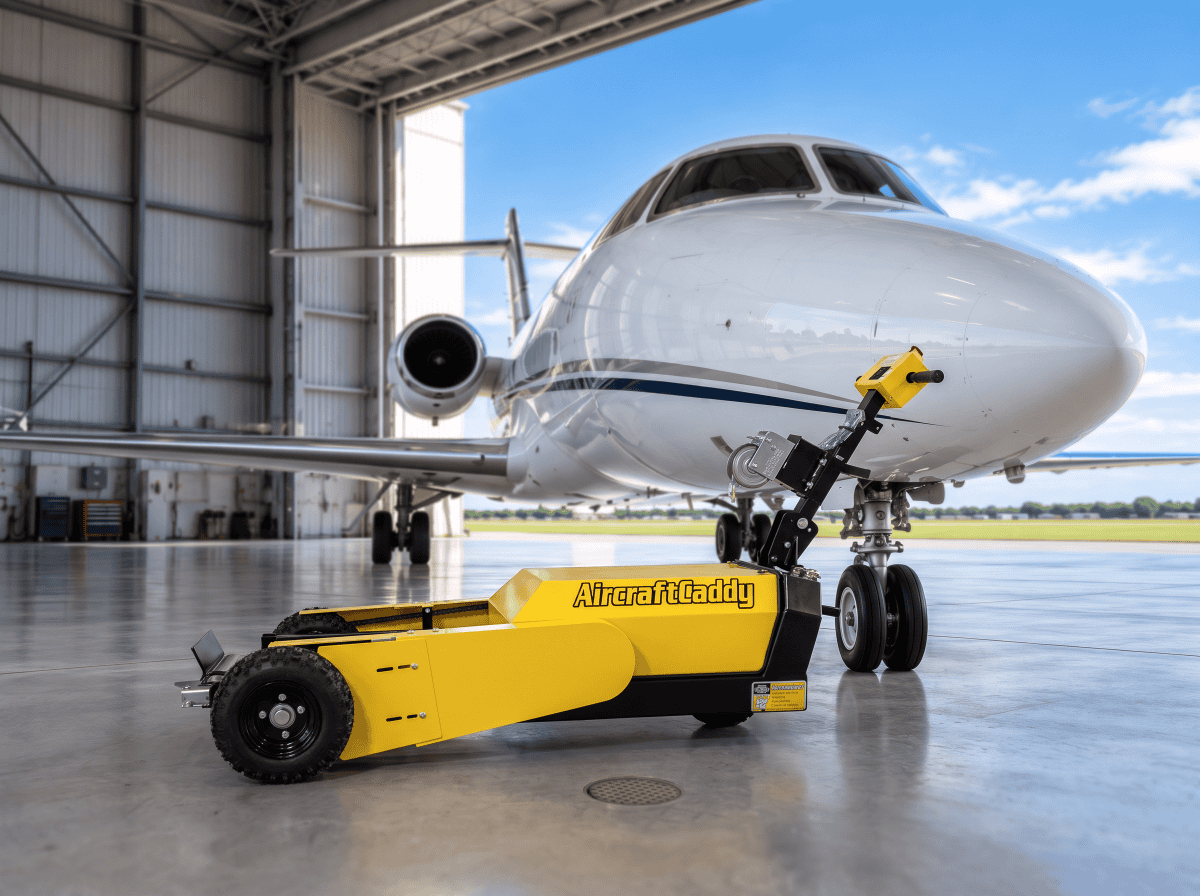
Choosing a battery-powered aircraft tug starts with aircraft compatibility, towing capacity, supported nose gear weight, route conditions, low-speed control, and charging requirements. Evaluate these together before selecting a model or comparing prices.
An aircraft’s weight helps narrow the options. The connection method, hangar layout, and daily workload determine whether a shortlisted tug fits the job.
For FBOs, flight schools, corporate flight departments, maintenance teams, and private hangar owners, the goal is practical: equipment that can handle the complete move, from connection and loading to final parking and unloading.
What should you compare when buying an aircraft tug?
Use the same requirements for every provider so you can compare proposals consistently.
| Selection factor | What to confirm |
|---|---|
| Aircraft compatibility | Exact aircraft model, landing gear configuration, wheel dimensions, wheel pants, and approved towing method |
| Towing and support capacity | Aircraft towing weight and the load the tug must support at the nose wheel |
| Route conditions | Slopes, pavement, grass crossings, door tracks, surface transitions, and expected weather |
| Hangar fit | Doorway clearance, wingtip path, turning space, and final parking position |
| Control | Loading, gradual starts, small adjustments, stopping, and unloading |
| Battery and charging | Expected workload, available charging time, electrical supply, and temperature limits |
| Ownership cost | Equipment, attachments, batteries, maintenance, training, parts, and support |
A proposal should explain how the recommended configuration meets these requirements and identify any operating limitations.
Start with the aircraft and daily workload
A flight school making repeated moves has different needs from an owner taking one aircraft out of a private hangar. An FBO handling several aircraft types also needs to understand connection changes between aircraft.
Before requesting quotes, gather:
- Aircraft makes, models, and expected towing weights
- Nose wheel, dual nose wheel, or tailwheel configuration
- Photos and dimensions of the intended connection area
- Wheel pants and nearby clearance restrictions
- Number of moves per day and approximate distance per move
- Hangar opening dimensions and the tightest parking turn
- Route photos showing slopes, door tracks, and surface changes
- Charging location and available charging time
For a mixed fleet, list each aircraft separately. Compatibility with one aircraft does not establish compatibility with every aircraft in the same weight range.
Understand towing capacity and nose gear support capacity
Towing capacity describes the aircraft weight a tug is rated to move under the manufacturer’s specified conditions.
For a tug that supports the nose wheel, the maximum supported nose gear weight is a separate limit. It describes the load the tug’s cradle or lifting arrangement can carry.
Both must suit the aircraft’s intended loading condition. Being within the towing rating does not automatically mean the nose gear load is within the support rating.
Use the aircraft’s documentation and weight-and-balance information to establish the relevant weights. Ask the aircraft manufacturer or a qualified aircraft professional for clarification where needed.
Then ask the tug provider to confirm those requirements against the exact configuration being quoted.
Check the conditions behind the rating
Ask whether the quoted towing capacity applies to your route.
An incline changes the force needed to move and control the aircraft. Surface conditions can affect rolling resistance, traction, or both. A level, dry pavement rating alone does not establish suitability for a sloped driveway, grass crossing, or winter operation.
Provide the slope, surface, and aircraft weight, then request a configuration recommendation for those conditions. A larger tug may be appropriate, but size alone does not establish that a route is suitable.
Confirm the connection method and aircraft clearances
Aircraft compatibility requires more than a towing rating.
Have the provider review the wheel dimensions, landing gear geometry, connection points, and available clearance. Confirm the proposed method against the aircraft manufacturer’s towing instructions and steering limits.
The FAA’s Aircraft Ground Handling, Servicing, and Marshalling guidance addresses towing equipment capacity, aircraft-specific procedures, and nose wheel swivel limits.
Questions to resolve include:
- Does the tug use a tow bar, wheel cradle, or another attachment?
- Is a separate tow bar needed during loading?
- Will the attachment clear the wheel pants and surrounding components?
- Can the configuration accommodate dual nose wheels?
- What adjustments or attachment changes are needed between aircraft?
- What manual effort is involved in connection and unloading?
Ask to see the complete loading process for a comparable aircraft configuration.
Evaluate control where space is tight
An open-ramp demonstration shows only part of the job. Your evaluation should also cover the doorway, the narrowest turn, and the final parking adjustment.
Observe how the tug handles:
- Approaching and connecting to the aircraft
- Loading or securing the wheel
- Starting gradually
- Making small forward and reverse adjustments
- Stopping and holding as specified by the manufacturer
- Unloading and disconnecting
Ask how speed control, acceleration, and braking work on the quoted model. Confirm what happens when the operator releases the throttle and what procedures apply on your route.
Also establish staffing requirements. Equipment that one person can operate may still require additional personnel for the aircraft or surroundings. FAA guidance recommends tow guides in congested areas.
Choose a battery and charger around your schedule
The useful battery question is: Will this configuration support our expected moves between charging opportunities?
Give the provider your aircraft weights, travel distances, move frequency, route conditions, and seasonal temperatures. Ask for a runtime estimate with those assumptions stated.
Then confirm:
- Battery type and capacity
- Compatible charger and electrical supply
- Expected recharge time after normal use
- Whether charging between moves is permitted
- Operating, charging, and storage temperature limits
- Battery maintenance and replacement requirements
Battery capacity divided by charger output does not establish a dependable full-charge time on its own. Charging behavior also depends on the battery, charger, starting charge level, and conditions.
For a busy FBO, available charging windows may influence the configuration as much as towing capacity. For a private hangar, reliable readiness between occasional moves may be the main concern.
Compare the full cost of ownership
Request a quote for the configuration your operation needs, including the attachments required for your aircraft.
Compare:
- Purchase price, delivery, and required accessories
- Battery and charger costs
- Routine inspections and maintenance
- Expected battery replacement costs
- Operator training and setup
- Warranty terms
- Replacement parts availability
- Technical support
A battery-powered tug has no combustion-engine exhaust during operation, but it still needs maintenance and appropriate charging arrangements.
Assess labor using the complete process. Include connection, loading, travel, positioning, and unloading, along with any guides or other personnel your procedures require.
AircraftCaddy options from DJ Products
The AircraftCaddy range includes battery-powered aircraft tugs with published towing capacities from 4,000 to 35,000 lbs. The lineup includes lighter-aircraft models, higher-capacity units, Magic Arm configurations, and a dual nose wheel model.
| AircraftCaddy model | Published towing capacity |
|---|---|
| 4K Jr. | Up to 4,000 lbs |
| 4K | Up to 4,000 lbs |
| 8K | Up to 8,000 lbs |
| 15K | Up to 15,000 lbs |
| 35K | Up to 35,000 lbs |
| DNW | Up to 35,000 lbs; designed for dual nose wheel aircraft |
These ratings provide a starting point for a shortlist. Confirm supported nose gear weight, aircraft compatibility, attachments, and route suitability for the specific unit.
For lighter aircraft, explore the AircraftCaddy 4K / 8K. For higher towing weights, review the AircraftCaddy 15K and AircraftCaddy 35K.
The 4K / 8K, 15K, and 35K product pages list neutral throttle braking and adjustable acceleration and braking. Available attachments and options vary, so confirm the final equipment specification in your quote.
Frequently asked questions
Is aircraft weight enough to select a tug?
- No. Also confirm aircraft compatibility, supported nose gear weight where applicable, route conditions, stopping requirements, hangar clearance, and battery needs.
Can a tug work with aircraft wheel pants?
- Some configurations accommodate wheel pants. Compatibility depends on wheel dimensions, fairing clearance, and the loading attachment. Send photos and measurements for a review of your specific aircraft.
Does a towbarless tug eliminate every need for a tow bar?
- Confirm the complete loading and unloading method. A tug’s connection during travel does not necessarily explain whether a separate tool is needed to load the aircraft.
Can battery-powered aircraft tugs operate on slopes or grass?
- Suitability depends on the tug configuration, aircraft weight, gradient, surface, and conditions. Ask the manufacturer to review the route and provide operating limits.
How long will an aircraft tug run between charges?
- There is no single runtime that applies to every operation. Request an estimate based on your aircraft weights, move distances, frequency, route, battery configuration, and temperatures.
What should I send when requesting an AircraftCaddy recommendation?
- Provide the aircraft make and model, expected towing weight, nose gear photos and dimensions, wheel pant details, route photos, slopes, hangar clearances, daily moves, and charging availability.
Find the AircraftCaddy configuration for your operation
Bring the aircraft and route details into the conversation before choosing a model.
DJ Products can review your application and help identify an AircraftCaddy configuration to consider. Ask about pricing, available options, and demonstration arrangements for your operation.