Warehouse and Forklift Injuries: Assess Hazards and Actual Costs

Review warehouse and forklift hazards using OSHA resources and documented workplace costs rather than unsupported injury-cost averages.

Workplace injuries can affect employees and disrupt warehouse operations. A useful review starts with the hazards at the actual site and documented costs, rather than applying an unsupported average injury-cost figure to every business.

Review the hazards at your warehouse

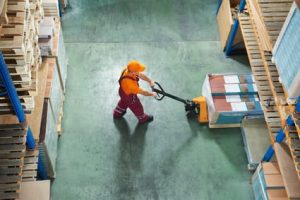
OSHA’s warehousing hazards and solutions guide covers ergonomic risks, powered industrial trucks, material handling and slips, trips and falls. Heavy pushing and pulling, awkward postures and repetitive tasks are among the ergonomic factors to examine.

Use your own records for the cost review

Review incident reports, time away from work, repairs, operational interruptions and other documented costs with the appropriate teams. Keep the assumptions and time period clear. Do not treat a general injury count or a historical estimate as a prediction for your workplace.

Match controls to the task

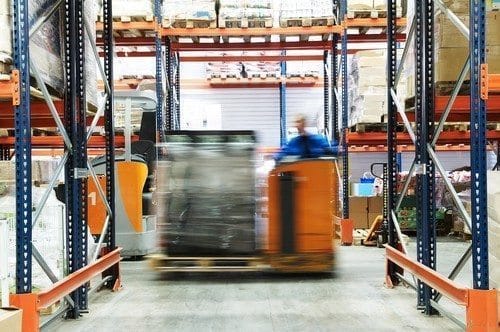
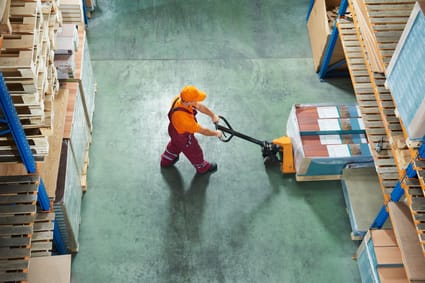
Consider layout changes, maintenance, training and suitable handling equipment together. A powered mover may reduce manual effort for a compatible task, but it does not eliminate collision, crushing or other operating hazards. Confirm the unit’s limits and the site procedure before use.

Discuss your material handling application

For equipment selection, contact DJ Products with the load, connection, route and operating conditions. Confirm the limits and training requirements for the specific unit before use.
Forklift Safety: Review Training and Workplace Hazards

Review forklift training, workplace hazards and incident prevention using OSHA guidance and an assessment of the actual site.

Forklift safety depends on the equipment, the workplace and the operator’s training. Review actual incidents and hazards instead of relying on an unsupported prediction about how many forklifts will be involved in accidents.

Use a site-specific review

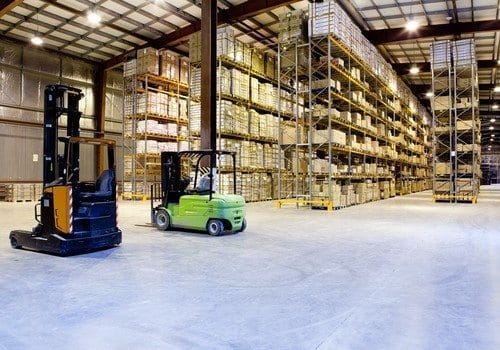
OSHA’s warehouse guidance discusses powered industrial truck hazards and the need for properly trained operators. Review traffic routes, pedestrian interactions, visibility, load handling, floor conditions and maintenance at your facility.

Make training practical

Check that staff understand the equipment they are assigned to use and the conditions they will encounter. Use the applicable training and evaluation requirements for the equipment and operation. Address unsafe conditions and provide appropriate refresher training when the review identifies a need.

Learn from reports

Invite workers to report hazards and close calls, document the response and check whether the corrective action worked. Technology can support a review, but equipment data alone does not replace observation, maintenance or a suitable operating procedure.

Discuss your material handling application

For equipment selection, contact DJ Products with the load, connection, route and operating conditions. Confirm the limits and training requirements for the specific unit before use.
OSHA Weighs in On Forklift Safety Awareness

OSHA Weighs in On Forklift Safety Awareness

Forklifts are standard material handling equipment in most warehouses. While forklifts allow greater productivity, they can also increase risk of injury and damage if workers don’t follow safe operating procedures.

The Occupational Safety and Health Administration (OSHA) promotes education and training to raise awareness of workplace safety. Here are OSHA’s top tips for operating forklifts safely and efficiently.

Mounting and Dismounting

– Make sure hands are clean and dry to prevent slipping off handholds.

– Don’t use the steering wheel to pull yourself up.

– Check the soles of shoes for grease that may cause your footing to slip.

– Climb in and out carefully and avoid jumping.

Starting and Stopping

– Conduct a visual and operational inspection of the forklift before each use.

– Check the travel path for obstructions.

– Watch out for blind spots and use the horn as needed.

– Don’t park in a spot that blocks the aisle or doorways.

– Always engage the parking brake.

Driving, Steering and Turning

– Drive at a speed that allows for safe stopping.

– Always look in the direction of travel.

– Reduce speed when turning and come to a complete stop before changing directions.

– Make sure forks are lowered before turning or reversing.

– Give pedestrians generous clearance.

– When traveling on an incline, always keep the load upgrade.

Forklift Operators

– Keep arms and legs inside the forklift at all times.

– Never carry passengers on the lift itself.

– Don’t engage in stunt driving or tricks.

– In case of a tipover, hold tight to the steering wheel, brace your feet and lean away from the impact.

Put Safety First with Material Handling Equipment from DJ Products

Minimize costly workplace injuries and damages with our ergonomically-designed tugs, movers and pushers. Visit our website to learn more about our efficient and cost-effective material handling equipment.

Warehouse Injuries – Pallet Rack Collapse Tops the List

Watch Out Above You for any Potential Hazards - Like Falling Wooden Pallets.
Watch Out Above You for any Potential Hazards – Like Falling Wooden Pallets.

You stock your facility with the warehouse equipment necessary to keep employees safe. Unfortunately, even small issues can result in serious injuries to workers when overlooked. Though accidents will happen, making staff aware of safety hazards and arming them with the proper training and tools minimize risks.

Four Commonly Overlooked Warehouse Hazards

The most common warehouse hazards are:

1. Pallet Rack Collapses: Pallet rack collapses occur when materials aren’t stowed in an orderly manner. They are exceptionally dangerous when resulting from high tiers, where even small items can become dangerous projectiles with momentum. Stacking items/pallets with the heaviest/largest items on the bottom and lightest/smallest on top, firmly positioned and wrapped with adequate space between pallets for lift truck access can prevent dangerous, costly accidents.

2. Slips, Trips and Falls: Although the easiest to prevent, this segment constitutes the majority of general industry accidents, causing 15% of accidental deaths (2nd to motor vehicle fatalities). Clear, clutter-free work areas, unobstructed aisles/walkways where hazards are quickly cleaned/quarantined, and proper lighting are key to mitigating risk.

3. Hazmat Incidents: Both small and large-scale hazardous material spills threaten worker safety. Here, employee knowledge of proper cleanup and containment procedures leading to the speedy resolution of spills are key, as is access to the proper personal protective equipment and current safety data sheets.

4. Forklift Crashes: Both environmental hazards and operator mishaps contribute to fatal forklift accidents. Proper training on warehouse equipment, inspecting machinery prior to use, knowledge of industry-specific standards, as well as selecting machinery that is easy to use can reduce the risk of forklift-related injuries and deaths.

Move beyond the basics, minimizing employee risk. Boost employee safety and productivity with the latest in warehouse equipment from DJ Products today.

Top Four Warehouse Injuries and How to Prevent Them

September Warehouse Cleaning Tips

U.S. Bureau of Labor Statistics data for 2016 show that there were five reported non-fatal injuries and illnesses for every 100 full-time workers in the warehousing and storage industry. This rate is significantly higher than the 2.9 reported cases per 100 full-time workers across all industries.

Our electric tugger carts are designed to reduce risk of common musculoskeletal and repetitive-motion workplace injuries. Here are the top four injury hazards found in warehouses along with expert prevention tips.

Collapsing Pallet Racks

Haphazard storage is the most frequent cause of accidents involving pallets. This is especially dangerous in high-pick areas, where momentum can turn the smallest falling item into a serious danger.

– Stack pallets with heavier items at the bottom.

– Leave adequate space between pallets to avoid pallet rack collapses caused by forklifts.

Slips, Trips and Falls

OSHA has determined that slips, trips and falls make up the largest category of general workplace accidents.

– Keep work areas free of clutter.

– Clean up spills immediately.

– Make sure hallways and staircases are well-lit.

Hazardous Materials

Any leak or spill of hazardous material should be considered an emergency, no matter how small the amount.

– Have an effective hazmat plan in place and train all employees.

– Provide access to personal protective equipment (PPE) and current safety data sheets (SDS).

Forklift Collisions

Warehouse environment, operator error, and the condition of the forklift are all factors in crashes.

– Conduct training on forklift operation and common hazards.

– Perform regular inspections and maintenance.

Make Safety a Priority with Tugger Carts from DJ Products

Warehouse activities often involve pushing and pulling, resulting in severe stress on a worker’s body. Our tugger carts eliminate the strain that causes many workplace injuries. Call 800.866.2651 and talk to one of our helpful sales engineers.

Dust Can Become Combustible in Warehouse Environments – What to Know

Warehouse Dust Can be Combustible

Avoid the fire and the financial pitfalls by keeping combustible dust out of the equation! A warehouse needs to be clean and safe so owners remain profitable and their employees successful at their assigned tasks.

Combustible Dust is a Fire Hazard

A recent article speaks of the need for simple methods (like incorporating a sealed work place) to be implemented so your employees and their machinery can function properly in a safe environment. The proper material handling equipment is also vital to keep operations running smoothly.

From Dust to DJ Products

Material handling equipment keeps human contact with potential hazards like combustible dust or muscle strain to a minimum. It simplifies tasks so your employees can enjoy their jobs without having to be overly physical. Dust not only affects warehouse processes by exposing humans to respiratory illnesses, it can also lead to more serious illnesses like lung cancer.

Overexposure to safety hazards that should be avoided will eventually lead to safety violations and on-site accidents. That’s why DJ Products material handling equipment plays a vital role in creating a more efficient environment. Precision machinery that can fare well in any environment keep costs down and employees on the job. Investing in battery-operated machines is really a step towards investing in the life and health of your labor force.

Diligence in Action

Stopping dust from infiltrating the environment you live and work in is important. It’s also important to ensure that safe work practices are an integral part in every area of business. We understand that you are responsible for your employees and your financial success. Do you need material handling equipment that is as reliable as those you employ? Stop by DJ Products today and start breathing a little easier!