
Warehouse Robots May Become Your Best Employee

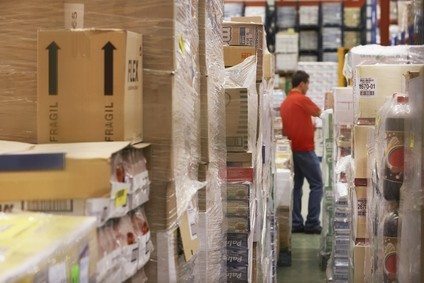
Smiling worker in warehouse
Your Next Employee May Just Be A Robot

As a task automation tool, warehouse robots serve as both an inexpensive “employee” and a method of improving your warehouse efficiency for everyone.

The BBC checked in on a new robotic dolly that reads orders and moves to the correct location. The robot does not handle the picking and grabbing, but it does move the loading cart into the right position so a human passerby can simply place the item on the cart.

If your warehouse does not use automated material handling solutions, your workers are handling the full physical exertion of every aspect — pushing or pulling the cart, lifting and loading the item, and moving the heavy cart from a standstill.

The Growing Value of Automation

Motorized industrial tugs are a commonsense solution for improving warehouse efficiency. No need to reinvent the wheel with a system designed for robots rather than humans. Motorized carts simply help workers get more done in less time, with less injury risk.

Humans can efficiently and accurately read an order and pick the correct item — but the strenuous, repetitive task of moving the cart slows down the process.

The new British robots require that a human happens to walk by and pick the item. Industrial tugs have an efficiency advantage — the worker simply directs the motorized cart from location to location.

Take away the strain of moving warehouse equipment and speed up the process, and your human employees will perform even better thanks to industrial tugs.

For more info about motorized cart movers and cart pushers, visit DJProducts.com and discover how you can reduce injury, boost productivity, and get more done at the warehouse.

B&H Photo Warehouses Face Personnel Revolt as Workers Try to Unionize

Hospital Hallway
Warehouse Workers are Revolting

A major blowback against warehouse conditions has led to a unionization movement at B&H Photo Video. The New York City electronics giant faces allegations of long hours and poor air quality at its Brooklyn warehouse.

B&H operates a large store near Penn Station in Manhattan, as well as a large warehouse at the Brooklyn Navy Yard. Employees have reported extreme dust problems as well as forced double shifts.

The Alleged Warehouse Problems at B&H

Employees say the dust causes nosebleeds and general health problems. The other main contention surrounds frequent long hours. The Hasidic-owned business operates Sundays and half of Fridays, requiring a 5.5-day week. Additionally, B&H closes for many Jewish holidays. After closings, workers allegedly must work 17-hour shifts to make up for lost time.

Whether unionization happens or not, it seems clear that something needs to change at the B&H warehouse.

Reports indicate that the warehouse either does not have the right equipment to get the job done efficiently or the equipment is too complex to be operated without extensive training, which workers say is not provided.

At the B&H retail store, a system of conveyor belts moves products from the shelves to cash registers. Perhaps automation will be part of the solution to streamline the warehouse.

Worker satisfaction can be significantly improved — along with warehouse efficiency — through the use of manufacturing industry tugs. Motorized cart movers reduce the physical strain on workers while streamlining material handling.

Does your warehouse use technology to its advantage? Manufacturing industry tugs keep workers happy and productive. Visit DJProducts.com for more information about cart movers and cart pullers.

Technology Changes the Way Material Handling is Performed in 2015

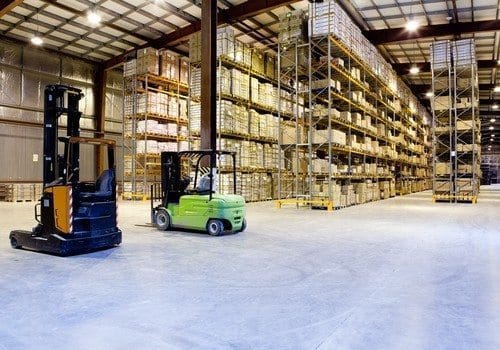
Large warehouse
Business Growth and Automation

When your business grows, can you handle the surge in labor? Technological advances in material handling are making things easier with automation. From manufacturing equipment, to warehouse distribution, to shipment — industrial tugs and other automated material handling solutions are driving growth in all industries.

Forecasts through 2019 call for a compound annual growth rate of more than 8 percent in the material handling industry. The numbers from BCC Research point to high-tech advances ranging from robotics to wearable tech as a source of growth for the next 20 years.

Tech that Makes Material Handling Faster, More Agile

Buzzwords like scalability and flexibility have been around for years. The new tech available are turning those concepts into a key part of everyday operations.

Consider the effects of adding industrial tugs to a warehouse. With a manual wheeled cart, a single employee can only move “X amount” of products around the warehouse floor in a given day. With a motorized tug that pushes or pulls the cart, the employee avoids the physical strain of maneuvering the heavy items all day.

Busier than usual one day? Automated solutions help your existing workforce accomplish more. If order volumes vary by day or season, a warehouse can keep costs down with a right-sized workforce using smart solutions that provide the flexibility and scalability required at all times.

Growing Your Business with Automated Material Handling

If your staff moves inventory, equipment, or vehicles around the worksite, we have industrial powered carts to increase productivity (and reduce worker injury, too).

Check out the WagonCaddy and other industrial tugs at DJProducts.com for more info.

How Did U.S. Automakers Get Themselves into This Mess?

President-elect Obama yesterday asked President Bush to throw a lifeline to the battered U.S. auto industry. House Speaker Nancy Pelosi also called for “emergency and limited financial assistance” for auto makers and suppliers, introducing legislation to make the big three automakers eligible for help under the $700 billion Congressional bailout passed last month. The move followed disastrous third-quarter losses reported by Detroit’s Big Three: General Motors, Ford and Chrysler.

Prior to its election break, Congress passed legislation providing $25 billion in government-backed loans to automakers to help them retool for the production of more fuel-efficient vehicles. Since then, the Big Three and United Autoworkers officials have asked for an additional $25 billion to keep the automakers afloat and a further $25 billion to fund future healthcare payments to 780,000 retirees and their dependents. Legislation currently being written in the House and Senate is expected to severely limit executive compensation and demand vigorous federal review in exchange for bailout funds.

Critics say Detroit is suffering from decades of short-sightedness and poor decision-making. In iterating the missteps that have led automakers to the edge of bankruptcy, critics cite the auto industry’s failure to invest in new products, failure to aggressively pursue fuel-efficient cars, failure to meet the competitive challenge of Asian imports and failure to take on growing union demands.

“There’s been 30 years of denial,” said Noel Tichy, a University of Michigan business professor, author and auto industry consultant. “They did not make themselves competitive. They didn’t deal with the union issues, the cost structures long ago, everything that makes a successful company.”

Tichy says the auto industry’s problems started in 1980s when Toyota and Honda mastered the production of reliable, fuel-efficient cars. Detroit, unfortunately, failed to see this as an omen of future trends. Cheap gas and a strong U.S. economy made Detroit blasé about the public’s fledgling interest in ecology and “green” lifestyles. Driven by high profits and consumer demand, the Big Three automakers continued to invest in the traditional “bigger is better” model, flooding the American market with luxury vans, trucks, SUVs and the ultimate example of overindulgence, the Hummer.

By the 1990s, Detroit had effectively ceded the small and midsize car markets to Toyota and Honda. When fears of global warming, pollution and high oil prices began to gain affect public opinion and buying habits after the millennium, U.S. automakers were caught unprepared. Skyrocketing fuel prices over the past year sent sales plummeting and sealed their fate. Coupled with a recessive economy and tight credit, failure to address future trends has driven the U.S. auto industry to the brink of extinction.

Next time: Hope for the future: Changes that will redefine the U.S. auto industry

Is Your Warehouse in Trouble? A How to Know Checklist

Puzzled Confused Lost Signpost Showing Puzzling Problem
Is Your Warehouse In Trouble?

Discovering a problem inside your warehouse should be considered a good thing — you know what to fix! The tricky part involves figuring out the hidden causes of lost productivity. Once you know what’s wrong, you can take action to make the warehouse more efficient.

Operations expert Dave Piasecki has a helpful checklist of warehouse problem symptoms to look for. Some frequently overlooked problems include:

  • Equipment damage
  • Worker injuries & declining productivity
  • Cleanliness and organization
  • Low morale

Some problems, like inventory errors, can be easily spotted in the numbers. But what if workers are slowing down and performing below expectations because of an inherently problematic process? That’s when it’s time to focus on the process itself.

Improving the Process, Implementing New Tools for Warehouses

As Piasecki says, you only need to analyze so much. You need to implement solutions.

Do you need a drastic overhaul? Probably not. Instead of worrying about elaborate changes, streamline the material handling process with better tools for your workers.

Powered industrial tugs improve warehouse efficiency for each individual task, and for the staff as a whole. Replace the tiring, injury-riddled problem of manually pushing carts with motorized tugs, and a worker can accomplish more in less time.

Over the long haul, your workers will maintain a higher level of productivity thanks to fewer injuries and less energy spent over the course of a day’s work.

Then there’s a ripple effect: inventory and equipment get moved more efficiently, so managers, receivers and everyone else can do their job with less back-up and stalling.

Ready to solve the problems plaguing your warehouse? Start with industrial tugs from DJProducts.com.

Car Dealership Puts Passion for Helping Charities at Top of To Do List

MP910216373[1]
Making Donations
Everybody wins when businesses partner up with charities to help make a difference. For Don Rodman, decades of devotion to hosting and promoting events for causes that are dear to him have not only made him a beloved figure in his community, but contributed over $100 million to a variety of nonprofits.

The Boston Globe recently profiled Rodman, a Ford dealership owner in Foxborough, Massachusetts. Since 1990, his Rodman Ride for Kids has raised funds and awareness for youth programs in his home state. He’s been called upon by other charities to help improve their events, and he’s even been recognized by Pope John Paul II for his charitable work.

A Story of Partnering for Good

Rodman likes to say that anybody can get involved in philanthropy. His story shows that what may start as a small idea can grow over time into a rallying point with profound impact.

One important form of motivation is that Rodman increases his personal donation when an event reaches an ambitious but realistic fundraising goal. His auto dealership also covers operational costs for the events, so donors know their money goes where it’s needed.

At DJ Products, we’re proud to help our nation’s car dealerships function with greater safety and efficiency through the use of our dealer car mover/pushers. From equipment carts to stalled cars, our motorized tugs help car dealership personnel perform daily operations with a streamlined workflow. And as car dealership tugs, our devices meet the parameters for a wide variety of commercial uses specific to car dealerships.

Buying for your dealership’s unique purpose? Check out all our industrial tugs at DJProducts.com.

The Future of Material Handling Industrial Tugs with Forecast to 2020

industrial tugs
The Future of Material Handling Innovation

Grand View Research in San Francisco has detailed the outlook for a wide variety of equipment and projects a global market of more than $208 billion in 2020.

The in-depth forecast for material handling equipment confirms that advanced technology and a growing need for automation and efficiency are driving steady gains in the industry.

The Forecast for Material Handling Equipment

With more businesses using material handling equipment to automate tasks and make human labor more efficient, we’re seeing industry rely more and more on material handling solutions to attain and maximize profitability.

The growing Asia Pacific region has the largest market for such equipment, and it continues to grow. North America and Europe are also seeing growth in the coming years, however.

In warehousing and distribution, material moving products like industrial tugs are growing. Infrastructure projects are also spurring massive sales in excavation, cranes and related equipment.

Highest Growth Seen in Material Handling

Automated material handling systems like industrial tugs and sortation devices are expected to grow more than construction, excavation, and other types of industrial machinery. The report predicts a compound annual growth rate of 5.7% through 2020.

This growth will not surprise anyone who has seen the wide range of uses for today’s material handling equipment. Industrial tugs can be used in industries ranging from warehousing to hospitals and hotels.

The latest devices have applications fit for virtually any employee in any industry where inventory, equipment, or raw materials need to be transported or distributed.

Is your business enjoying the efficiency and profitability boosts of automated material handling? Find industrial tugs and other ergonomic solutions at DJProducts.com.

New Surfaces May End De-Icing Needs for Aircraft

No More Icy Roads And Runways

Scientists may have found a way to eliminate the need for aircraft de-icing — by preventing moisture from adhering to surfaces in the first place.

A team of researchers from China and Israel recently unveiled their findings about how water droplets react upon contact with surfaces. The results are published in Applied Physics Letters and have quickly become discussed by materials manufacturers such as AZoM.

The Breakthrough that May Stop De-Icing

Picture a raindrop falling on a flat surface: the droplet flattens out momentarily, then retracts into more of a spherical shape.

The study looked into the details of how long water droplets remain flattened against a surface before retracting. The faster the water retracts, the less likely it is to stick — and freeze into ice.

While you might imagine that water sticks less to metal than organic materials, scientists point out that lotus leaves are the “gold standard” for repelling water due to an air cushion effect.

If the same effect can be produced on surface materials used for aircraft, we might see de-icing become a thing of the past.

Aircraft materials made from cutting-edge materials may be more hydrophobic than ever. Without de-icing, or with less frequent de-icing, how much more efficient would your aircraft maintenance be?

Great innovations are leading to easier operations and more efficient solutions for the aircraft industry. Our Lindbergh small aircraft tugs are already helping many operators enjoy simple towing and maneuvering on the ground. Small aircraft tugs make it easier to move equipment in snow and sleet and other tough conditions.

Contact us at DJProducts.com for more info about Lindbergh small aircraft tugs.

Tips to Having Truly Efficient Warehouse Operation

Depositphotos_33849809_xs
Warehouse Efficiency

Warehouses greatly benefit from a “work smarter, not harder” mentality. Better processes can lead to far greater results than any amount of elbow grease.

Here are some key ways to improve warehouse efficiency:

All Employees Should Use the Same Methods

Warehouse employees often develop personal methods that work best for them, but everybody should be following the same general operations. The process can’t vary depending on who is on shift. Develop a system that works well dependably, so you can enjoy consistency and efficiency even after turnover.

Don’t Bury and Forget Suggestions & Improvements

Do you have an employee suggestion box and conduct regular meetings? And more importantly, do items on the agenda tend to get buried?

These should be sources of improvement, not thoughts on the back burner. Set aside time to take action. Use a plan of action sheet, set reminders for follow-up, and actively test new solutions to gauge efficiency improvements.

Automate Repetitive, Labor-Intensive Tasks

Warehouses don’t just lose efficiency when workers go down with injuries. Your employees slow down and take more breaks when sore and tired from repetitive tasks. Motorized industrial tugs reduce the impact of pushing and pulling heavy loads — one of the most common sources of warehouse injuries and inefficiencies.

If your workers manually push wheeled carts or heavy equipment, industrial tugs speed things up and keep them working efficiently day in and day out. Our industrial tugs can be efficiently maneuvered at up to 3 mph by one worker, even in tight spaces.

Need to boost warehouse efficiency? Browse industrial tugs and cart pushers at DJProducts.com and follow our blog for more advice.

Employers Are Urged to Step Up Health Initiatives to Lower Healthcare Costs

Stepping Up Healthcare

Toby Cosgrove, CEO of the Cleveland Clinic, has a bold message for private business: help your employees lose weight and stay healthy, because employers have the greatest impact on public health.

Cosgrove recently spoke at a panel discussing Obamacare and said that the biggest challenge right now is lowering the cost of healthcare. Employers can cut costs with programs aimed to help workers fight obesity, smoking, and chronic disease.

Healthy workers not only help lower a company’s health costs, but boost productivity in the long run.

How Businesses are Using Workplace Health Programs

About half of all private businesses have some kind of health initiative. Healthcare experts like Cosgrove strongly believe that they help businesses retain healthy workers and benefit the bottom line.

Popular employee health programs range from on-site fitness classes to healthy food programs for vending machines and cafeterias. Some employers are providing direct assistance for workers to quit smoking.

Of course, yoga classes and low-calorie snacks are only part of the solution. Employers still need to provide a safe work environment to prevent injuries that directly result in huge healthcare costs. Reducing the risk of workplace injuries has significant impact on employer health costs.

In hospitals, for example, nurses and orderlies can use motorized healthcare carts to push equipment and linen carts. Long term, these ergonomic carts reduce back, neck, and arm injuries from repetitive stress.

If your employees move heavy equipment, industrial tugs and cart movers like our healthcare carts can protect your staff and reduce your healthcare costs in the long run. Visit DJProducts.com for more info about products to improve worker health and productivity.