
World’s Shipping Industry Sets Aggressive Goal to Obtain by 2050

World's Shipping Industry Sets Aggressive Goal to Obtain by 2050
World’s Shipping Industry Sets Aggressive Goal to Obtain by 2050

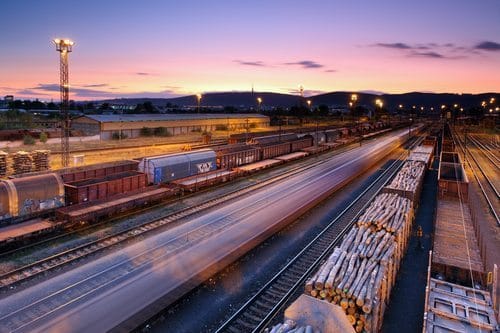
Are you using an eco-friendly electric terminal tractor to handle your semi trailer moving needs? The global shipping industry has fully embraced a green mandate with an agreement to cut carbon emissions in half by the year 2050.

Seeking an International Solution to Carbon Emissions

The landmark deal was finalized on April 13 by members of the UN International Maritime Organization. Plans call for a minimum 50 percent total reduction in greenhouse gas (GHG) emissions against the benchmark measure of 2008.

During the two-week discussion period held in London, not all of the organization’s 173 member nations were initially in accord. Saudi Arabia and the United States raised objections to earlier drafts, while some members, including the Marshall Islands and the EU, lobbied for higher reduction goals.

In the end, stakeholders expressed satisfaction with the final terms of the agreement. Peter Hinchcliffe, secretary general of the International Chamber for Shipping, called it a “clear signal” for the shipping industry to develop zero carbon dioxide fuels.

The Fight Against Global Warming

The United Nations Paris climate agreement of 2015 did not include aviation and shipping. While the aviation industry subsequently forged its own emissions plan, shipping’s reliance on bunker fuel to run long-distance ships presented a greater challenge.

Shipping currently produces approximately two percent of carbon emissions worldwide. Experts at the World Bank have warned that the figure could eventually reach 15 percent if steps are not taken to halt growth.

Go Green with the Electric Yard Dog from DJ Products

Our battery-powered TrailerCaddy terminal tractor easily accommodates semi trailer moving up to 100,000 pounds. The Yard Dog is ergonomically designed and includes a number of safety features to reduce the risk of workplace injuries.

Call 800.686.2651 for more information.
Colorado Adds Human Trafficking Prevention Training to CDL Requirements

Colorado Adds Human Trafficking Prevention Training to CDL Requirements

In 2016, the state of Colorado saw a 56 percent increase in human trafficking cases. The trucking industry is taking notice. Recently, human trafficking prevention was added to semi trailer movers’ requirements for acquiring a CDL.

Exercising proper safety measures is vital to all things related to the transfer of products, especially to those involved in the warehouse/trucking business. Similarly, DJ Products, a company that strives to provide quality machinery so that safety requirements are met, embodies that same care for human life by providing applicable solutions to the potential hazards in the industry.

Using Products to Protect

Safeguarding human lives is a priority. By putting in place machinery that lightens the workload and lowers the amount of work-related accidents, the potential for human error begins to evaporate. Semi trailer movers use precision machinery to make their tasks easier and to increase efficiency.

Products like the Yard Dog/Terminal Tractor move loads that weigh hundreds of thousands of pounds and allow workers to focus on other important tasks. Drivers and warehouse workers often work long hours and in human trafficking prevention, being aware is key. Increased hours of labor wreaks havoc on mental awareness.

The ability to observe surroundings more thoroughly because of the utilization of prime machinery can help stop the influx of human trafficking.

Giving to Get

Affordable solutions like time-saving, durable machinery may seem too simplistic to solve big problems, but like in human trafficking, simple changes create impactful results. At DJ Products, semi trailer movers benefit from the products we provide. Enduring, fail-safe machinery allows employees to use their energy for the benefit of many. Contact DJ Products today and find out how our products facilitate safety!

What Is Changing the Face of Logistics in 2018?

What is Changing the Face of Logistics?

Thanks to improved efficiency and safety, battery-powered semi trailer movers from DJ Products are raising the bar on logistics productivity. What are some other major innovations and trends that have been changing the face of the logistics industry in 2018?

Blockchain Technology

Originally developed for use with digital currency Bitcoin, blockchain technology allows for open distribution of digital data without alteration or copying. Experts predict that by 2021, approximately one-quarter of major global companies will incorporate blockchain for transactional data.

Choice of Logistics Providers

In the continuing competition to offer a superior customer experience, the latest element gives buyers a choice of logistics providers to handle their shipments. While the option began last year with only a few e-commerce companies, the trend has picked up steam in 2018.

Elastic Logistics

As the term implies, elastic logistics is a means of expanding and contracting services to align more precisely with supply chain requirements at any given time. Many companies are outsourcing fleets through third-party logistics providers (3PLs) to take advantage of increased flexibility without increased costs.

Perfect Order Deliveries

Can it get any better than perfection? The numerous challenges involved in the delivery process create a daunting barrier to perfect orders, but when the goal is attained, it provides the ultimate in customer satisfaction.

Integration of Sustainability and Profitability

Carbon footprint reduction has become an essential part of operations for all businesses. Logistics companies that offer green features such as intelligent auto-routing are attractive partners for shippers looking to reduce both carbon emissions and costs.

DJ Products: Your Source for State-of-the-Art Semi Trailer Movers

Our Electric Yard Dog is an eco-friendly solution to save time and money while reducing injury risk. Visit our website to learn more from our sales engineers.

Infrastructure Priorities for Supply Chain Logistics Help the Economy to Grow

Infrastructure Priorities for Supply Chain Logistics Help the Economy to Grow

End users may sometimes take supply chain functions for granted. The truth is that shippers and logistics management face congestion, bad weather and other challenges to deliver goods on time and in good condition.

Supply chain professionals invest in high-tech software and high-quality equipment such as yard trucks, but they can’t do it all by themselves. Here are five infrastructure-related priorities that should be addressed by public funding.

Congestion

Highways, rail hubs and ports in the United States are at such a high level of congestion that it’s putting our country’s shippers at a serious disadvantage with global competitors. This problem needs to be corrected so it aligns with economic growth goals.

Parking

Lack of sufficient truck parking was apparent during the stormy weather that battered the East Coast earlier this year and restricted travel on major highways. The Fixing America’s Surface Transportation (FAST) Act includes helpful provisions for building new parking areas and using existing facilities such as weigh stations.

Freight Advisory Committees

Under the FAST Act, the Department of Transportation is charged with promoting the establishment of freight advisory committees in each state. These committees would include stakeholders from the public and private sectors, enabling better communication regarding freight-related projects.

National Hiring Standards

Creating national hiring standards would eliminate confusion surrounding FMCSA credentials and help small carriers be more competitive.

Infrastructure Funding Methods

While there’s a definite need to create funding mechanisms, care should be taken to institute methods that allow collection of funds without hampering the interests of the freight companies they’re meant to help.

Boost Safety and Productivity with Yard Trucks from DJ Products

Looking for a cost-effective way to increase efficiency while reducing injury risk? Call 800.686.2651 to learn more about our Electric Yard Dog.

Load Dimensions: Check the Rules for the Actual Route

Check vehicle and load dimensions against the actual route. Review federal width guidance alongside applicable state rules and permit requirements.

Over-the-road load dimensions need a route-specific review. A single nationwide height, length or payload figure is not enough to decide whether a shipment needs a permit or escort.

Distinguish federal and state requirements

FHWA’s Federal Size Regulations guide describes federal commercial-vehicle length and width requirements and the networks where they apply. It states that there is no federal commercial-motor-vehicle height requirement; states set height restrictions. The guide discusses the general 102-inch width requirement on the National Network and reasonable access routes, including scope and exceptions.

Measure the complete shipment

Review the vehicle configuration, cargo dimensions, overall and axle weights, route clearances and state requirements with the carrier and permitting authorities. Obtain the applicable permits and resolve travel restrictions, markings or escort requirements before dispatch. Do not rely on a universal 46,000 lb. load limit or an 8 ft. 6 in. height limit.

Plan yard handling separately

Road permissions do not establish the suitability of a yard mover. Check the trailer connection, load, surface, grade and published limits for the actual equipment and facility.

Discuss your material handling application

For equipment selection, contact DJ Products with the load, connection, route and operating conditions. Confirm the limits and training requirements for the specific unit before use.

Cryptocurrency Payments Coming to Container Shipping; is Trucking Next?

Cryptocurrency Payments Coming to Container Shipping; is Trucking Next?

Cryptocurrency is increasing its impact on various industries through the world of finance. Since its inception in 2009, digital financial avenues are beginning to widen. The container shipping industry has now jumped on the cryptocurrency bandwagon.

Certain companies (like those involved in manufacturing) benefit from the cost-effective solutions cryptocurrency provides, directly or indirectly. One logistics business that is considering using digital currency in their day-to-day is the trucking industry. The implementation of cryptocurrency increases time and cost-saving opportunities, much like what quality products provide to trucking companies who incorporate their use in day-to-day operations.

Transporting Solutions

The trucking business touches all aspects of commerce, including manufacturing. From transference of products from place to place to employing yard trucks to make loading simpler, the trucking world is ripe with potential. And their need for sufficient data logging and record-keeping is well-known.

The man-hours required to ensure invoices, arrival dates, load documentation, supply chain info and other valuable data is properly secured and accounted for is astronomical. In the past traditional methods have proven woefully inefficient without utilizing advanced technology to make workloads lighter.

Cryptocurrency is a data safeguard for companies that have an internal and external need for accurate data transfer. Trucking logistics requires keeping accurate ledgers, inputting vital information, and producing proficient timing that works in sync with warehouses and other businesses.

Compiling information that is secured through digitized algorithms and computer coding protects blocks of data from illegal interlopers. Cryptocurrency offers the element of efficiency to an industry that thrives on timing and information security.

Like cryptocurrency, quality machinery by DJ Products through their line of quality yard trucks can move the truck industry towards better efficiency and an altogether less strenuous work environment.

Tips for Moving Your Supply Chain into the World of Digital

Moving to the Digital Domain

Digital technology has touched every part of our lives, so it’s no surprise that supply chain management is embracing this transformation. As consumers continue to demand faster delivery times, technology can streamline every step of the process, from forecasting seasonal demand to managing terminal tractors.

What Is Digital Business?

As explained by IT research and advisory firm Gartner, digital business refers to new business designs that combine the digital and physical worlds. A recent study by Gartner found that digital business is second only to the cloud in terms of top investment areas.

Technology provides the means to gather unprecedented amounts of data. Digital business requires an ability to connect directly with customers and partners in order to access, extract and analyze relevant information.

Benefits of Supply Chain Digitalization

– Real-time updates for inventory and freight are readily available.

– Decision-making is more accurate thanks to a greater understanding of supply and demand.

– Companies have the flexibility to respond immediately to sudden changes or disruptions.

Making the Move to Digital

Digitization involves much more than simply overlaying digital apps over current processes. In order to realize the full power of digital, it’s important to examine core processes in terms of how they support digital and align them accordingly.

According to Gartner, although most C-suite leaders believe digital disruptions are inevitable in the near future, only 25 percent of them have a digital strategy in place. As a result, Gartner recommends that businesses make it a priority to develop short- and long-term plans to incorporate digital into their supply chain.

Save Money and Manpower with Electric Terminal Tractors

The Electric Yard Dog from DJ Products lets a single employee move trailers weighing up to 100,000 pounds. Call 800.686.2651 to learn more.

2018 Intermodal Commentary: Historical Context

Read the 2018–2019 intermodal discussion as historical commentary. Assess current routes, service terms and quotes before making freight decisions.

This article originally discussed intermodal forecasts for 2018–2019. Those forecasts describe a past planning period; they are not current growth rates, freight prices or service guarantees.

Evaluate the actual lane and service

For a present shipment, ask the carrier about the full route, terminal handoffs, timing, capacity commitments and charges. Compare current information for the shipment rather than applying a general historical growth estimate.

Plan the facility handoff

Review trailer staging, dock availability, traffic routes and responsibilities at your site. A handling-equipment purchase does not guarantee a shipping time or establish that an operator is exempt from licensing or other requirements. Confirm the rules for the actual operation and select equipment against its published limits.

Discuss your material handling application

For equipment selection, contact DJ Products with the load, connection, route and operating conditions. Confirm the limits and training requirements for the specific unit before use.

Tips for Diversifying the Number of Your Truckload Carriers

Tips for Diversifying the Number of Your Truckload Carriers

With more than 200,000 for-hire full-truckload carriers in the U.S., it seems there are enough providers to keep semi trailer movers hopping. But available capacity is subject to a number of fluid factors, which could suddenly leave you in a bind without proper planning.

Experts say your best bet is to diversify suppliers among large- and small-asset carriers. Here are their top suggestions for optimizing this approach.

Align Supply Chain Segments with Provider Goals

Many carriers are implementing yield management tools to maximize revenue opportunities without overburdening drivers. As a result, there is little flexibility to accept jobs that don’t fit their lane and volume requirements.

High volume alone is sometimes not enough incentive for carriers. Look for providers whose goals are compatible with your different needs.

Leverage the 80-20 Rule

If your business is like most, 80 percent of load volume is in 20 percent of lanes. The challenge becomes addressing the other 20 percent of load volume that’s in 80 percent of lanes.

Approximately 97 percent of carriers in the U.S. have fleets of 20 or fewer trucks. These smaller providers have the elasticity to handle demand spikes, niche locations and other features of the 20 percent volume.

Engage a Third-Party Logistics Provider

Portfolios with multiple carriers benefit the big picture, but they’re difficult to manage on a day-to-day basis. A third-party logistics provider (3PL) consolidates the process so you’re working with a single source rather than several.

Solve Yard Congestion with Semi Trailer Movers from DJ Products

Our Electric Yard Dog offers valuable returns in greater efficiency and fewer workplace injuries. Our knowledgeable sales engineers are ready to help you choose the best semi trailer movers for your applications.

Call 800.686.2681 to learn more.

2018 Truckload Market Commentary: Historical Context

Read the 2018–2019 truckload market discussion as historical commentary. Use current quotes and operating conditions for today’s freight planning.

This page originally discussed forecasts for the 2018–2019 truckload market. That period is historical. The old capacity, fuel-price and truck-purchase estimates should not be used as current market figures or a basis for present freight bookings.

Use current information for current planning

Obtain current carrier quotes, lane-specific service commitments and the operating information your business needs. Compare the date, geography and assumptions behind any market report before applying it to a shipment or budget.

Review the work inside your yard

Separately from freight-market conditions, document trailer arrivals, waiting time, dock handoffs, staff responsibilities and the routes used at the facility. Those observations can help define a handling-equipment application without assuming a market forecast or a fixed productivity gain.

Discuss your material handling application

For equipment selection, contact DJ Products with the load, connection, route and operating conditions. Confirm the limits and training requirements for the specific unit before use.