Trash Rooms and Compactors are Dangerous!

Protect the Safety of Your Employees with the Dumpster Caddy

Trash collection and disposal seems like it should be a fairly benign activity, but sadly trash rooms and compactors have been the sites of a number of serious injuries and fatalities over the years.

Compactor Accidents Can Have Tragic Results

One of the more devastating accidents occurred at Grocery Outlet in Redwood, CA. Mendie Udo, a 43-year-old janitor who had worked at the store for several years, was discovered inside the trash compactor by another employee. Responding firefighters declared him dead at the scene.

Although there were no witnesses, a spokesperson for Cal/OSHA said there was no doubt that Udo was crushed in the compactor and there were no signs of foul play. Based on the position of the body, authorities speculate that Udo leaned into the machine.

Enforce Compactor Safety Rules in Your Workplace

Any employee who uses a compactor should be thoroughly trained in its proper operation. Here are some other safety measures that should be implemented in your workplace:

• The operating key should never be left in an unattended machine.

• Always examine the inside of the compactor’s bin before starting.

• Employees should never climb into the compactor or put any body parts inside the bin.

• Turn off the power and use long-handled tools to clear jams.

• Point of operation guards should be firmly in place at all times.

Prevent Workplace Injuries with a WasteCaddy from DJ Products

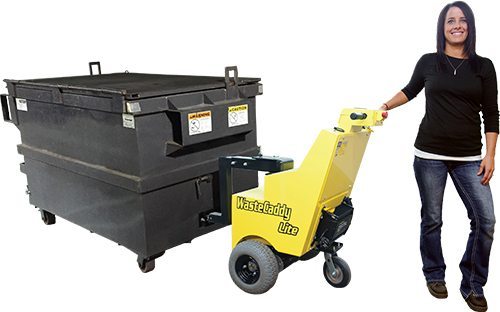
Transporting dumpsters and waste bins to the trash room can also cause injuries. Visit our website to learn how our battery-powered WasteCaddy can improve efficiency and cut down on workplace injuries and costly medical claims.

The Business Case for Investing in Equipment that Prevents Back Injuries

DJ Products Waste Caddy is an Investment in Your Employees' Health
DJ Products Waste Caddy is an Investment in Your Employees’ Health

Data from an older article stated that on average, nearly 50 workers are injured during any given minute of the work week. The American Society of Safety Engineers (ASSE) published a 2002 report that workplace safety programs benefit both your company and your employees. Fast-forward to today. This data makes a good business case that using WasteCaddy dumpster movers to prevent back injuries is a wise investment.

Safety by the Numbers

In that article, workplace injuries resulted in $128 billion in losses in 1996, which equated to 25 percent of pre-tax net profits. Even in today’s business environment, indirect costs can inflate direct costs by a factor of 20. Some of these include:

• Hiring, training and paying replacement labor

• Reduced productivity

• Investigation time and implementation of corrective measures

• Absenteeism and low employee morale

• Poor reputation in the community and industry

Many of these costs can continue long after the actual occurrence of the injury.

Raising Safety Awareness

The report cited a survey showing that employers buy into the importance of heightened safety practices regarding business and human costs. The top two reasons given were the cost of workers’ compensation insurance and the “right thing to do.”

There is real-life data to support the cost-effectiveness of safety programs:

• Companies have seen a return of up to $6 for every $1 spent on workplace safety.

• After investing in their safety program, a West Virginia coal mining company saw its workers’ compensation rate drop to $1.28 per $100 in payroll, compared to a competitor’s rate of $13.78.

Reduce Back Injuries with Electric Tugs from DJ Products

Our WasteCaddy dumpster mover enables a single employee to safely and easily handle one of the more labor-intensive tasks in the workplace. Call 800.686.2651 to learn more.

North Dakota Offers Safety Grants – Could You Buy a Dumpster Mover?

Does Your Safety Grant Cover a Dumpster Caddy?

As healthcare costs continue to spiral, companies are focusing on preventive measures to help reduce injuries and illnesses. In many cases, government agencies are offering financial incentives as encouragement for employers to implement workplace safety measures.

Promoting Ergonomic Safety in the Workplace

North Dakota administers an ergonomic initiative through the state’s Workplace and Safety (WSI) agency. The goal is to reduce the number of cumulative trauma injuries, which make up 35 percent of claims that were reported in North Dakota over the last five years.

One part of the initiative provides for a safety grant to be issued to qualified employers who participate in the program.

• The process begins when an employer submits an application.

• Once the application is approved, the employer selects a provider from the WSI network to perform an on-site assessment to identify problems, make recommendations and conduct training.

• If any equipment is recommended during the assessment, the employer completes the second part of the application requesting a safety grant.

• Upon approval of the application and completion of signed agreements between both parties, the employer purchases the equipment and submits the paid invoice for reimbursement.

Could You Use Your Safety Grant to Purchase a Dumpster Mover?

Many workplace injuries happen when moving heavy dumpsters by hand. One of our clients explains that a dumpster mover from DJ Products allows this task to be completed by a single person, so it’s like “having another employee on staff.”

Don’t let workplace injuries compromise employee productivity. Visit our website and let our friendly sales engineers help you find the right solution from our comprehensive selection of battery-powered movers and tugs.


What Makes Dumpsters so Dangerous?

DJ Products' Dumpster Caddy Reduces Workplace Injuries
DJ Products’ Dumpster Caddy Reduces Workplace Injuries

It’s easy to think of dumpsters as safe, since they are basically large inanimate objects. However, these massive metal structures tend the be the starting point for many workplace injuries. Loading, cleaning, and relocating a dumpster can be very hazardous to both employees and tenants.

Manage the injury risk at your workplace by taking a fresh look at the dangers surrounding dumpsters and waste containers. This rental dumpster blog sums up what everybody should know:

  • The ground around a dumpster must be kept clean to prevent slips and falls.
  • Clean dumpsters with disinfectant on a routine basis to stop the spread of illness and deter pests.
  • Dumpsters should be carefully placed in safe locations. Moving them requires machinery like a dumpster caddy because manual pushing and pulling carries major injury risk.
  • Workers should use proper lifting technique when loading a dumpster. Use side openings for large, heavy objects.
  • Use motion sensor lights to keep the area safe for nighttime workers.
  • Clearly label the dumpster with safety warnings — no one should climb in, hazardous materials should not be deposited, and workers should not move the container without a dumpster caddy and proper safety equipment.

Prevention is the best policy when it comes to worker injuries while using a dumpster. Safety gloves are a must; goggles and air filter masks are recommended. Make sure your employees know safe techniques for lifting heavy objects and trash bags.

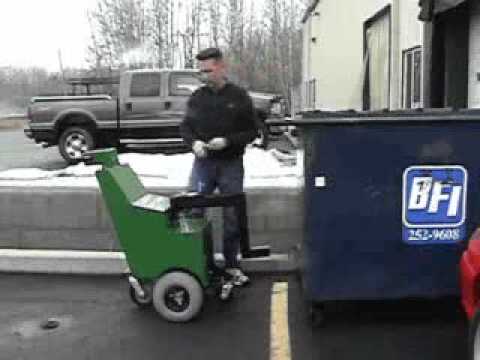
If workers need to move a dumpster, be wary of manually pushing the dumpster, even if it’s on wheels. The dumpster caddy from DJ Products automates this process and virtually eliminates the risk of muscle injuries and runaway carts.

The Condo Owners Guide to Dumpster Safety

A Guide for Dumpster Safety

Shards of glass, broken furniture, heavy and awkward items — taking out the trash represents an enormous liability for multi-tenant properties. As a condo owner, you and the condo staff face the risk of injury both from accidents and the physical strain of handling waste and moving heavy dumpsters around the property.

Condo owners should set aside time to go over safety practices with employees. The Work Safe Center offers this help checklist for dumpster safety that you can review with your workers.

Avoiding Accidents and Hazardous Materials

Employees should recognize that dumpsters may contain dangerous items such as bent metal, broken glass or even medical waste.

Tips for safe waste collection include:

  • Avoid back and shoulder strain; do not throw objects or handle heavy items with only one hand.
  • Use safety gloves when filling or emptying dumpsters.
  • Break down dangerous items into manageable parts.
  • Place warning signs about hazardous waste that should not go in dumpsters.

Dumpster Moving Tools for Safe & Easy Waste Handling

Tools are available to help with the weight and strain of filling dumpsters and carting them around the property. Motorized dumpster movers help prevent injury when moving dumpsters up and down inclines, across rough asphalt, or through inclement weather.

Even in normal use on flat ground, a dumpster mover helps by reducing the strain on the back, legs, and shoulders.

In addition to dumpster moving tools, containers can be made safe and ergonomic with easy-grip handles and tools to help lift lids and deposit heavy items.

Property managers can find out more about dumpster movers and waste bin pullers at DJProducts.com.


How to Prevent Trash Fires in Your Warehouse Dumpster

Prevent Dumpster Fires

Although not common, trash fires in your warehouse dumpster should always be a concern. Greasy oily rags under the right conditions, can spontaneously combust. A cigarette or cigar butt thrown in, can light paper trash or cardboard refuse on fire. Even such things as a spark from welding or grinding, whether it comes from building or routine maintenance, has the potential to start a fire in your warehouse dumpster.

Of course, prevention is the best way to limit fires in any dumpster. Signs can be posted to make employees aware of only putting non-flammables inside. A sturdy metal cover will not allow random sparks to get in, and if it is tight enough, it may even inhibit spontaneous combustion. To that end, oily rags should have their own container, and receptacles for smokers should be well marked and available.

Safety First

Another safety consideration is the use of dumpster tows. If there is a fire, a dumpster tow can be quickly hooked onto the dumpster, and it can then be moved quickly outside, and out of harms, way by only one person instead of the three or four that are normally required.

In every case, dumpster fire prevention should always be a priority. But if there ever is a dumpster fire, a dumpster tow will get that dumpster out and away from the warehouse, minimizing both damage to the property and  safety concerns for your employees. Safety should always come first.

For more information about dumpster tows and how they may work for you, please contact DJ Products. We have the easiest and safest moving solutions, for any industrial need.