

Some Plastics Become Trash as They Are No Longer Profitably Recycled

Some Plastics End Up in Trash if They Are Not Properly Recycled

Americans have long been educated about the importance of recycling as a means of preserving the environment, but many don’t realize that it’s also a lucrative commodities business. Today, though, companies are seeing their profits dry up due to low crude oil and natural gas prices.

Falling Fuel Prices Cause Dwindling Recycling Profits

Fracking in Texas and other shale-rich parts of the country has resulted in significantly lower fuel prices. Over the past two years, crude oil has dropped nearly 60 percent while natural gas has dropped just over 40 percent. The cost of raw materials is now competitive with recycled materials, and even less expensive in some cases.

Effects on Recyclers and Municipal Clients

Most recycling is done for environmental reasons, so that segment sees no drop-off due to the price changes. Municipalities that count on recycling profits to pay their trash removal costs are bearing the brunt of the downturn.

The second-quarter report from Waste Management, the country’s largest trash collecting company, revealed a $5 million loss in recycling revenues largely caused by lost or renegotiated contracts in several cities. In order to remain profitable, recycling companies are being forced to reduce paybacks to contracted municipalities or even begin charging fees.

Improve Efficiency with a WasteCaddy Dumpster Mover from DJ Products

Recycling and trash removal are cumbersome but necessary tasks for every business. Our WasteCaddy dumpster mover lets a single employee easily maneuver waste bins, even up and down inclines or across snow and ice. Visit our website and chat with our sales engineers to find the best solution for your dumpster and material handling needs.


 

Hospitality Industry: Tips on Preventing Back Injuries

Preventing Back Injuries

Hotel staff face many of the same injury risks as warehouse and shipping workers — especially when it comes to the repetitive tasks of moving equipment and supply carts. Proper techniques and ergonomic hospitality industry carts help reduce the risk of back injuries and upper body fatigue.

Here are some tips from Oklahoma State University researchers that hospitality staff should keep in mind when training and managing employees:

Store all items on shelves. Supply closets should always make use of shelving to keep items up off the ground.

Place heavy items in the easy lifting zone. The heaviest items should be placed at waist level to reduce back strain when picking them up. Items close to the floor or above the head should be the lightest weight items.

Bend at the knees. Like a baseball catcher getting into position, workers should squat to pick things up by bending at the knees with the feet at shoulder width.

Get a good grip. Reaching out and grabbing things with the fingertips sends more stress through the upper body than firmly grasping objects with the whole hand.

Face forward. When loading up a cart, workers should face the item being picked up and then turn (not twist) to face the cart.

Use motorized carts. Hotel workers who push or pull supply carts up and down the hallways face back injury risk from long-term, repetitive stress. Hospitality industry carts with motorized operation take this out of the equation.

For help reducing back injuries among employees, follow our blog for materials handling tips and check out DJProducts.com for info about ergonomic hospitality industry carts.

Top Warehouse Hazards and How to Solve Them

Prevent Warehouse Accidents

Injuries may seem like just another part of the job at warehouses, but in most cases it doesn’t have to be that way! Proper training, tools, and technique help avoid what the folks at Premier Handling Solutions have identified as some of the top warehouse safety hazards:

• Slips & Falls: Use guardrails and non-slip floor pads. Train workers to know that most warehouse slips don’t happen because of spilled liquid, and they don’t need to be working at height to fall — debris and awkward maneuvering often lead to slips and falls.

• Equipment Danger: Workers get comfortable with their tools, but everyone should remain aware that heavy machinery must be handled carefully. Use button-operated industrial tugs with brakes and other automated equipment that is easy to control.

• Lifting, Reaching, Carrying: Carrying and moving items causes musculoskeletal stress — especially when performed repetitively. Learn proper lifting techniques and design tasks to avoid awkward movements like grabbing heavy items from above shoulder level. Use motorized equipment rather than manual push carts.

• Lack of Safety Protocol: Employees should have tools and knowledge to help deal with fires, hazardous waste, and other emergency situations. Hold meetings regularly and post signs with important info in easy-to-see locations.

These hazards can all be minimized with smart planning, regular training, and tools that reduce the physical risks of warehouse jobs.

Our industrial tugs can be used to move tons of weight, including customized solutions for parts, pallets, lumber, or towing other equipment. Our tuggers and cart pullers are operated with a push of a button — starting, stopping, and maneuvering easily to prevent many of the biggest hazards in the warehouse.

Warehouse Safety Tips Include a Focus on Education and Ergonomics

Proper Ergonomics can Keep Your Employees Safe, Healthy and Happy

Warehouse management needs safe, repeatable processes in order to reduce injury risks. It’s not enough to rely on brute strength and lumbar belts! This is why warehouses implement proactive changes — from stepping up training protocol to bringing in automated equipment like our industrial tugs.

Educating Workers About Warehouse Safety

Train and frequently remind your workers about the most common warehouse injuries. Key issues for your team to discuss:

• Slips and falls: Messy warehouses cause falls, often when workers carry items and cannot see the ground below.

• Forklift and equipment injuries: Even after training and certificates are obtained for operating heavy machinery, each worker should review instructions periodically.

• Unreported dangers: Workers should have an avenue for reporting hazards like chemical fumes and faulty equipment.

• Untrained staff: Don’t skimp on training or let veteran employees miss safety meetings.

Ergonomics to Prevent Warehouse Injuries

Ergonomics refers to tools and methods that have been designed to suit a task. The more you manage ergonomics, the fewer injuries you can expect.

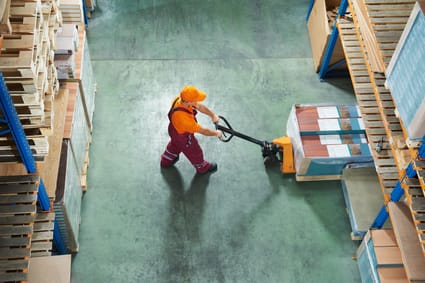
Warehouse equipment is one obvious area to consider ergonomics. For example, you might see a warehouse worker hunched over while strenuously pushing a wheeled cart. This almost guarantees a back injury. Ergonomic industrial tugs remove most of the physical burden and let the worker stay in a comfortable position.

Lifting techniques can also be designed for ergonomics. Heavy items that get moved should be a few feet off the ground so the worker does not have to bend all the way over repetitively.

Next steps: refresh safety training at your warehouse and bring in motorized industrial tugs for better ergonomics.

Railway Freight Trains Take a Back Seat to Amtrak in Priority Change

Cargo transportatio with Trains and Railways
Amtrak Puts Freight on the Back Burner

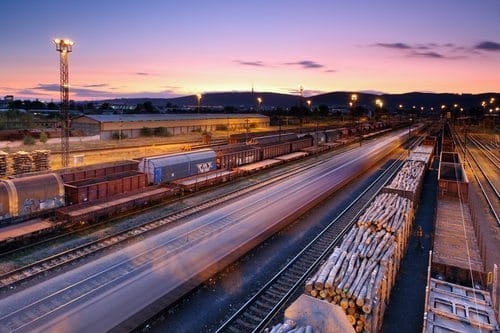
As Amtrak continues efforts to promote railway travel as an attractive alternative to flying, it scored a big regulatory victory this past July. The Safety Transportation Board (STB) issued a reversal on its previous stance concerning a policy change from two proposals that would have favored freight trains.

Passenger Travel vs. Freight Transport: Which Has Priority?

The first proposal would have given railways the leeway to prioritize freight trains over passenger trains. While the STB initially supported the policy, saying Federal law did not explicitly state that passenger trains should be given preference, they have since reconsidered.

Amtrak fought the change on the grounds that it would severely impair their ability to operate on time, since 97 percent of their mileage is run over non-Amtrak railroad tracks. Not surprisingly, rail freight companies disagreed, saying that priority would actually be determined on a case-by-case basis.

With the second proposal, STB issued a change in terms rather than rejecting it outright. Instead of defining “on-time performance” as the point when a train reaches its final destination, it will now be calculated by arrivals at intermediate Amtrak stations.

This may sound like a minor alteration, but it makes a significant impact based on a 2008 law stating that Amtrak can petition STB for investigations and remedies for delays if on-time performance runs at an average of less than 80 percent for two consecutive calendar quarters.

Stay on Schedule with Railcar Movers from DJ Products

Don’t let inefficient maneuvering of railcars cost you precious time. Visit our website to learn more about how our battery-powered railcar movers are the solution to your needs.

Rich Old Buildings Become Hotspots for the Hospitality Industry

MWS-DSCN3342
Old Becomes New Quaint

Broadway composer Peter Allen once wrote that “Everything old is new again.” That has certainly turned out to be true in cities like Adelaide in Australia, where historic buildings are getting a second chapter as up-to-the-moment restaurants and bars.

Hibernia

Owners Zoi Kokoti and Stephen Lowery have transformed the venerable 113-year-old Magill Institute into a minimalist Scandinavian-style cafe. The large windows provide an abundance of natural light, adding an element of warmth that’s not usually found in this type of decor.

Kokoti presided over the transformation, which occurred over a mere 10 days. In keeping with the low-key vibe, the dining tables were recycled from another restaurant and much of the shelving was purchased from Kmart. Modern conveniences such as USB ports and WiFi access were added.

The Henry Austin

Iconic Adelaide restaurant Chesser Cellars closed four years ago, but has now reopened as The Henry Austin. Max Mason and Tess Footner, a duo with extensive hospitality experience, took advantage of a rent-free lease awarded by Renew Adelaide, a program created to stimulate development in unused local spaces.

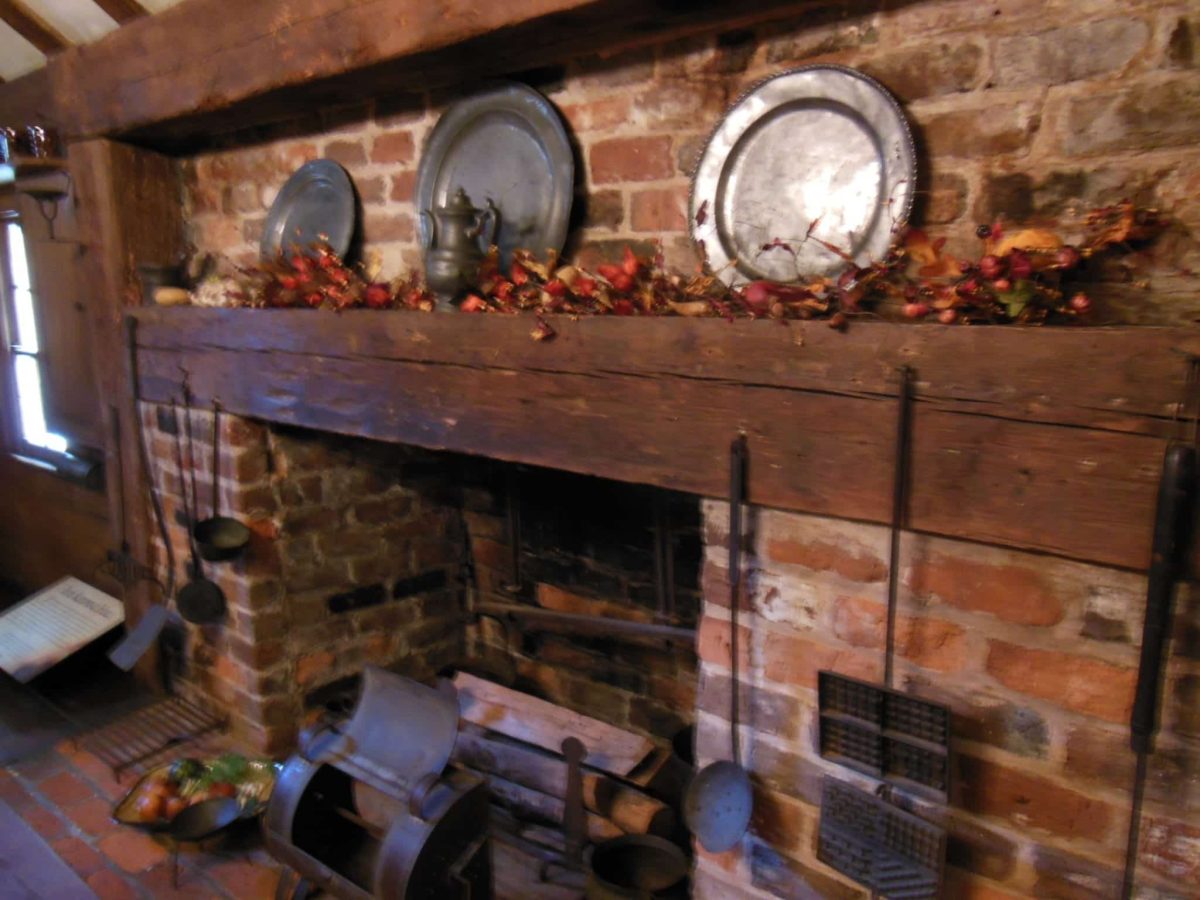
The pair honored the classic ambiance of the original design with an old-school decor style that incorporates existing elements, such as a polished wooden staircase and a dumbwaiter. Mason paid respect to former owner Primo Caon by asking for his blessing prior to the reopening.

Provide Four-Star Service with Hospitality Carts from DJ Products

Our battery-powered hospitality carts make it easier for your staff to keep your hotel, restaurant or bar in tip-top condition. Visit our website to learn more about our linen carts, housekeeping carts and CartCaddies.

Warehouse Ergonomics Are Less About OSHA Than Productivity and Staff Retention

worker with fork pallet truck
Warehouse Ergonomics and Productivity

The practice of warehouse ergonomics began as a way to safeguard employees from injuries due to overexertion or repetitive motions. As the industry faces an increasing labor shortage, implementing ergonomics has become crucial in terms of retaining workers while also maintaining high service levels.

Current State of Ergonomic Practices in the United States

Unlike countries such as Canada and Australia, ergonomics are not covered by federal law in the United States. OSHA’s General Duty Clause is so broadly written that companies are cited only when extremely poor conditions exist. Jim Galante, chairman of MHI’s Ergonomic Assist Systems and Equipment (EASE) Council, says that despite loose regulations, awareness of ergonomic practices has grown.

According to Galante, efforts to solve production problems and improve efficiency often result in ergonomic solutions. Issues such as improper motions and wasted energy are almost always at the root of bottlenecks and slowdowns.

In addition, a changing workforce has become a serious concern for the warehouse industry. Galante cites statistics showing that the average workforce age has doubled over the past 22 years, while a third of its members are now classified as obese.

What are the Best Methods to Implement Ergonomics?

  • When choosing equipment such as warehouse tugs and movers, consider the impact on overall productivity as well as individual workers.
  • Regularly solicit feedback from employees who are actually using the equipment. Take the information into consideration when evaluating processes and make necessary modifications.

Boost Workplace Safety with Warehouse Tugs and Movers

DJ Products offers a wide variety of ergonomically designed material handling solutions to meet every need. Visit our website for more information.

RV Industry News: RV Fifth Wheels Add Luxury and Top-Level Lounging

Camping by fjord
RVing

Regardless of features and options, fifth wheels have followed a traditional pattern over the years. Today’s models are flip-flopping the classic layout in favor of more privacy and flexibility in accommodating owner preferences.

In the past, most fifth wheels were designed with the master bedroom in the raised front area, leaving the rear for the living space. RV manufacturers are now switching it up by placing the bedroom in the rear, with living/lounge areas up front.

Advantages of “Top Level” Lounging

  • The updated layout provides more privacy for both those in the master bedroom as well as overnight guests sleeping in the lounge area.
  • Placing the master bedroom and bathroom in the back means a more comfortable amount of headroom.
  • Living space up front allows for more of a den-like setting that can be customized with a wide variety of entertainment options.
  • Upper-level lounges/living rooms create more differentiation of spaces. People can visit in the dining/kitchen area without interruption from those who are engaged in watching sports or movies.

Fifth wheels have also been incorporating more sophisticated entertainment options. Current models are outfitted with features such as WiFi-enabled big-screen TVs, theater-style seats with built-in heaters and massagers, and surround-sound stereo.

Motorized Trailer Pullers from DJ Products

Whether you’re moving fifth wheels and other RVs down assembly lines, across dealer lots or onto a trade show display, motorized trailer pullers from DJ Products let a single employee get the job done quickly and safely. Visit our website and use the convenient online chat feature to learn more from our friendly sales engineers.

Forklift Safety Tips Your Warehouse Staff Needs to Know

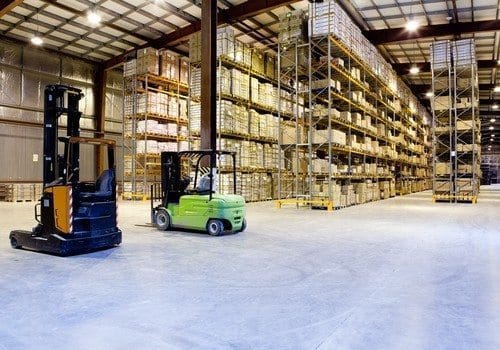
Large warehouse
Forklift Safety

Does your material handling equipment include forklifts? While they’re helpful in lifting and transporting heavy loads, forklifts present the same safety risks as other motorized vehicles.

A safe workplace minimizes loss of efficiency due to on-the-job injuries. Make sure your employees know and practice these helpful safety tips from OSHA:

Before Starting

  • Do a pre-check for any obstacles in your path.
  • Be sure your hands and the soles of your shoes are dry to prevent slipping as you mount the forklift.
  • Watch your footing as you mount and dismount.

Driving and Steering

  • Sound the horn at aisle crossings, blind spots and anywhere your vision is obstructed, such as operating in reverse.
  • Always come to a complete stop before changing directions.
  • When turning, slow down to a manageable speed. Start the turn as close to the inside corner as possible to allow for the wide swing of the forklift’s rear end.
  • The lift should be lowered before turning.

Stopping and Parking

  • Stop the forklift in a clear spot that doesn’t obstruct foot or vehicle traffic.
  • Place the direction lever in neutral, lock the mechanism and set the emergency break. The tips of the lift should be touching the floor.
  • Once the forklift is completely stopped with all safety measures engaged, dismount carefully, without jumping.

Efficient, Cost-Effective Material Handling Solutions from DJ Products

Overexertion and repetitive motions are two of the primary causes of work-related accidents and injuries. Protect your employees with durable, eco-friendly material handling equipment from DJ Products. Call 800.686.2651 for prompt and friendly assistance from our experienced sales engineers.

Safety Tips for Property Managers

Man from city service pulling garbage bin
Dumpster Safety

Property managers often deal with a wide variety of people in both public and private settings. In many cases, such as during property showings, robberies (and worse) have taken place due to the relative absence of other people. These tips can help keep you and your co-workers safe while handling the day-to-day chores of running a rental office.

Be Careful When Doing Physical Labor

There are times when property managers who don’t normally do maintenance work may need to be out and about on their properties. During those times, it’s important to take every precaution to not injure yourself. Using the right tools such as a dumpster caddy can make the job of moving heavy objects easier, leading to fewer accidents.

Always Copy Identification

When showing units, make a copy of everyone’s ID before taking them into a space for lease and only do so if someone else is around. If staffing is tight, send a quick text/email to your office with an ID scan so at least someone else knows who is viewing the property.

Schedule Unit Tours in Advance

By having potential tenants schedule their showing in advance, you can limit tours only to periods of time when there will be more than one person in the office or on the property. If that does not work for the tenant, you can at least have another person accompany you for the showing.

If you’re interested in learning more about keeping yourself safe as a property manager, or making your workload easier with tools like a dumpster caddy, give our staff at DJ Products a call at 1800-686-2651.