A trailer dolly vs forklift comparison starts with the job. A motorized trailer dolly moves compatible wheeled trailers or carts. A forklift lifts and stacks loads such as palletized goods. A warehouse may need both: the right choice depends on the load, travel route and handling task.
Moving trailers and carts
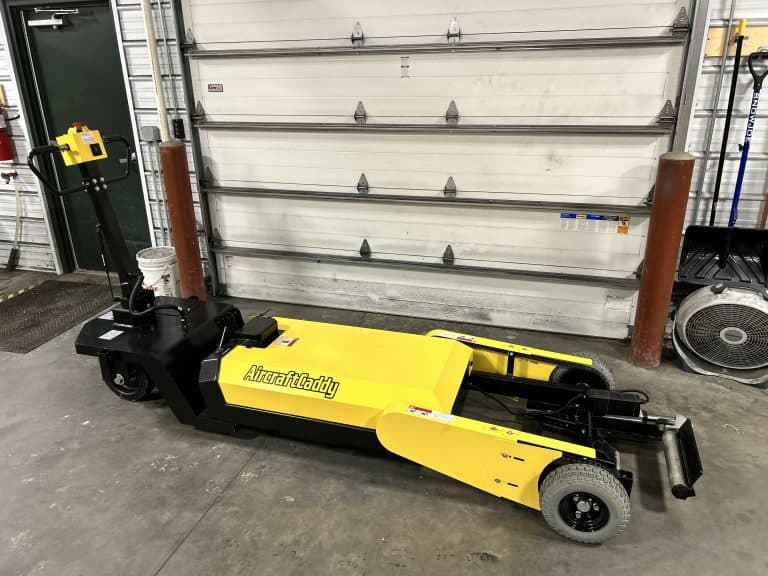
A powered dolly can reduce manual pushing when repositioning a trailer or moving a cart between work areas. Confirm the hitch or coupling, total rolling load, tongue weight and available turning space before choosing a model. Pulling capacity does not establish lifting capacity.
Lifting and stacking pallets
If the task involves raising pallets onto racks or unloading a raised load, select equipment designed and rated for that lifting task. A trailer dolly is not a general replacement for a forklift. Compare each machine’s rated limits rather than assuming one type always handles heavier loads.
Check the route and controls
Measure aisle widths, corners, thresholds and grades. Discuss floor conditions, traction and stopping distance with the manufacturer. Review the actual model’s steering, braking and operator controls. Do not assume collision avoidance or stability-control systems are included.
Plan training and operating costs
Include operator training, inspections, charging space and maintenance in the comparison. OSHA’s powered industrial truck guidance explains training and safe-operation considerations. Select equipment for the site’s conditions and applicable requirements.
Choose equipment for your warehouse
Record the current movement task, trips per shift and time spent coupling, moving and parking loads. Use that baseline to assess whether a powered dolly improves the process. Contact a DJ Products sales engineer with load dimensions, weights, hitch details and route information to compare a suitable dolly configuration with your existing equipment.