
An Electric Low-Cost Alternative to a Shunt Truck:
Why Businesses Should Consider an Electric Trailer Moving TrailerCaddy Terminal Tractor Solution vs. a Shunt Truck:
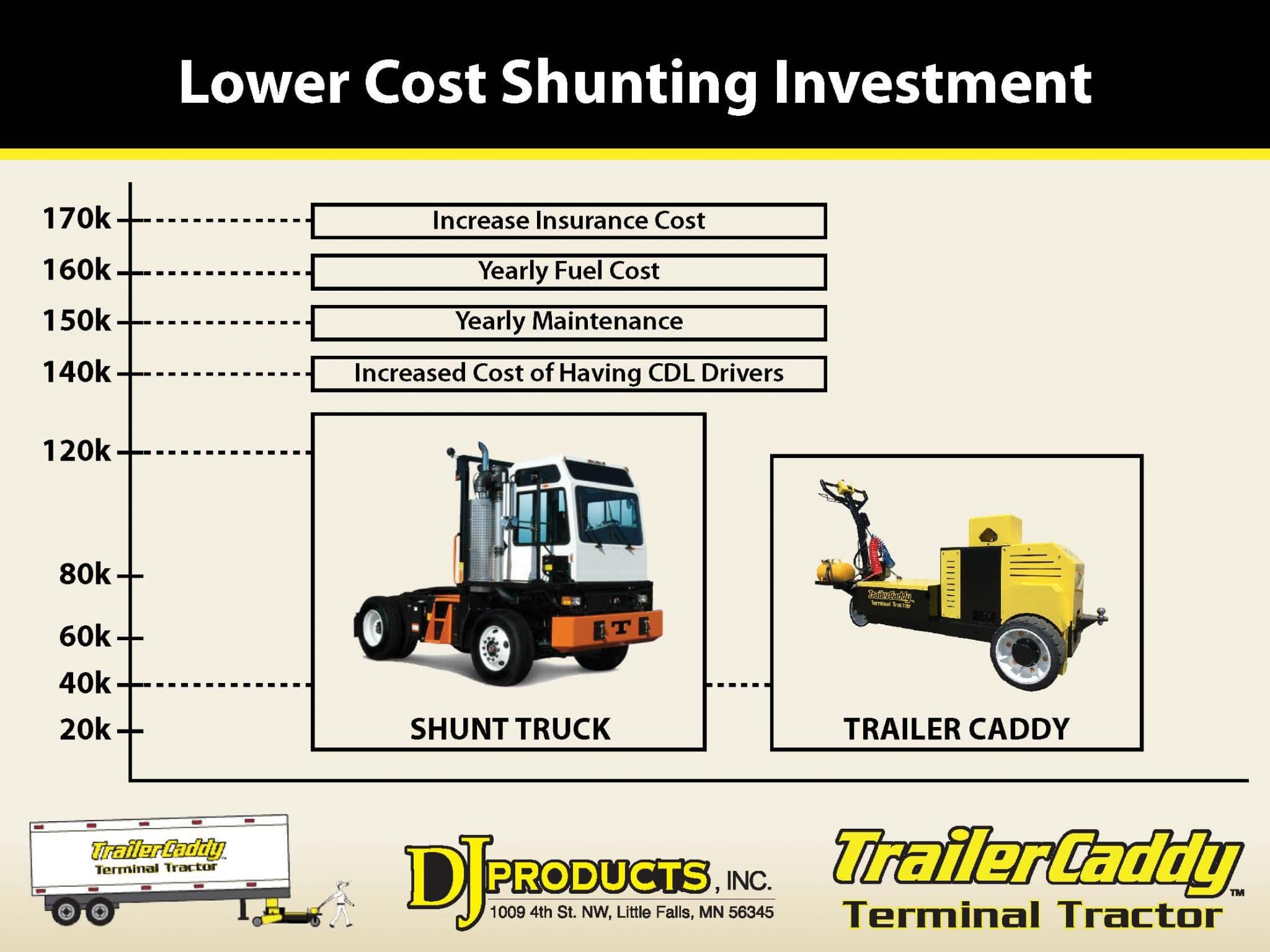
Compare the full cost of moving trailers
First, review the equipment, staffing and operating costs of your current shunt truck. Include fuel, maintenance, insurance and the time employees spend waiting for a trailer move.
Then compare those costs with a TrailerCaddy Terminal Tractor configured for your trailers and route. Use current quotes and your own records. The figures in the illustrations are examples, not a quote or a guarantee of savings.
Plan operation and charging
Train operators for the selected equipment and site conditions. Check applicable licensing and site requirements before use. Follow the manufacturer’s instructions for the trailer connection, braking and travel route.
Plan charging around your shifts, load and duty cycle. Battery runtime depends on the application. The electric drive produces no tailpipe exhaust during use; charging and broader environmental impacts still depend on the power supply.
See a customer application
The Quality Bicycle Products testimonial shows one customer’s trailer-moving application.
Compare an outside shunting service
Consider service charges, scheduling and the frequency of trailer moves alongside the cost of owning equipment.
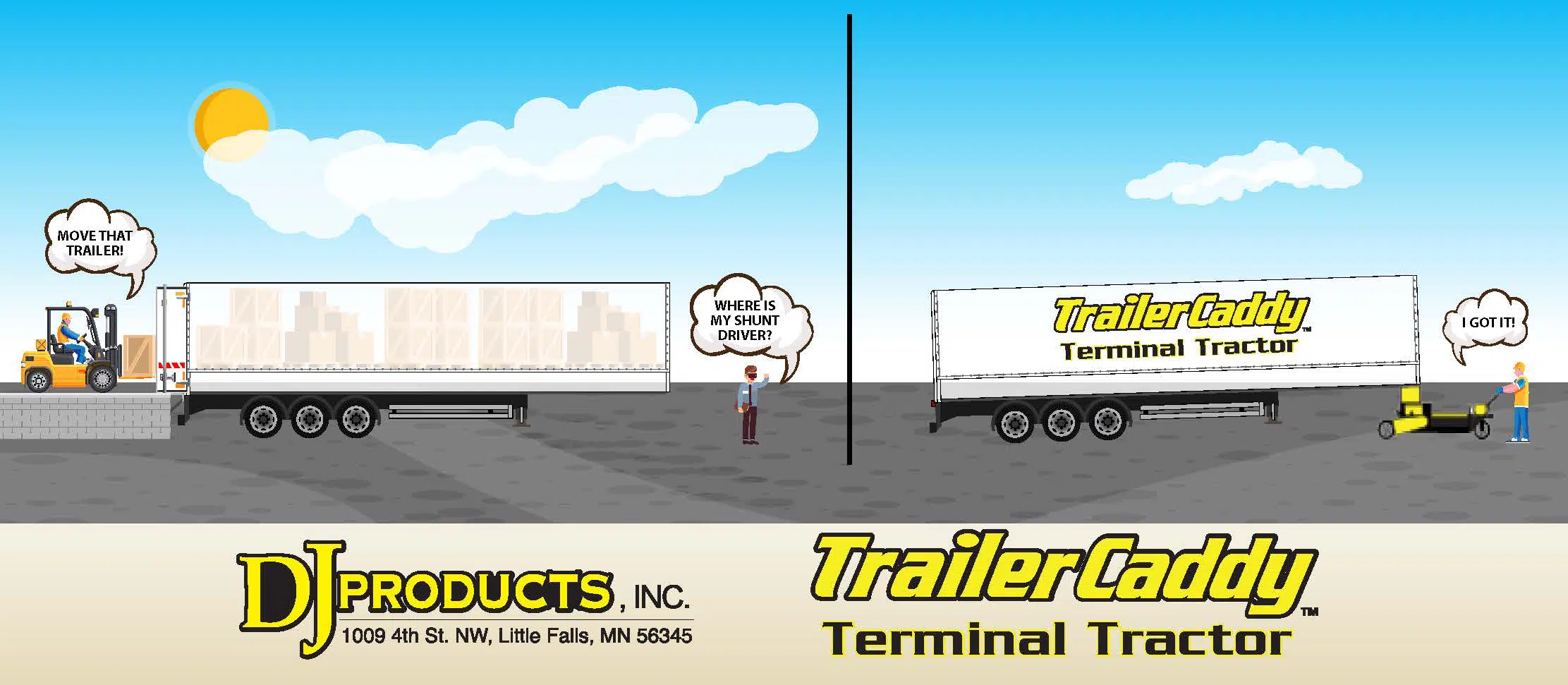
Some customers have reported service charges of $50–$500 per day and payback in six to nine months. These historical reports describe individual applications. Your costs and return depend on equipment price, utilisation, staffing, maintenance and service charges.
For a useful comparison, calculate the cost per trailer move under each option. Also consider whether trained employees and suitable equipment can meet your schedule. Contact DJ Products for current pricing and application guidance.