
Do You Know These Warehouse Safety Tips?

Warehouse Safety
Warehouse Safety Tips

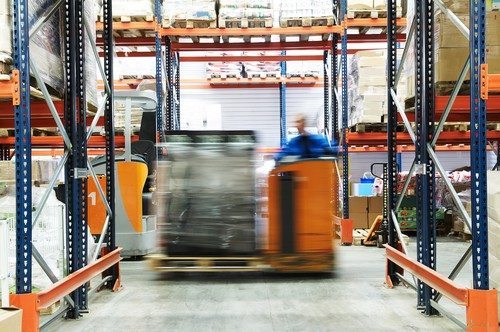
Warehouse workers face risks of injuries when they operate equipment, pull heavy loads, and perform other tasks. Maintaining a safe workplace environment in your warehouse should be a top priority in order to protect your employees. Consider the use of a trailer dolly or warehouse tug to prevent injuries. The following warehouse safety tips can help you provide a safe working environment for your staff.

Keep PPE Available at All Times

Personal protective equipment for workers should always be available in your warehouse. Your workers should also be aware of when to use PPE and how to use it properly. The use of PPE helps reduce the risk of injuries in your warehouse.

Hold Safety Equipment Training Sessions

Having safety equipment in your warehouse isn’t enough to guarantee that it will be used correctly. Schedule training sessions to make sure that your workers know how to operate or use safety equipment correctly. A trailer dolly is easy to operate and does not need intensive training. From time to time, hold retraining sessions or refresher courses.

Teach Vehicle Awareness to All Staff

Office staff and staff in other areas of your facility need to be trained on vehicle awareness as well. This helps cut down on accidents that can happen when these employees are on the warehouse floor instead of in their office.

Create an Efficient and Safe Layout

Your warehouse floor should have a layout that reduces the risk of collisions or accidents when forklift trucks or other vehicles are being operated. Make changes to your current layout as needed in order to keep workers walking on the floor from being in or near the path of vehicles.

Put in Physical Barriers

If you don’t have barriers already, consider installing them in your warehouse. Physical barriers, such as guard rails, help separate vehicles lanes or areas from areas where workers walk around. These barriers can help lower the risk of accidents in your warehouse.

Install Sensors and Other Visual Barriers

Sensors and other kinds of visual barriers can serve as another layer of protection for warehouse employees. These barriers might alert forklift operators or other vehicle operators to the presence of workers walking in certain areas.

For more warehouse safety tips and to find solutions that help improve safety in your facility, visit DJ Products. We are highlighting the Trailer Dolly this week. Ask us for a video demo or more information today.
Five Key Warehouse Safety Facts

Warehouse Safety
Warehouse Safety Facts

Providing a safe environment for workers in your warehouse is essential. Reducing the risk of injuries and accidents in your warehouse keeps employees safe from harm while also boosting productivity. The following warehouse safety facts can help you better understand the importance of ensuring the safest environment possible. Consider a trailer dolly to stop injury when moving heavy loads.

Overturned Forklift Trucks Cause the Most Fatalities

Forklift trucks are often used in warehouses to move pallets and other large objects around. These trucks can tip or overturn, leading to potentially fatal injuries. In fact, overturned forklift trucks are the most common incident resulting in fatalities. Over 40 percent of fatalities are caused by these trucks overturning.

U.S. Warehouses Have Fewer Than 30 Fatalities Each Year

Regulations on worker safety have made it possible for warehouse owners to reduce the number of fatalities and serious injuries in these facilities. Even with more and more warehouses being built in recent years, the number of fatalities has remained stable. Warehouses in the U.S. have fewer than 30 fatalities per year.

Warehouse Injuries Cost Over $84 Million a Week

The cost of warehouse injuries, which includes medical bills, equipment damage, replacement staff training, and production time loss, adds up quickly. One of the most notable warehouse safety facts is that injuries in these facilities in the U.S. cost more than $84 million a week.

Warehouse Staff Numbers Have Doubled in the Last Decade

Warehouse safety becomes more and more important as the number of workers in these facilities increases. In fact, the number of warehouse staff has doubled during the last decade and is expected to reach close to 2 million by 2030. With more warehouse workers, it’s crucial for owners to ensure warehouse safety.

Forklifts Cause 90 Percent of Pallet Rack Failure

While forklifts are commonly used for moving goods around warehouses, they can lead to pallet rack failure. Collisions with these trucks is one of the top reasons that failure occurs. The way forklift trucks move makes them more likely to hit pallet racks.

Having the right equipment for moving large items around is an effective way to ensure warehouse safety. Visit DJ Products to learn more about the solutions we offer. Our highlighted product this week is the versatile Trailer Dolly. Find out more today.

Warehouse Injuries Statistics for 2021 – Amazon is a Dangerous Place to Work

Warehouse Safety
Warehouse Safety

Not surprisingly, warehouse workplace injuries are a frequent occurrence. According to the Bureau of Labor Statistics, freight, stock and material movers are second only to healthcare workers in the number of incident-related days away from work.

Many companies take steps to protect employees with stronger on-site safety protocols. But a recent report indicates this may not be the case at one of the country’s largest employers.

Amazon: A Question of Safety

The Strategic Organizing Center (SOC) is a coalition of four major labor unions that represent more than four million workers. In their published report, based on 2021 data from the Occupational Safety and Health Administration (OSHA), SOC turned the spotlight on Amazon’s questionable safety record.

Incredibly, while Amazon employs only one-third of warehouse workers, they accounted for 49 percent of warehouse injuries. Total injuries amounted to nearly 40,000, which is a 20 percent jump over Amazon’s 2020 injury rate.

How do Amazon’s numbers compare to the rest of the industry? The overall rate of serious injuries is 3.3 per 100 workers, which is nearly doubled by Amazon’s rate of 6.8 injuries per 100 workers. In addition, Amazon’s general injury rate of 7.7 per 100 workers far surpasses the industry average of 4.0 injuries per 100 workers.

Carpal tunnel, back pain and other musculoskeletal disorders comprise the bulk of the injuries. These are usually caused by repetitive motions that put undue strain on workers’ bodies.

Seeking Relief

Ironically, Amazon has proudly proclaimed its goal to become “Earth’s Safest Place to Work.” Authors of the report point to Amazon’s rigid quotas and “obsession with speed” as primary factors contributing to Amazon’s poor safety record.

For their part, Amazon workers have been campaigning to unionize the facilities, driven in part by unacceptable working conditions. Another motivation? As workplace injuries were on the rise, so were company profits, by approximately the same rate.

Protect Employees from Warehouse Workplace Injuries

Our eco-friendly tugs, movers and pushers are easy to use and reduce the physical strain of workplace activities. Contact DJ Products at 800.686.2651 or use our handy online chat feature and let our Sales Engineers help you find the right solution for your application.

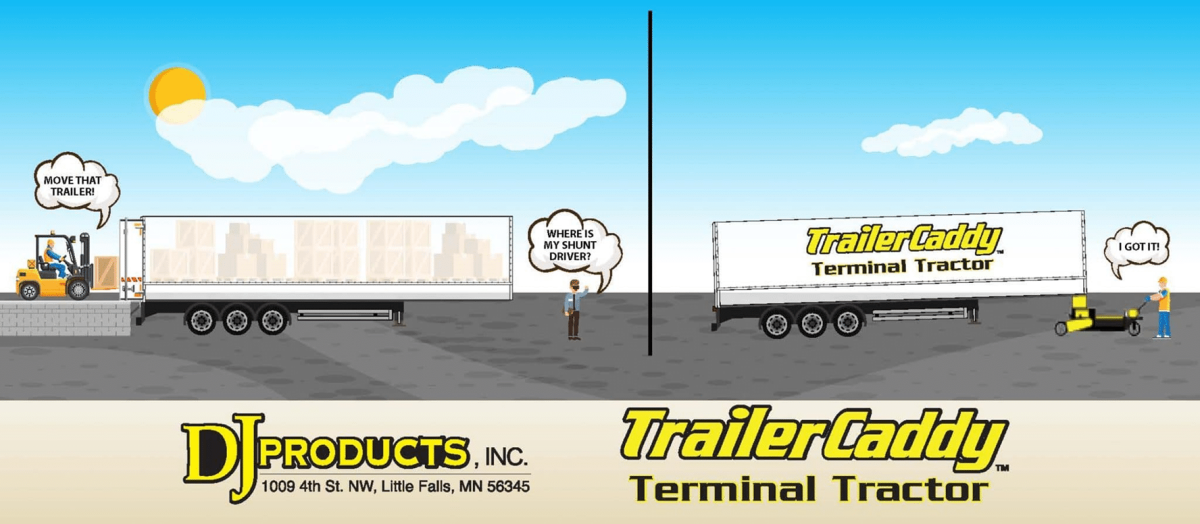
Trailer Dolly Makes Quick Work of Moving Trailers

Trailer Caddy Terminal Tractor
DJ Products Trailer Dolly

So, you need to move a full semi-trailer to the staging area for unloading, but no trucks are readily available. Precious time is lost as you hunt for a truck or some other option to fill in.

Does this scenario sound familiar? Turn these nightmares into a distant memory with the sturdy and efficient trailer dolly from DJ Products.

Why You Need a Trailer Dolly

Moving semi-trailers, boats, RVs and other large vehicles is a tedious and cumbersome job. In addition to a truck, the job frequently requires two or more employees handle the task safely.

Compare that to our trailer dollies, which come in eight different models and a wide range of configurations. Thanks to the compact size, smooth movement and ease of operation, these dollies allow a single employee to move loads from 1,000 to 100,000 pounds safely and effectively.

Features and Benefits

* All of our trailer dollies are battery-powered, making them quiet and eco-friendly. A full charge generally lasts for an entire eight-hour shift. Recharge simply by plugging the unit into a standard 120-volt outlet.

* The automatic safety brake engages when the dolly comes to a stop, holding tight even on an incline.

* Travel at speeds up to 3 MPH in both forward and reverse. Use the variable speed handlebar twist grip for smooth operation. The ergonomic design also cuts down on stress and strain that can cause repetitive motion injuries.

* The compact size and non-marking tires allow the trailer dolly to quickly and efficiently navigate tight spaces on any surface, including gravel, grass, snow and ice.

* We can adapt the hitch options to ball, pintle, gooseneck, kingpin, or whatever style of trailers you work with.

* No commercial driver’s license (CDL) is required for use. Any employee will be up and running with some basic training.

* Our trailer dollies aren’t just for trailers. Use them to move RVs and campers, boats and other heavy wheeled equipment.

Solutions for All Your Material Handling Needs

Whether you’re moving hospitality carts, dumpsters, carpet rolls or airplanes, DJ Products has the solution for your specific application. Call 800.686.2651 to learn more from our helpful Sales Engineers.

Truck Weigh Stations – How Do They Work?

Truck driving on country-road
What to Know About Weigh Stations

Weigh stations are used to calculate taxes on freight and also to ensure that trucks are below a maximum weight rating. In the U.S., trucks cannot weigh more than 80,000 pounds, and local areas may have lower limits.

Taxing by weight largely eliminates the need for time-consuming inspections. Our powered trailer mover can handle up to 100,000 pounds, but you’d better lighten the load before you drive up to the weigh station!

Truck Weigh Station Methods

Now, about how truck weigh stations work. It’s a lot different than a bathroom scale. Truck scales may be underground or inside of pads, but they all use one of these methods:

– Load-cell systems embedded with wires that sense a difference in electrical resistance depending on the weight

– Bending-plate systems that look like rubber or steel pads and have strain gauges inside

– Piezoelectric systems that use conductors to sense changes in voltage caused by the pressure above

Older technology requires the truck to stop several times with each axle on a scale, but it’s more common to see large scales that look like little landline strips and only require one stop.

As most drivers have noticed by now, there are also “weigh-in-motion” scales that don’t require truckers to stop. Simple versions are pads that truckers can slowly drive over, while more sophisticated technology allows for weigh-ins at freeway speeds.

Tow Trailers Up to 100,000 Pounds

Need a better solution for towing semi-trailers to the dock? DJ Products has beefed up our popular TrailerCaddy to operate as a powered trailer mover that can handle tank trailers, reefers, and even shipping containers.

Save time, improve safety, and avoid the high costs of shunting trucks with a powered trailer mover from DJ Products. Contact us for details.

Fleet Manager Tips: Preventive Maintenance Protects Your Truck Investment

Fleet Manager Tips: Preventive Maintenance Protects Your Truck Investment

You already rely on the use of a powered trailer mover to protect your trucks and trailers from damage, but are you dropping the ball on maintenance? Keeping your fleet in top shape ensures productivity, safeguarding your organization’s sales and service goals.

Keeping Your Fleet Road-Ready with Preventive Maintenance is a Worthwhile Investment

With regular preventive maintenance, unscheduled downtime and unexpected repairs are easily avoided. This includes pre-travel safety checks (fluid levels, tire pressure) to ensure a road-worthy vehicle. Sadly, this is often the only time the vehicle gets an all-over once-over!

Keep Drivers In-the-Know

Fleet managers are not the only ones responsible for preventive maintenance (PM). Make sure all drivers know their PM responsibilities, including scheduling and policies on how to handled the need for repair, roadside assistance, or accidents. Common areas of concern include:

Proper Spec’ing: Usage, operating conditions, and the nature of the goods carried must be carefully considered to control cost. Operating an over-spec’d vehicle will inflate costs. Under-spec’ing leads to roadway incidents and damage to goods.

Tire Pressure/Wear: Heard often and practiced rarely, adjusting tire pressure is essential. Affecting tire wear, gas mileage, handling, and vehicle/driver safety, tire pressure should be regularly adjusted for weather.

Use Preventive Maintenance to Protect Your Investment Dollars

When a preventive maintenance schedule is routinely followed, it’s easy to see when maintenance and repair needs rise with vehicle age. The way manufacturers’ warranties cover maintenance and repair will affect your total cost of ownership. Comparing maintenance with vehicle worth will help you realize when selling the vehicle makes more sense than the cost of repairs.

Wish everything worked as easily as your powered trailer mover? Simplify things with the help of the industry experts at DJ Products today.

Trailer Load Theft is a Serious and Growing Problem

Don't Leave Your Vehicle and Your Company's Transported Products Susceptible to Theft.
Don’t Leave Your Vehicle and Your Company’s Transported Products Susceptible to Theft.

Using a powered trailer mover in the yard protects from damage and injuries, but what about threats to safe transport of goods? Valuable loads carried in commercial trucks make them appealing targets of cargo thieves.

Trailer load theft isn’t a new problem, but improvements in technology give the bad guys new tools that make them even more dangerous. Here’s what you need to know about cargo theft along with tips to protect drivers and product.

Types of Trailer Load Theft

“Straight” thefts occur when cargo is stolen directly from an unattended trailer, often at a truck stop or parking lot. These incidents are generally crimes of opportunity where the thief takes advantage of a situation, sometimes on the spur of the moment.

“Strategic” thefts are planned crimes where the thief uses sophisticated methods to fraudulently obtain possession of the cargo.

What Is Social Engineering?

Social engineering is an increasingly popular technique in which thieves search Internet sources such as public load boards for possible targets. Sometimes they may even post fake loads and solicit bids to get carrier information.

Tips to Prevent Cargo Theft

According to experts, educated and alert drivers are the best defense against trailer load thieves.

– Be well-rested and attentive to surroundings at all times.

– Conduct a walk-around inspection of the truck before and after every stop.

– Fuel up before loading.

Shippers can also take steps to reduce theft risk:

– Work only with licensed brokers who implement thorough vetting of carriers.

– Always verify driver, truck and pickup confirmation numbers at the pickup point.

Make Safety a Priority with Our Powered Trailer Mover

Our best-selling Electric Yard Dog is designed with top-of-the-line safety features to reduce risk of worker injury and trailer damage. Contact us for more information.

Extreme Cold Impacts Semi Truck Performance – What to Know

Extreme Cold Impacts Semi Truck Performance - What to Know
Extreme Cold Impacts Semi Truck Performance – What to Know

As climate change continues to fuel winter temperature extremes, trucks and truckers shoulder an increased burden. Though your powered trailer movers will push on through such extremely cold temperatures, your hauler may not, pulled down by the weight of fuel gelling.

Frozen in Time

With extremely cold temperatures, diesel fuel and diesel exhaust fluids freeze. More than an inconvenience, this poses a rather large problem as the regeneration process necessary from an emissions control standpoint cannot sustain at certain temperatures. What’s your best chance of keeping vehicles on the road?

Weighty Matter

In colder climates such as in Minnesota and Canada, drivers understand the risks of temperature extremes, swapping their usual fuel for a winter-weight diesel fuel mix and additives that allow them to keep their vehicles moving. Fleet drivers in warm to moderate climates, however, are often ignorant of this need, watching their progress literally freeze as soon as they go north and their vehicles come to a stop.

Half Empty/Half Full

When driving in winter conditions, it is strongly advisable to keep the fuel tank at least half full. This will allow drivers to keep rigs running long enough for the vehicle to hit the temperature necessary to go into its regeneration cycle. Otherwise, haulers may get stuck due to emission controls.

When Push Comes to Shove

In normal weather this is not an issue, however sub-zero weather requires more energy (fuel) to sustain the vehicle’s temperature necessary for regeneration. Idling overnight or warming the block with a heater are not enough – the vehicle must be driven, even if it’s just a few yards at a time.

Are your operations stuck? Get things moving with a powered trailer mover from DJ Products today.

The Pain Continues with the ELD Data Shift for Compliance

ELD Changes for Semi Truck DriversBe glad your powered trailer mover is functioning correctly. Some ELDs still aren’t. ELD pain continues across all sectors, hitting small fleets and independent owner-operators particularly hard, including Jon Hose of Texas, who was issued a false-log violation in Missouri in June of this year following the malfunction of his ONE20 F-ELD.

Out of Production

Using the most inexpensive ELD on the market, Hose’s violation occurred just two weeks before the manufacturer ONE20 stopped support for the device on June 18. ONE20 recently made the news this summer for losing support from its principal investor, owner of PeopleNet, Trimble Companies, after which it stopped production and support of its F-ELD devices.

Out of Luck

Hose noted en-route malfunctions of his ONE20 F-ELD were common. In an Overdrive Radio podcast he stated he’d noticed ongoing issues with the device: Automatic duty-status changes he still can’t explain, despite his master’s in data science. After one such occurrence, he believed he solved the issue and proceeded to his destination, where he unloaded and attempted to return home, but was instead stopped by a Springfield, Missouri officer.

Out of Service

Believing his ELD wasn’t even connected, and noting yet another malfunction Hose couldn’t explain, the officer put Hose out of service with a false-log violation. He has since switched to provider BigRoad, with no issues to-date. Since this master’s in data science couldn’t explain the issue, those hoping for leniency would do better ensuring the right equipment aboard their rigs, allowing access to logs from an admin account (independent) or ensuring a direct line to key support personnel (fleet/partner carrier), or ELD provider.

Out of commission? Powered trailer movers from DJ Products will get you back in action. Learn more from DJ Products today.

Is “Lidar” the Next Big Thing in Transportation Safety?

The Next Thing for Transportation Safety

Our battery-powered yard trucks greatly reduce risk of workplace injury for your on-site employees. What about the long-haul drivers who are responsible for transporting large tractor-trailers across hundreds or even thousands of miles of highway?

No matter how skilled and experienced a truck driver is, they can’t account for the actions of automobile drivers sharing the road. Lidar technology is on the verge of creating unprecedented safety features that can act as a driver’s extra “eyes.”

Lidar = Light + Radar

Lidar is an enhanced form of radar that measures distance using pulsed laser lights rather than radio waves. Thanks to the differences in laser return times and wavelengths, the data can actually create a 3D representation of the target.

Combinations of cameras, radar and lidar are currently used for passenger car features such as automatic emergency braking and blind spot monitoring. Velodyne, the Silicon Valley-based company that invented lidar more than 10 years ago, is working with tech companies and truck manufacturers to adapt lidar to large Class-A tractor-trailers.

Making “The Big Picture” Even Bigger

According to Andrew Nelson, North America commercial vehicles manager of Velodyne, lidar can provide a constant 360-degree view at nearly 1,000 feet. Velodyne’s system also uses infrared lasers, making them effective even at night or during poor weather conditions.

As with most new technology, cost has been the biggest roadblock to implementing lidar. Velodyne is focused on bringing costs down to mass-market levels, and Nelson believes companies will recognize that the benefits of lidar far outweigh the investment.

Put Safety First with Yard Trucks from DJ Products

Our Electric Yard Dog lets a single person move trailers up to 100,000 pounds, reducing the risk of common musculoskeletal injuries. Visit our website for more information.