
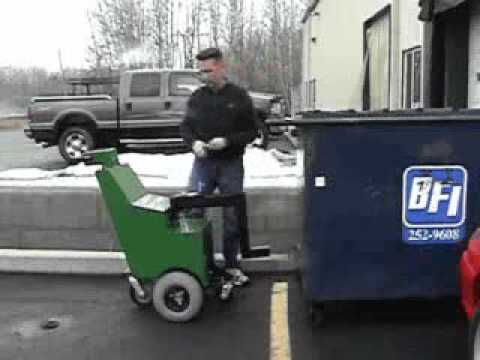
Introducing the WasteCaddy Trash Hauler

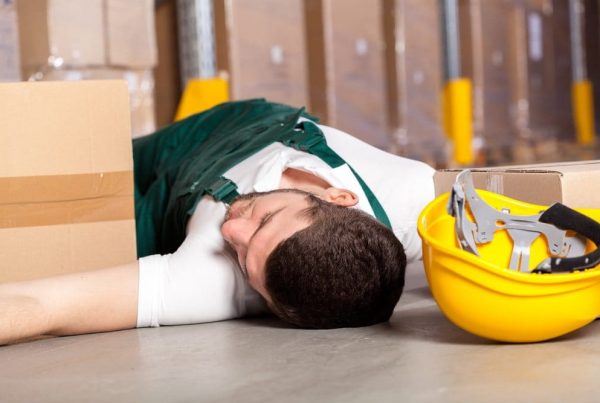
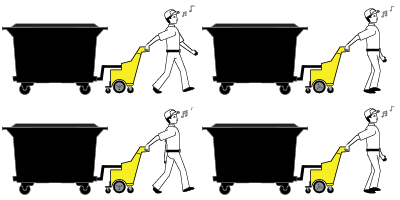
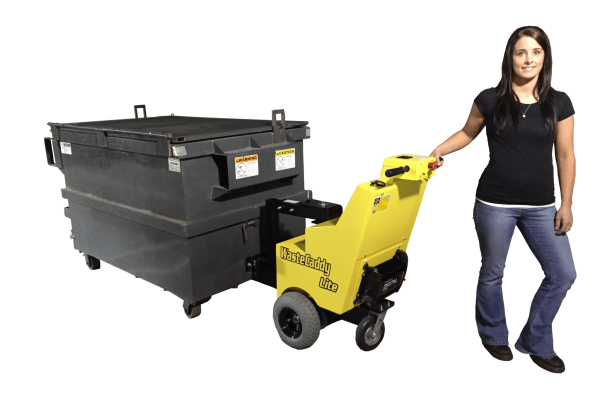
Kayla pulling dumpster How many injuries do your employees have each year? Are any of those injuries related to moving heavy dumpsters on the job? If they are, then you need a solution. Moving dumpsters manually is hard work, and it puts employees and their health at risk. A dumpster puller or a great product like our WasteCaddy Trash Hauler can keep them safe. It also offers you plenty of other benefits.

Saving Time and Man Power

How would you use an extra employee? What would your employees be able to accomplish at work if they had more time? A dumpster puller could give you and your workers back some valuable time.

One customer stated that having the right equipment is, “…like having another employee on staff.” She went on to say that now, instead of needing two people to spend eight hours a week on the trash, it only takes one.

Preventing Injuries on the Job

Many on-the-job injuries are related to moving heavy dumpsters. This can get expensive for employers, plus, they also lose valuable members of their teams. Having the right equipment, such as using a WasteCaddy Trash Hauler, can prevent those injuries from occurring. This keeps businesses much more productive, and reduces costs in many areas.

Saving Money

When you save time and prevent injuries, you’re also saving money. In today’s world, that’s a big deal. Employers can avoid shelling out thousands of dollars every year because of lack of personnel and workers comp claims.

Do you have questions about the dumpster puller or the WasteCaddy Trash Hauler? We’d love to hear them and get you answers. Contact us!

What Things Should Never Go Into Your Dumpster?

Deposit photos Wondering whether that plastic bottle of cleaning spray can go into the dumpster? At your work place, employees and visitors are wondering similar questions all the time. Find out what items can’t be thrown away and post a list near dumpsters to prevent messy and dangerous situations!

Toxic Chemicals

Items that contain hazardous chemicals include batteries, electronics, and light bulbs. Many household cleaners and hygiene products also contain chemicals that should not be put into landfills.

Flammable Materials

Dumpster fires might start with a match or cigarette butt, but the fuel typically comes from flammable waste thrown into the dumpster. These include oil, lubricants, paint, and fuels including gasoline, butane, and propane.

In restaurants and commercial kitchens, tell staff to never discard oil-soaked rags or aprons. These should be soaked in water first or taken to a hazardous waste drop-off.

Items That Are Illegal to Throw Away

Many of the above items are prohibited by local laws and the rules of your waste removal service. Other illegal or banned items may include sharps, thermometers, smoke detectors, tires, and treated lumber.

Some cities have begun outlawing food waste in the trash, making compost bins mandatory. Stay ahead of the game so your business is prepared for any new environmental rules on the horizon!

Use a Dumpster Mover for Convenience

Dumpsters come with many rules, regulations, and safety concerns. Make things simple with a dumpster mover that just one employee can use.

Our WasteCaddy dumpster mover can tow 5,000 pounds, while the WasteCaddyLite can push a standard commercial dumpster weighing up to 2,000 pounds. Contact us if you’d like a free demo!

Prevent Potential Waste Bin Cover Injuries

Dumpsters Can Be Dangerous

Waste handling poses several obvious risks, especially in regards to hazardous materials and the physical injuries associated with pushing or pulling heavy dumpsters. Your staff should also be aware of dumpster safety tips for operating the bin cover or lid.

Ideally, maintenance staff should use a motorized dumpster pusher to prevent muscle strains and back injuries. For loading and unloading, it’s important to use a reasonably clean lid that’s in good working order.

Dumpster injury hazards to address include:

– Tipping hazards: Never move a dumpster or waste bin with the lid open. The lid can crush or cut the hands, or even cause a lightweight container to tip over backwards. This garbage can injury story details the potential for lacerations, nerve injury, and worse.

– Keep out unwanted people and pests: Use padlocks to deter dumpster divers, unauthorized access, and raccoons or other vermin. If locks aren’t a good option, make sure to use tight-fitting lids and replace broken lids.

– Best practices for waste bins: Workers should avoid throwing the lid open wildly. Check to make sure no one is standing behind, and use a step stool if you’re too short to safely open the lid.

Most importantly, never rely on the safety labels to teach employees how to handle waste bins. Conduct safety meetings regularly, post large signs as reminders, and use tools like our automated dumpster pusher to alleviate the heavy strain.

If your team needs to move dumpsters or waste bins around the property, request a demo of the WasteCaddy dumpster pusher from DJ Products, the industry leaders in ergonomic safety equipment.

Maintenance Staff Injury Prevention Starts with a Waste Caddy

Man from city service pulling garbage bin
Injuries can Occur from Pushing or Pulling Heavy Dumpsters.

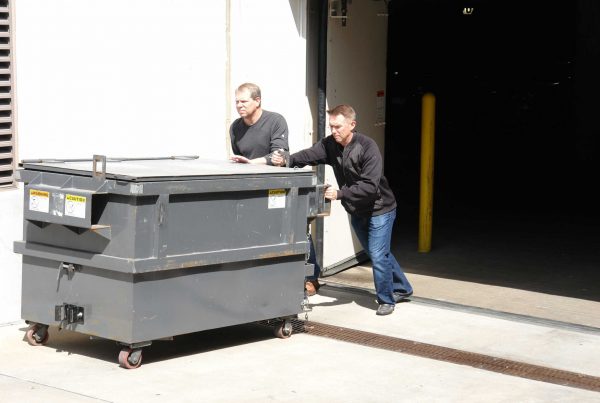
Janitors and maintenance teams have enough physical strain in the course of their job. After making the rounds, lifting and throwing bags into the dumpster and dealing with oversized items, the employee then has to push the waste container to the proper collection site. That last step can be the most difficult – manually pulling or pushing thousands of pounds.

Tips to Prevent Injuries to Maintenance Staff

Prevention has two main components: general health and ergonomics. The ergonomic part is easy – you can switch from manual power to battery-powered waste caddies that motorize the most difficult part of the job.

Safety experts also recommend taking a holistic approach – what John Virsack of ARM has called the “360 degrees of safety.” Consider workplace programs to promote healthy eating, exercise, work-life balance, and stress reduction. Workers in good shape physically and mentally are less likely to get injured and miss days.

Waste caddies and dumpster movers are a necessity for workers, regardless of physical conditioning. No strong man can safely push and maneuver a loaded dumpster 100% of the time. Frequent exertion, inclines, gravel parking lots, etc. – the job needs automation to be safe.

Consider the many safety hazards of manually moving dumpsters:

• Muscle strains from long-term overexertion.

• Herniated discs, torn muscles from sudden force.

• Crushed fingers and toes, e.g. when maneuvering into a freight elevator.

• Pinned by dumpster when out of control on slope or slippery surface.

• Property damage if dumpster strikes parked cars or buildings.

To prevent worker injuries — not to mention the cost of sick days and workers comp claims — invest in a waste caddy to improve safety for your maintenance staff.

Is It Best to Push or Pull a Heavy Dumpster?

DJ Products' Dumpster Caddy Reduces Workplace Injuries
DJ Products’ Dumpster Caddy Reduces Workplace Injuries

Deciding whether to push or pull a loaded dumpster can have a significant impact on your health, and the health of your employees. Moving several hundred pounds of trash and metal unassisted is never easy and can be close to impossible if the surface isn’t completely flat and smooth.

Pushing or Pulling – Which is Better?

In most cases, pushing a dumpster will result in less strain on your back and is generally safer since it cannot end up rolling over you if you fall down. Even so, a fully loaded dumpster can weigh half a ton or more, making it extremely difficult to move even with two people on the job.

How to Alleviate the Problem

Dumpster tugs are designed to work around the problem of forcibly moving a dumpster by giving you a way to use a powered device to help move it along. Our tugs are designed to be operated by only one person, making it less likely that you will need multiple employees to handle trash collecting activities. In a hotel or apartment complex environment, this frees up maintenance workers to focus on more pressing matters surrounding the comfort of your guests and residents.

DJ Products has developed dumpster tugs that make moving trash around extremely simple. To find out more about how our products can benefit your business, give us a call at 1-800-686-2651

Risk Factors Put Pushing Heavy Dumpsters in the Danger Zone

Moving Heavy Dumpsters Can Lead to Injury

When it comes to injury risk in the workplace, people usually think of activities such as using power tools. Would it surprise you to learn that OSHA has identified specific factors that place pushing heavy dumpsters manually without a dumpster mover squarely into the danger zone?

Here are some of the main elements as stated by OSHA.

Forceful Exertions

When employees use a greater than usual amount of force to perform a task, such as moving a heavy dumpster, muscle fatigue sets in more rapidly. Over time, this can result in muscle strain, irritated tendons and damaged joints. Many workers compensation claims are related to back injuries from overexertion.

Awkward Postures

In order to move stubborn dumpsters, employees may find themselves leading with their shoulders, crouching down or taking some other unnatural stance that places additional stress on muscles and joints.

Pushing and Pulling

The force needed to move a dumpster across a surface is affected by its weight and the amount of friction between the dumpster and the surface. In fact, stopping and controlling the dumpster can be just as difficult, if not more so, than pushing and pulling it from place to place.

Uneven, Slippery or Sloped Surfaces

Inclines, snow and ice, and bumpy pavement can increase the already significant amount of force needed to move a dumpster and make stopping it several times more difficult.

OSHA Recommends Use of Powered Movers

According to OSHA, one of the more effective ways to limit these safety risks is with the use of powered movers such as our WasteCaddy dumpster mover. Call 800.686.2651 for more information.

The Logistics Industry Hits a Growth Cap Due to the Current Labor Shortage

Tips to Protect Your Warehouse Employees and Boost Performance

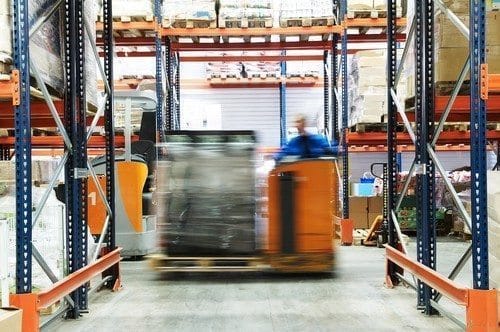
Is your powered trailer mover tapped out? Warehouse workers are too. With the rapid growth of e-commerce, labor supplies are drying up.

Unsustainable

There will be an estimated 452,000 warehouse and distribution positions in need of fulfillment in 2018-19. However the industry is already labor-strapped, with the volume of positions outpacing the labor pool’s ability to fulfill demand by 180,300 positions per year since 2013. How will the industry cope with this shortage as e-commerce sales continue to accelerate?

Filling-in the Blanks

Retailers, delivery companies, and third-party logistics firms are dealing with the labor crunch in each (or all) of these three ways:

• Recruiting from Other Industries

Recruitment from other industries has proven successful in recent years, with government data showing a 66% increase in employees moving to the transportation and warehouse sector from other industries from 2011-15, though this arena won’t lend enough to meet demand.

• Automation to Boost Efficiency

Robots and autonomous vehicles can boost the productivity levels of existing employees.

• Market Expansion

Moving into new sectors with readily available workforces.

What Metros Offer Light in the Darkness?

Federal employment data points to multiple markets with the right combination of availability, quality, and cost of labor, as well as proximity to large customer populations for warehouses and distribution, including Memphis, Nashville, Atlanta, Dallas-Fort Worth, Louisville, Denver, Indianapolis, and Oakland, to name a few.

Intelligent Design

Smart analysis of labor sources is essential. To protect the bottom line, intelligent site selection efforts take into account the fact that labor contributes to more than 20% of total supply chain cost as well as 75% of final-touch distribution.

Short on manpower? Up the ante, saving time and labor with a powered trailer mover from DJ Products. Learn more today.

What’s Safe to Throw Away in Your Dumpster?

The WasteCaddy Dumpster Mover  Is Your Solution for Tight Trash Spaces.
The WasteCaddy Dumpster Mover Is Your Solution for Tight Trash Spaces.

Dumpsters are almost literally a “catch-all” solution to waste. However, there are certain items—chemical waste, liquid propane, and those darn CFL bulbs—that do not belong. Thankfully, most other garbage can go into a dumpster safely and legally.

Trash rooms are safer when everyone knows where different items need to go. For the best dumpster safety, workers should use our WasteCaddy dumpster mover to prevent and alleviate back and arm injuries.

Good to Go: Items You CAN Put in Dumpsters

Here’s a list of questionable items that are allowed; virtually all trash collection agencies let you put these in dumpsters:

• Appliances that do not contain refrigerant

• Aerosol cans, if empty

• Furniture, except for upholstered items in some locations

• Yard waste, except for large volumes of dirt in some locations

• Construction and demolition waste, with weight or volume restrictions

• Electronics, in small quantities if local law allows

How to Safely Handle Dumpster Waste

To prevent injuries, trash fires, and costly fines for improper disposal, try these solutions:

• Provide collection boxes for paint cans, fluorescent lights, rechargeable batteries, etc., so people are not tempted to hide these in the trash

• Post signs for workers to double-check allowed and not-allowed items

• Empty dumpsters frequently to prevent overflow and items left on the ground

• Use motorized tools like the WasteCaddy dumpster mover to haul trash containers with lower risk of injury

These simple but powerful steps can greatly improve dumpster safety. Get the right equipment for moving dumpsters safely to make the job even safer and reduce worker injuries. Visit DJ Products to learn more about the WasteCaddy dumpster mover and other waste container movers.

It’s Our Most Popular – the WasteCaddyLite Dumpster Mover

Support Your Staff by Providing the Right Tools
Your Staff Needs Our Most Popular Dumpster Mover the WasteCaddy Lite

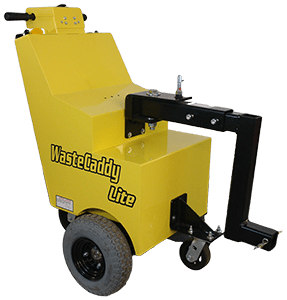
Nobody likes hassling with a heavy dumpster. That’s why our powered dumpster mover ranks as our most popular product! The WasteCaddyLite uses a battery-powered motor to assist employees who need to push, pull, or maneuver dumpsters. It’s the fastest and safest way to take care of trash duty at an office building or apartment complex.

We have larger options for more industrial needs, but the WasteCaddyLite handles the needs of most facility and property managers. It pushes up to 2,000 pounds at up to 3 miles per hour.

In other words, a powered dumpster mover lets your maintenance staff move the waste container as easily as a shopping cart!

Why Use a Powered Dumpster Mover?

An employee might have enough muscle to push a wheeled dumpster across a parking lot. However, if they do that routinely, a devastating injury is bound to occur.

Lower back strains, pulled muscles, or even spinal damage can occur from manually moving dumpsters. The WasteCaddyLite can keep your all-star janitor happy, productive, and on the clock.

Dumpster injuries also lead to high insurance premiums and costly worker’s compensation claims. Automated equipment reduces the risk and protects your bottom line.

Meet the WasteCaddyLite

We designed our powered dumpster mover with all the features you need. The bracket system can be bolted or welded to virtually any dumpster, and the wheels are safe for icy pavement or gravel.

Even the steering system has an ergonomic design and smooth functionality.

Check out the specs and features of the WasteCaddyLite to see if it suits your needs, or contact DJ Products to request info or a free demo.

Garbage – Collection and Moving is Dangerous!

Gargbage Collection is Dangerous

Garbage collectors get a lot of respect for doing other people’s dirty work, but few envy the job. Filth and odors make trash collection unpleasant, while physical safety hazards pose a much bigger problem. In fact, garbagemen die on the job more often than police officers.

Workers who run behind waste collection trucks face perhaps the greatest risks. Dig deeper, and we find a plethora of injury risks affecting every aspect of trash collection.

This eye-opening infographic about garbage collection dangers lays out the facts. Consider these stats:

– Waste collector is the 5th most dangerous job in the US.

– About 100 garbage workers die each year.

– The job ranks 3rd most dangerous for falling injuries.

– Heavy lifting causes countless non-fatal injuries (ankle, back, and shoulder strains, cut hands, and more).

Making Waste Collection Safer

Bad things can happen once you have items like broken glass, chemicals, animal waste, and other hazardous materials being gathered in one place. Facilities managers and janitorial workers who deal with dumpsters and waste containers face similar dangers as city trash workers.

Stop overlooking the daily stress associated with filling and moving dumpsters from collection areas to pickup sites. Pushing or pulling wheeled containers results in musculoskeletal problems like shoulder and back injuries.

Motorized waste container movers like DJ Products’ WasteCaddy alleviate the greatest risk factor for your employees who handle dumpsters. Instead of putting two or three workers in harm’s way, one employee can transport heavy containers with a battery-powered tow.

Read more about dumpster safety and consider the WasteCaddy lineup of dumpster movers to protect your workers’ health and safety.